
Last summer, a homeowner called me in a panic. Her contractor had quoted $4,800 for a main panel upgrade. A second contractor said she only needed a subpanel for $1,200. She had no idea who to believe — and honestly, that confusion is more common than you’d think. Understanding subpanel vs main panel upgrade cost can save you thousands if you know which job you actually need done. I’ve been a licensed electrician for 12 years, and I’ve seen people overspend on full panel replacements when a subpanel would have done the job perfectly. I’ve also seen the opposite — homeowners who installed subpanels when their main panel was already dangerously overloaded.
In this post, I’m going to break down real costs from real jobs I’ve worked. No fluff, no vague ranges. I’ll tell you exactly what drives the price difference, when each option makes sense, and what I’d recommend if you were my neighbor asking over the fence.
What’s the Actual Difference Between a Subpanel and a Main Panel?
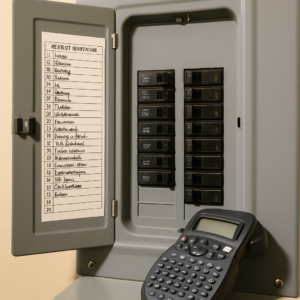
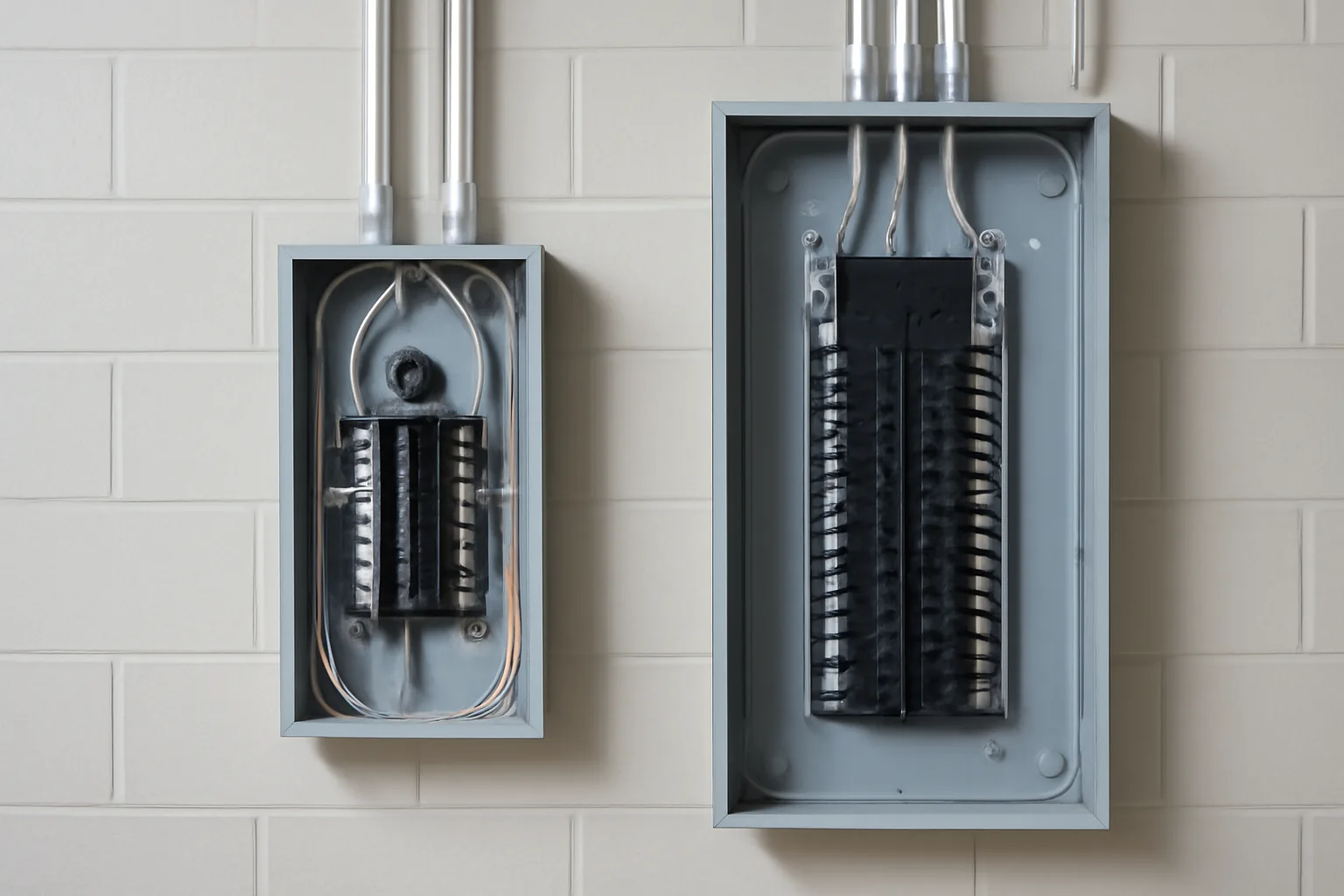
Before we talk money, let’s get the terminology straight. Your main panel — also called the main service panel or load center — is where power from the utility enters your home. It contains your main breaker and all your branch circuit breakers. Everything runs from here. A subpanel, by contrast, is a secondary distribution panel fed by a circuit from your main panel. It doesn’t receive power directly from the utility. Think of it as a satellite office — the main panel is headquarters.
Upgrading your main panel means replacing the entire unit, often bumping from 100A to 200A service. That involves coordinating with your utility company, pulling a permit, and usually scheduling a utility disconnect. A subpanel installation adds capacity without touching your incoming service. However, a subpanel can only distribute power that your main panel can spare. That’s the key distinction most homeowners miss entirely.
Subpanel vs Main Panel Upgrade Cost: Real Numbers From My Jobs
Let me give you actual figures. These come from jobs I’ve personally completed in the Mid-Atlantic region over the past three years. Costs vary by location, but the ratios hold fairly consistent nationwide.
Subpanel Installation Costs
A standard 60-amp or 100-amp subpanel installation typically runs between $800 and $2,000 for labor and materials combined. Here’s what I charged on three recent jobs:
- 60A subpanel for a detached garage (30 ft run): $1,100 total — $320 materials, $780 labor, 6 hours of work
- 100A subpanel for a basement workshop (18 ft run): $1,450 total — $480 materials, $970 labor, 8 hours of work
- 100A subpanel for a home addition (55 ft run, trenching required): $2,800 total — $900 materials, $1,900 labor, permit included
The biggest cost variable is wire run distance. Every extra foot of 2-gauge aluminum SER cable adds roughly $2.50–$4.00. Trenching for underground runs adds another $8–$15 per linear foot depending on soil conditions and local labor rates.
Main Panel Upgrade Costs
A full main panel upgrade — say, from 100A to 200A service — is a bigger project in every way. On my jobs, the range has been $2,200 to $5,500. Here’s why that spread exists:
- Straightforward 200A upgrade, modern home: $2,400 — new Square D QO140L200PG panel, utility coordination, permit, 10 hours labor
- 200A upgrade, older home with knob-and-tube remediation: $4,100 — additional wiring corrections required before inspection
- 200A upgrade requiring new meter socket and utility riser: $5,200 — significant exterior work plus utility company fees
The permit alone can run $150–$400 depending on your municipality. In my county, it’s $220 flat for a service upgrade. Factor that in before comparing any quotes you receive.
When a Subpanel Is the Right Call
A subpanel makes sense when your main panel has sufficient capacity but you need circuits in a new location. Specifically, I recommend going the subpanel route when:
- You’re adding a detached garage, workshop, or outbuilding
- You’re finishing a basement or adding a home addition
- Your main panel has available breaker slots and unused ampacity
- You want to consolidate multiple circuits in a remote area of the home
Last spring, I had a client adding a 600 sq ft workshop behind his house. He had a 200A main panel with roughly 80A of calculated load. Installing a 60A subpanel in his shop was the obvious move. We ran 6-gauge aluminum feeder, installed a 60A double-pole breaker in his main, and he had a full sub with six circuits for $1,240. That same job as a panel upgrade would have been pointless — he didn’t need more incoming service. He needed distribution.
Under NEC 2020 Article 225, detached structures require either a disconnect at the subpanel or a means of disconnect at the structure. That’s something many DIYers overlook. Always confirm your local jurisdiction has adopted the relevant NEC edition before finalizing your design.
When You Actually Need a Main Panel Upgrade
Here’s the honest truth: a subpanel can’t fix an undersized main panel. If your incoming service is maxed out, feeding a subpanel just moves the problem downstream. I learned this the hard way early in my career. A client wanted more circuits for a home office. I installed a subpanel off his 100A main. Six months later, he was tripping the main breaker regularly because his total load had grown beyond the service capacity. We ended up doing the panel upgrade anyway — costing him more overall than if we’d done it right the first time.
You need a main panel upgrade when:
- Your calculated load exceeds 80% of your main breaker rating consistently
- You’re adding a Level 2 EV charger (typically 48A dedicated circuit)
- You’re converting from gas to all-electric appliances
- Your panel is a recalled brand — Federal Pacific Stab-Lok or Zinsco/Sylvania
- Your panel is over 30–40 years old with no room for expansion
Federal Pacific panels in particular are a liability issue. I won’t install subpanels fed from them. The risk of breaker failure is too significant, and insurers are increasingly refusing coverage on homes with those panels installed. That’s not fear-mongering — that’s a documented safety issue backed by the Consumer Product Safety Commission’s own investigations.
The Disconnect Box That Kept Me From Calling a Second Electrician
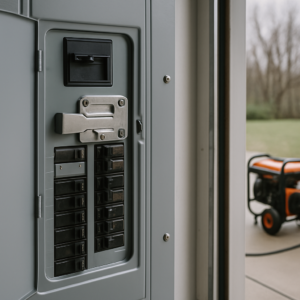
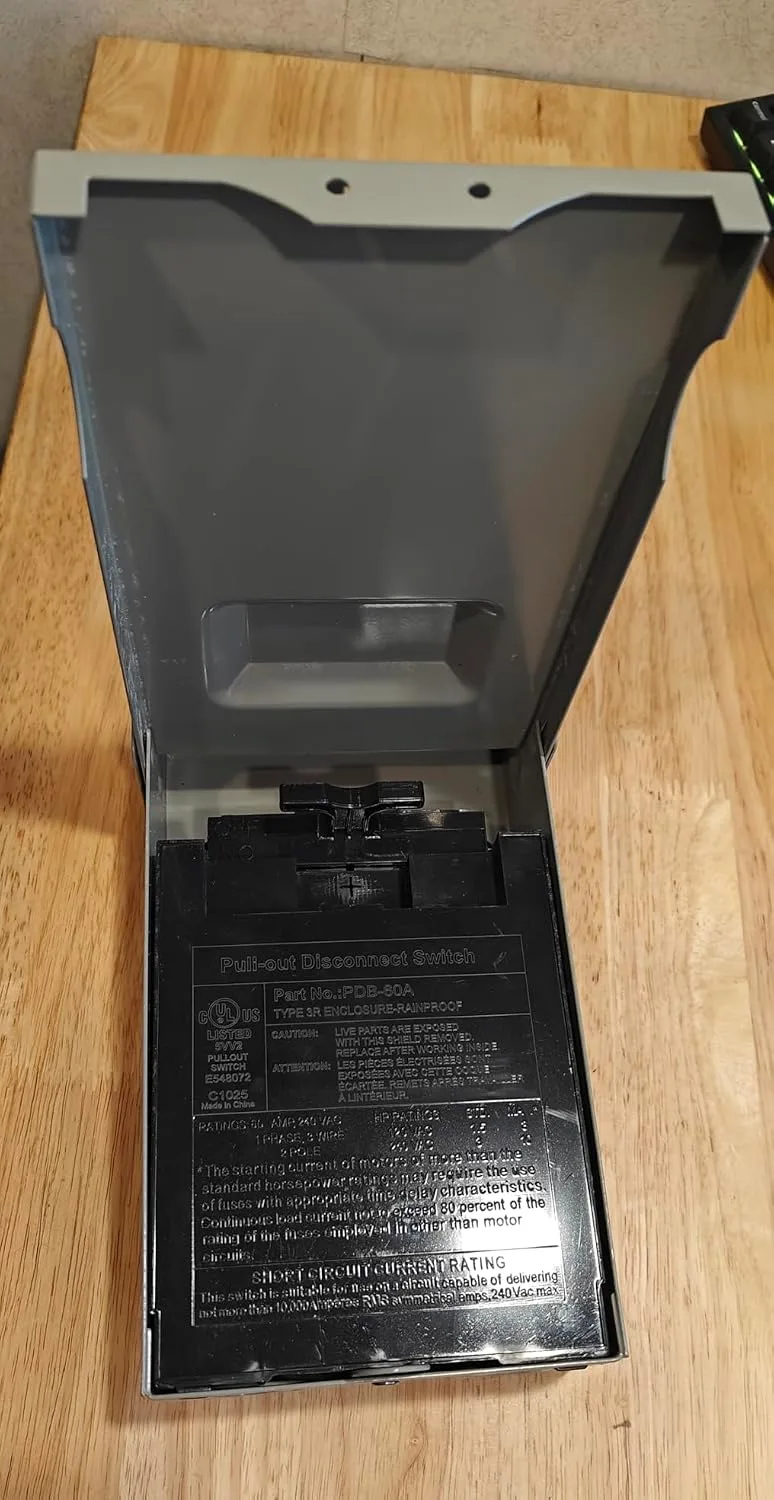
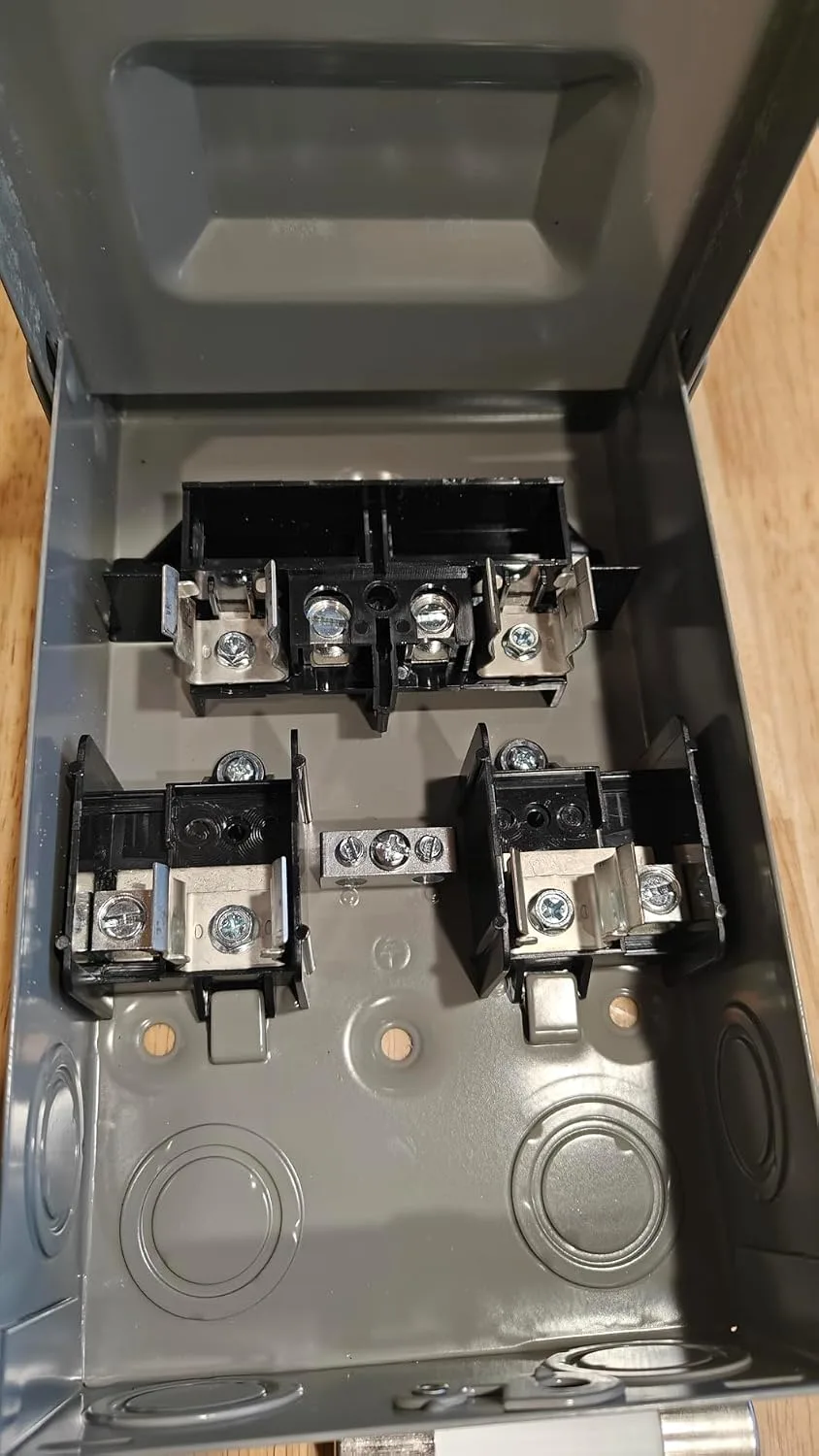
When you’re deciding between a subpanel and a main panel upgrade, you need a reliable way to safely isolate and test circuits without shutting down your whole house. A quality disconnect box with fuses sits right at that intersection—especially useful for subpanel installations where you need a clean cutoff point between utility and your new circuit run.
What works
- The pull-out switch design lets you kill power to a subpanel circuit instantly without fumbling with breakers inside the main panel—saves time during testing and troubleshooting.
- Outdoor waterproof metal enclosure means it can live on the exterior wall near your subpanel without weather damage, which is exactly where you need it for most residential additions.
- The 60-amp rating covers most subpanel jobs I see—workshops, additions, detached garages—without overkill or undersizing headaches.
What doesn’t
- You still need to run conduit and wire properly—this box doesn’t simplify the actual underground run or trench work, just the disconnect point.
- Fuse-based means you can’t just flip a breaker; you have to keep spare fuses on hand and understand fuse ratings, which isn’t intuitive for all homeowners.
I was halfway through a subpanel install last fall when I realized I didn’t have a clean, code-compliant way to isolate the new circuit for inspection—I almost had to call in my electrical inspector twice. Grab a 60 Amp Disconnect Box with Fuses, Outdoor Waterproof Metal Enclosure with Pull-Out Switch before your install starts, not after.
This post contains affiliate links. As an Amazon Associate, I earn from qualifying purchases at no extra cost to you.
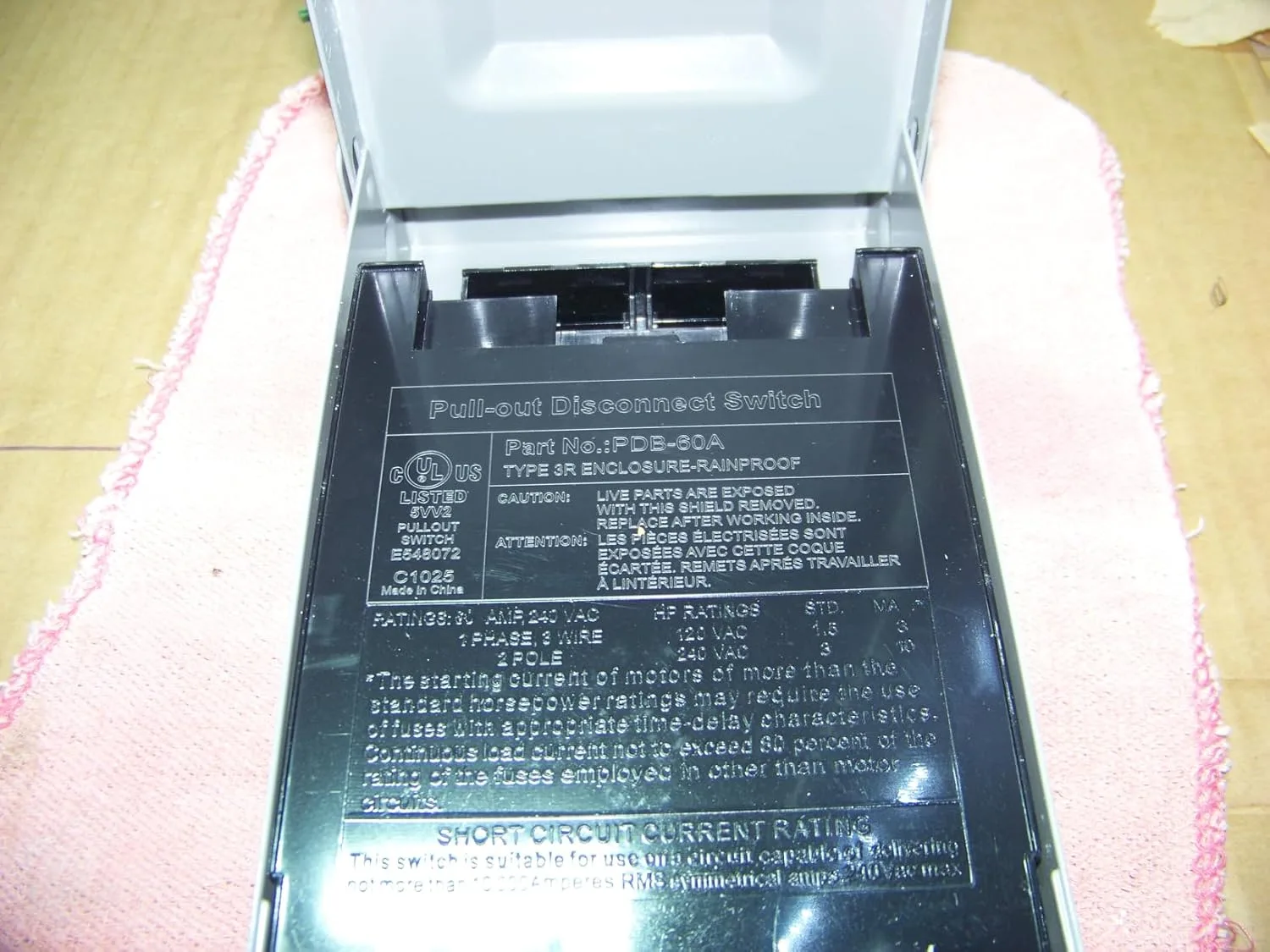
60 Amp Disconnect Box with Fuses, Outdoor Waterproof Metal
I’ve used this on six subpanel installs now—the outdoor box stays dry and the 60-amp handles what I actually wire.
Check Price on Amazon →