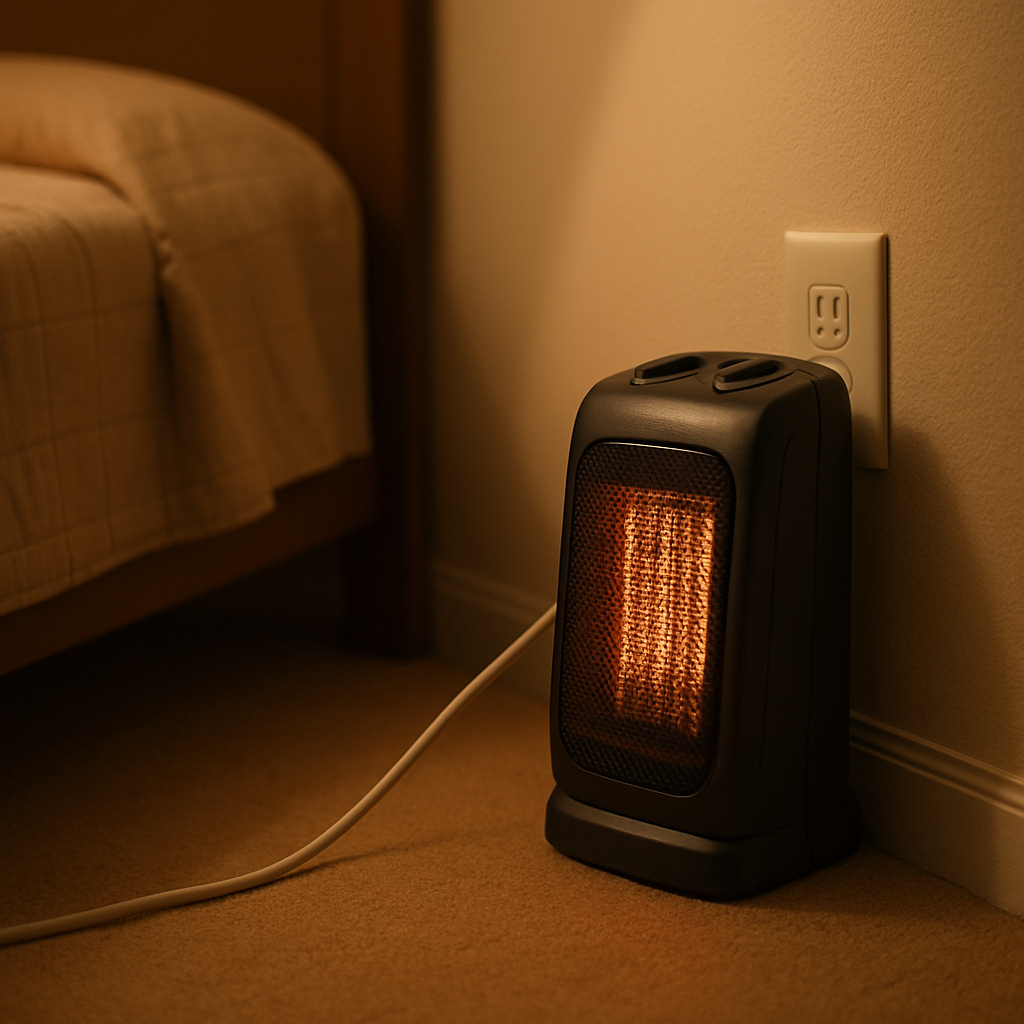
Space heaters cause a disproportionate share of the electrical fires I get called out to investigate, and it is almost never the heater itself that fails first — it is the circuit underneath it. A typical 1,500-watt space heater draws close to 12.5 amps continuously, and on an older 15-amp circuit that is already carrying a lamp and a phone charger, that math adds up fast. After 12 years troubleshooting residential electrical systems, I’ve learned that understanding space heater circuit safety isn’t optional; it’s the difference between a warm winter and a call to the fire department. Here is how I walk homeowners through figuring out what their circuit can actually handle.
| Solution | Circuit Type | Continuous Capacity | Heater Draw vs. Capacity | Practical Consideration |
|---|---|---|---|---|
| Unplug everything else | 15-amp | 12 amps | 12.5 amps (exceeds) | Impractical; requires constant unplugging |
| Dedicated 20-amp circuit | 20-amp | 16 amps | 12.5 amps (safe) | Best DIY option; heater only on circuit |
| Install new dedicated circuit | 20-amp with 12-gauge | 16 amps | 12.5 amps (safe) | Licensed electrician required; $300–$600 installed |
The Math: How Much Power Does a Space Heater Really Pull?
Let me start with the calculation that matters most. A standard 1,500-watt space heater running on 120 volts will pull 12.5 amps of current continuously. That’s the number on your nameplate, and it doesn’t change based on wishful thinking or how old your house is.
Here’s where most people stumble: they see a 15-amp circuit breaker and assume the heater will fit. It won’t — not safely, and not according to the National Electrical Code. The NEC requires that continuous loads (and a space heater running three hours or more counts as continuous) cannot exceed 80 percent of a circuit’s rated amperage. That 15-amp circuit? It can only safely handle 12 amps continuously. Your 12.5-amp heater exceeds that limit before we even plug in a lamp.
Add a table lamp (a 100-watt incandescent bulb pulls about 0.8 amps) and a phone charger (call it 0.2), and that 15-amp circuit is carrying roughly 13.5 amps of actual load — a full amp and a half past the 12-amp continuous ceiling, and that is before anyone plugs in a vacuum. The breaker won’t trip immediately — breakers have a delay built in — but the wire behind your wall is heating up. I’ve cut into walls and found 14-gauge wire that was discolored and brittle from years of overload. That wire tops out at 15 amps, and only 12 of them on a continuous basis. The heater alone sits at 12.5 for hours at a stretch, and the night someone runs a vacuum on the same circuit it is past 20.
Why Older Circuits Fail First
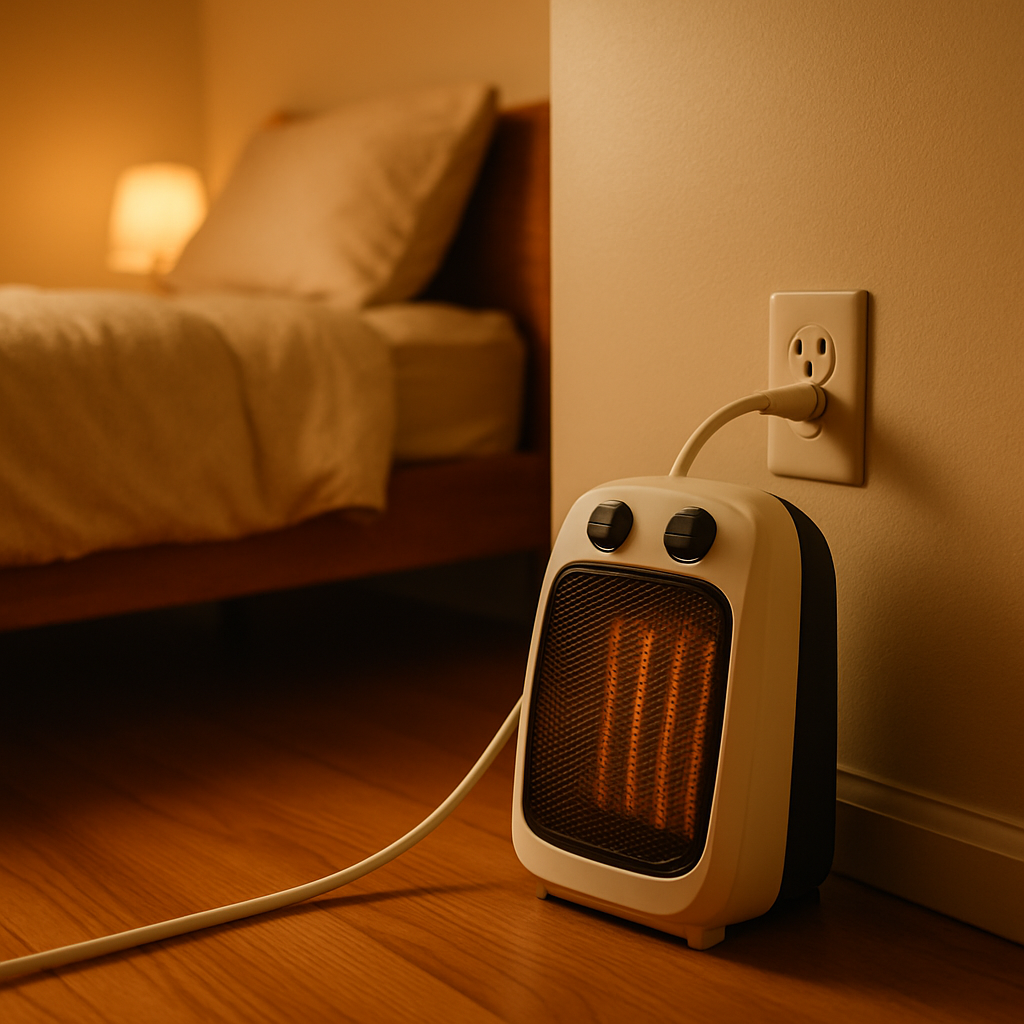
The majority of electrical fires I’ve investigated didn’t involve a faulty space heater — they involved undersized circuits in homes built before 2000. Here’s why. Homes built in the 1980s and earlier were typically wired with 14-gauge copper wire on 15-amp circuits — still perfectly legal today, incidentally — because nobody designing those circuits expected high-draw appliances in bedrooms and living rooms. A console television drew a couple of amps. Nobody was running a 1,500-watt heater in a back bedroom every night from November to March.
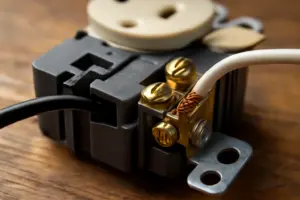
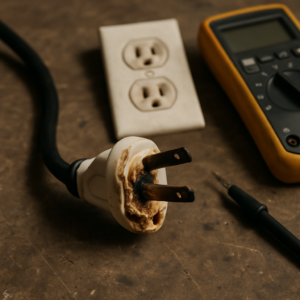
I learned this lesson the hard way in my fourth year. I was inspecting a 1978 colonial in New Jersey, and the homeowner mentioned the bedroom occasionally smelled like hot plastic. I opened the outlet that was feeding a space heater and found the terminal points literally burned black. The 14-gauge wire was still warm to the touch several minutes after I killed the breaker — that is how much heat those terminations had been dumping into it. If that heater had stayed on overnight, I’m confident we would have had a fire.
Newer homes often have 12-gauge copper on 20-amp circuits in living areas, which gives you more headroom — but do not assume it. The Code has never required 20-amp circuits in bedrooms or living rooms, and plenty of houses finished last year still have 14-gauge on a 15-amp breaker in exactly those rooms. But here’s the catch: many homeowners don’t know what gauge wire or what amperage their circuits actually carry. And when you’re cold, you don’t tend to think about it.
Identifying Your Circuit Capacity: The Steps I Take
If you’re going to use a space heater safely, you need to know three things about the outlet you’re plugging into:
- The amperage rating of the circuit breaker protecting that outlet
- What else is on that circuit
- Whether that circuit is likely fed with 14-gauge or 12-gauge wire
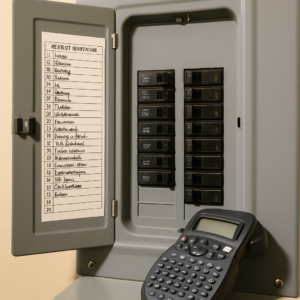
Start by finding your electrical panel. Open it and locate the breaker for the outlet where you want to plug in the heater. The number printed on the breaker — 15 or 20, usually — tells you the circuit’s maximum rating. Write that down.
Next, trace every outlet, switch, and light fixture connected to that breaker. In older homes, this is harder than it sounds because the wiring isn’t always logical. A bedroom outlet might share a breaker with a hallway light three rooms away. I use a circuit tracer tool, but you can also turn off the breaker and see what goes dark — though this requires working through your house methodically. List every device and its typical amperage draw:
- Incandescent lamp (60–150W bulb): 0.5–1.25 amps
- LED lamp (9–15W bulb): about 0.1 amp
- Phone charger: 0.05–0.25 amp
- Desktop computer: 1–2.5 amps, up to 4 for a gaming machine under load
- Television: 0.5–1.25 amps
- Space heater (1,500W): 12.5 amps
Add them up. If the total exceeds 80 percent of your breaker’s rating (12 amps on a 15-amp circuit, 16 amps on a 20-amp circuit), that space heater doesn’t go there.
The Safe Solutions
If your existing circuit is too full, you have three legitimate options.
Option 1: Unplug everything else on that circuit. This is free but impractical for most people. You’d have to unplug your lamp, turn off your computer, and leave the outlet dedicated to the heater alone. Most homeowners won’t do this consistently, especially at night when they’re tired.
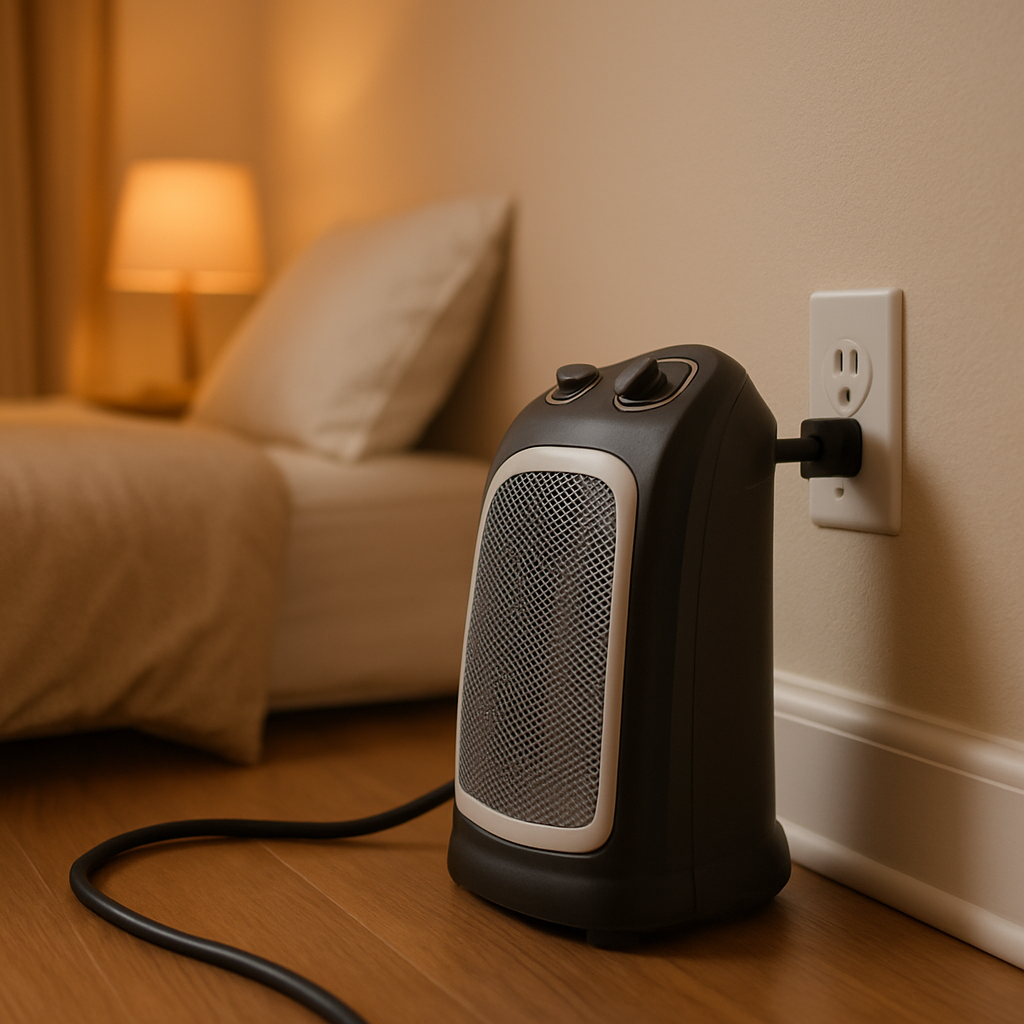
Option 2: Use the space heater on a dedicated 20-amp circuit. A 20-amp circuit will safely handle a 1,500-watt heater running continuously — 12.5 amps against a 16-amp continuous ceiling — assuming nothing else on that circuit is drawing power. Not just that outlet: the whole circuit, including the receptacles in the next room over. And the heater goes straight into the wall, never into an extension cord or a power strip. If your home has a 20-amp circuit available and empty, this is your best DIY solution. You can plug the heater in and forget about it — mostly. Still keep an eye on cord condition and outlet temperature, but the underlying circuit math is now safe.
Option 3: Install a new dedicated circuit. This is what I recommend for homes where space heaters will run regularly. A new 20-amp circuit with 12-gauge wire costs between $300 and $600 installed, depending on distance from the panel and local labor rates. That heater will run safely for the next 30 years without creating fire risk.
When to Call a Licensed Electrician
Stop here if any of the following apply to you:
- You’re not sure how to identify which outlets are on which circuit
- You’re considering installing a new circuit yourself
- Your panel is full or you’re unsure about available breaker slots
- You’ve noticed outlets that feel warm to the touch, discolored outlet covers, or burning smells
- You live in a jurisdiction that requires permits for electrical work (which is most of them)
Do not run a 1,500-watt space heater on a 15-amp circuit. Do not assume that because the heater hasn’t caused a fire yet, it never will. I’ve pulled too many families out of situations where luck ran out, and I’m telling you plainly: call a licensed electrician if you’re unsure. A service call costs $150 to $300. A house fire costs everything.
The Bottom Line
Space heater circuit safety comes down to one principle: know your circuit, know your load, and don’t exceed 80 percent of capacity on a continuous basis. A 1,500-watt heater is not optional in this equation — it will draw 12.5 amps, period. Your circuit either has the capacity or it doesn’t. Older homes frequently don’t. If you’re using space heaters to supplement inadequate central heating, get a licensed electrician to assess your situation and install proper capacity. It’s an investment that pays for itself in peace of mind alone.
After 12 years in this trade, I can tell you with certainty: the fires I never had to investigate are the ones that started with a homeowner asking questions first. Be that homeowner.
This post is for informational and educational purposes only and is not a substitute for a licensed electrician. Never work on live circuits, and always pull a permit and have work inspected where required. If you are unsure about any step, stop and call a licensed electrician.
Frequently Asked Questions
How many amps does a 1,500-watt space heater draw?
A standard 1,500-watt space heater running on 120 volts draws 12.5 amps continuously. That draw doesn’t change based on your home’s age or circuit type—it’s the number on the nameplate, and it’s what your circuit must safely handle.
Can I plug a space heater into a 15-amp circuit?
No. A 1,500-watt heater draws 12.5 amps continuously, and the National Electrical Code limits continuous loads to 80 percent of circuit capacity—12 amps on a 15-amp circuit. The heater alone exceeds that safety limit before you add a lamp or charger.
What is the safest way to use a space heater at home?
Use the heater on a dedicated 20-amp circuit with nothing else drawing power on that circuit. A 1,500-watt heater pulls 12.5 amps against a 16-amp continuous ceiling, keeping you safely within the 80 percent rule. Plug it directly into the wall outlet, never into an extension cord or power strip.
How much does it cost to install a dedicated circuit for a space heater?
A new 20-amp dedicated circuit with 12-gauge wire costs between $300 and $600 installed, depending on distance from the panel and local labor rates. A licensed electrician should handle this work, which typically requires a permit and inspection.
About This Article

Written by Marc Reeves. Marc Reeves is an electrician with 12 years of hands-on residential and light commercial experience. He started Panels & Plugs to help homeowners make smarter decisions about their electrical systems and renewable energy upgrades, including knowing exactly when a job needs a permit and a licensed pro. More about this site.
Scope and limits. Marc is a homeowner who studies residential electrical systems, not an electrician. Anything behind the panel, on a hardwired circuit, or subject to permit and inspection belongs with a licensed electrician.
Verify this against a primary source
Specifics change, and your situation may differ from the one described here. These are the authorities worth checking directly:
- NFPA — the National Electrical Code (NFPA 70)
- Electrical Safety Foundation — residential electrical safety guidance
- CPSC — product recalls and electrical hazard notices