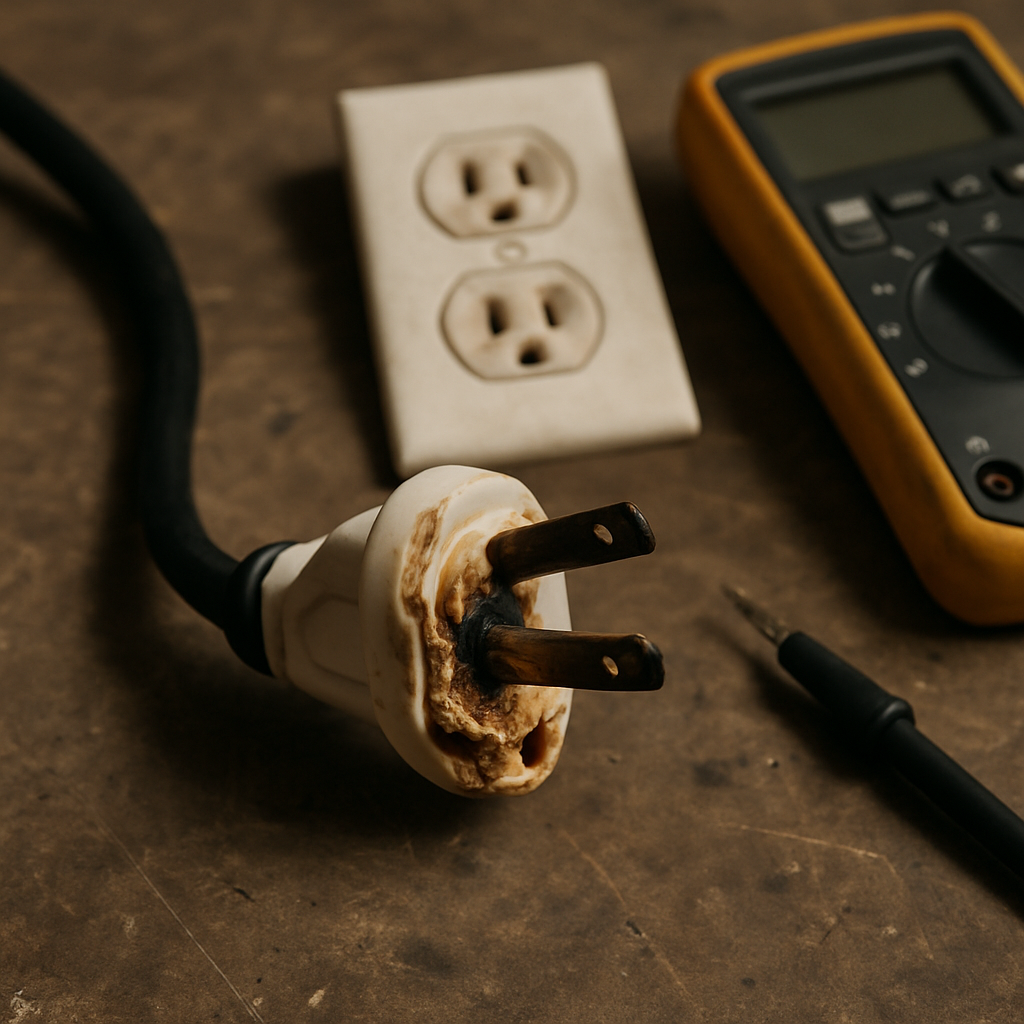
I have pulled more melted extension cords out of crawlspaces and behind furniture than I can count, and almost every single one shares the same three mistakes. Extension cords are rated for temporary use—typically 90 days or less—not as permanent wiring, and the gap between how people actually use them and what the cord is rated for is where extension cord fire risk begins. Over 12 years inspecting and rewiring residential electrical systems, I’ve learned that the majority of homeowners don’t understand what makes an extension cord dangerous, and I’ve seen too many situations where ignorance nearly became a tragedy. Here is what I look for on an inspection, and what I tell homeowners to change before it becomes a problem.
The Three Mistakes That Create Fire Conditions
When I’m walking through a home during an inspection, I’m always looking for extension cords being used as permanent solutions. I see them plugged into the same outlet for months or years. I see them running under rugs, behind furniture, and through walls. I see multiple devices daisy-chained together. Every single one of these scenarios violates the basic principles of how extension cords are designed to work, and every single one increases the extension cord fire risk in that home.
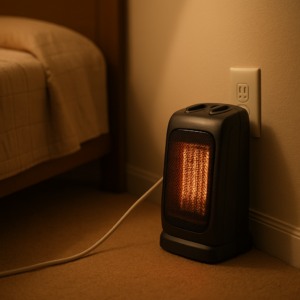
The first mistake is using an undersized cord for the load. Extension cords have wire gauges—12 AWG, 14 AWG, 16 AWG—just like the wiring in your walls. The thinner the wire, the more resistance it has to electrical current. When you plug a 1,500-watt space heater into a 16 AWG cord rated for 13 amps at 50 feet, you’re asking that cord to carry more current than it’s safely designed for. The wire heats up. The insulation breaks down. That’s how fires start. I’ve inspected homes where someone ran a high-draw device off a lightweight extension cord for an entire winter, and the cord was literally warm to the touch.
The second mistake is running extension cords in ways that prevent heat dissipation. Cord insulation is designed to shed heat into the air. When you coil a cord tightly, run it under carpet, or tuck it behind a radiator or furniture, you trap that heat. The temperature inside the cord rises far above what the insulation can tolerate. I once pulled apart a section of cord that had been hidden behind a dresser for about 18 months, and the insulation was brittle—it cracked when I flexed it. If a fault had occurred inside that cord, there would have been nothing stopping an arc and a fire.
The third mistake is treating extension cords as permanent wiring. They’re not. The NFPA 70 National Electrical Code makes this distinction clear: extension cords are for temporary use only. Yet I walk into homes where the same extension cord has been plugged in for three years. Over time, the insulation degrades from heat cycling, UV exposure (if it’s outdoors), moisture, and physical wear. Connections loosen. The risk compounds month after month.
What the Ratings Actually Mean—And Why They Matter
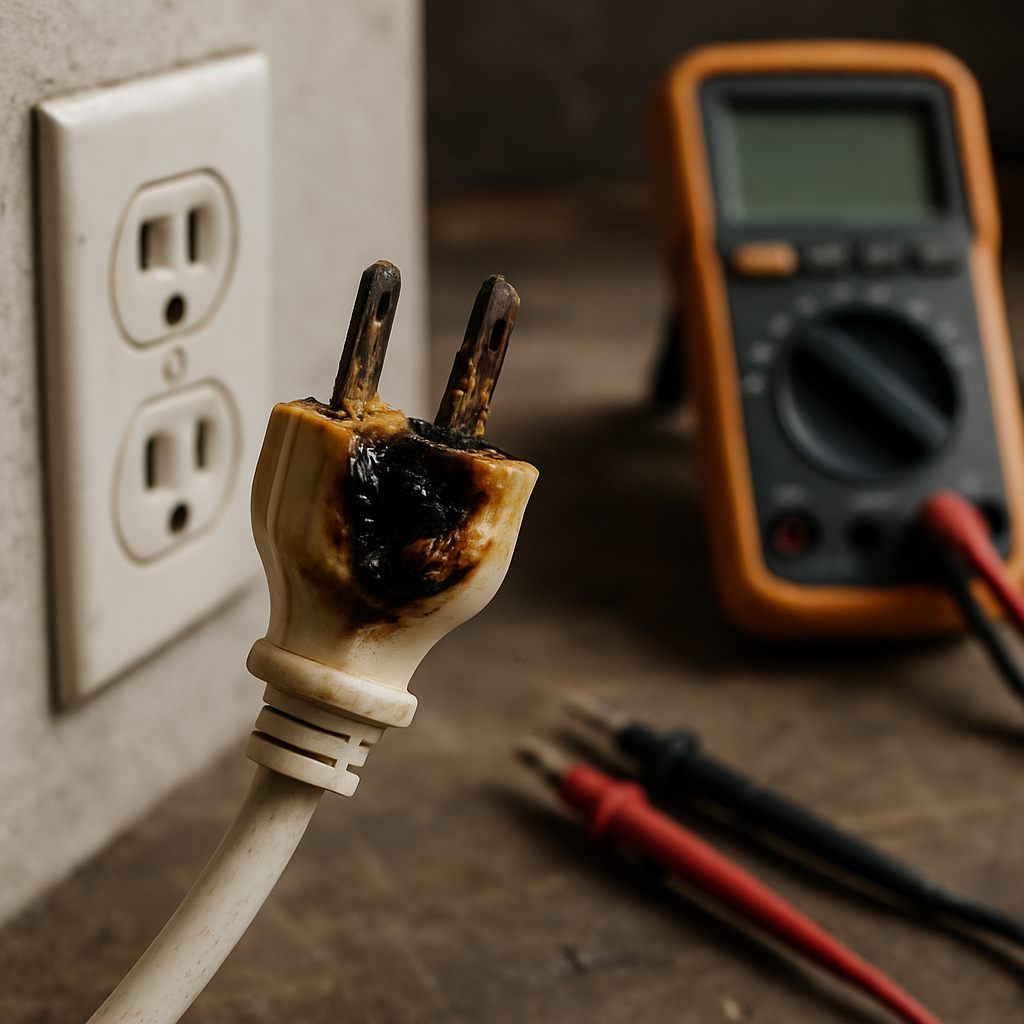
Here’s what I learned the hard way early on. I was installing a permanent outlet in a workshop, and the homeowner mentioned she’d been using a 50-foot 16 AWG extension cord for a table saw for about six months while she “waited for me to get to it.” I measured the cord during that installation visit. It was warm. Not hot, but warm enough that I knew something was wrong. That cord was rated for a maximum of 13 amps at 50 feet. A table saw typically draws 10 to 15 amps on startup. She was right at the edge of that rating every time she cut, and she was doing it with a cord that had been flexed, dragged, and stressed for half a year. I replaced that cord immediately and installed the permanent outlet the same week. That experience stuck with me because I realized most homeowners have no idea what those little tags on extension cords actually specify.
Extension cords are labeled with three things you need to understand: wire gauge (AWG), amperage rating, and length. A 12 AWG cord can safely handle 15 amps at 50 feet. A 14 AWG cord can handle 13 amps at the same distance. A 16 AWG cord maxes out at 13 amps but only for up to 25 feet—beyond that, the voltage drop becomes significant and you’re asking for trouble. Once you go beyond the length rating, the resistance in the cord increases, and you lose both power delivery and safety margin.
The amperage rating on your device matters too. Your microwave might pull 10 amps. Your space heater pulls 12 to 15 amps. Your hair dryer pulls 10 to 15 amps. Before you plug anything into an extension cord, check the nameplate on the device and match it to the cord’s rating. If the device draws more than the cord is rated for, you need a different cord or you need a permanent outlet installed. This isn’t complicated, but it’s where most extension cord fire risk originates—a mismatch between what the cord can handle and what’s being plugged into it.
How to Spot a Dangerous Extension Cord Setup on Your Own
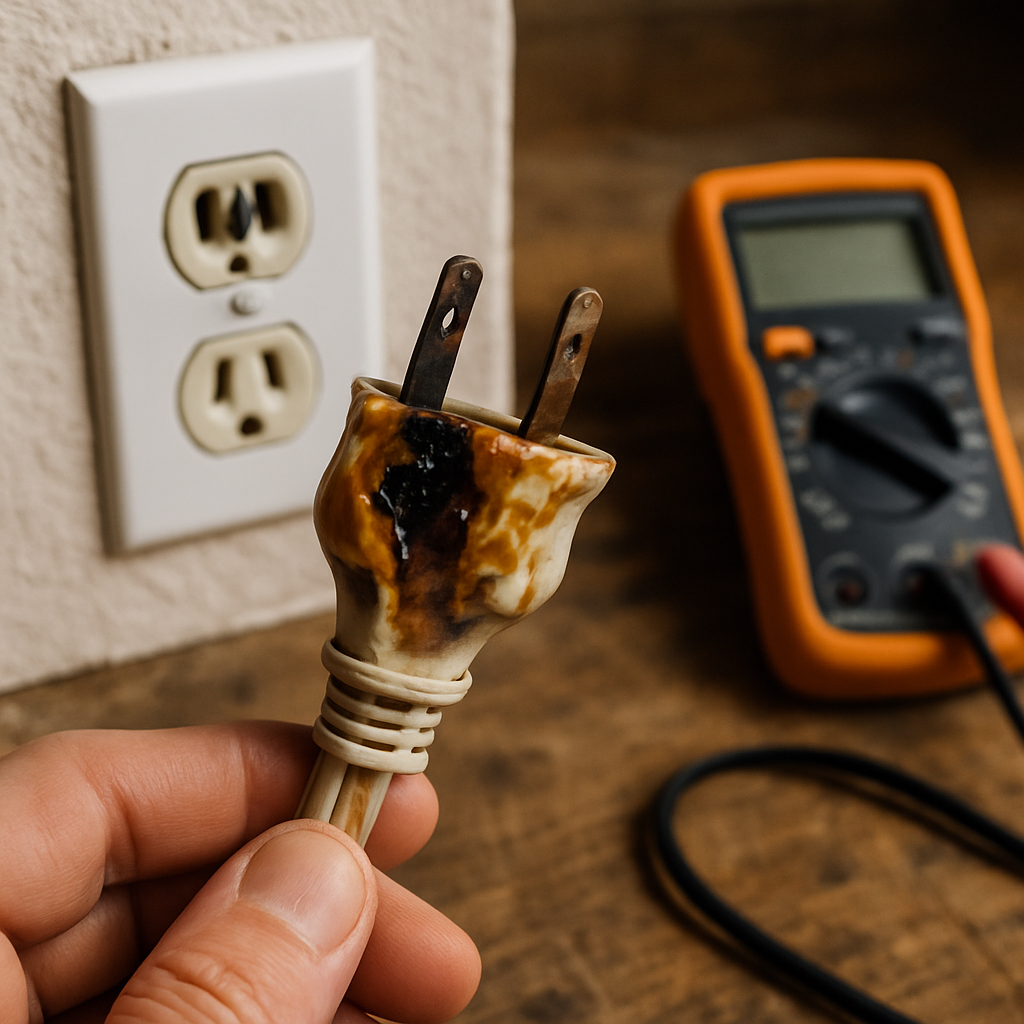
You don’t need to be a licensed electrician to identify extension cord setups that need to change. Walk through your home and look for these red flags:
- Cords under rugs or carpet. This is one of the fastest ways to create a fire. The cord can’t dissipate heat, and foot traffic damages the insulation.
- Cords that are warm to the touch. If an extension cord feels warm during normal use, the wire inside is overheating. Stop using it immediately.
- Damaged, cracked, or discolored insulation. If the outer jacket is compromised, the conductors inside are exposed to moisture and physical contact hazards.
- Tightly coiled cords left plugged in. Even unused coiled cords can trap heat. Always uncoil extension cords completely before use.
- Multiple extension cords daisy-chained together. This multiplies the resistance and heat generation. If you need that much reach, you need a hardwired outlet.
- Extension cords that have been in use for more than a few months. If a cord has been plugged in permanently for longer than 90 days, it’s time to install a permanent outlet.
- Outdoor extension cords used indoors (or vice versa). Outdoor cords are thicker and rated for moisture, but they’re bulky. Indoor cords aren’t weather-resistant. Use the right cord for the environment.
If you see any of these conditions, address them now. Don’t wait for an inspection. Extension cord fire risk is cumulative and progressive—it gets worse the longer the unsafe condition persists.
Why Multi-Plug Adapters and Extension Cords Get Flagged in Fire Inspections
If a fire marshal has ever handed you a violation notice over a power strip, you have run into a rule most people never knew existed. And the first thing worth clearing up is the word “illegal,” because the honest answer depends entirely on the building.
In your own single-family house, nobody is inspecting this. The NEC governs how a building is wired, not what you plug into it afterward. No inspector is coming to fine you for a cube tap behind the couch. The rules below are still describing a real hazard — your homeowners insurance and a house fire do not care about jurisdiction — but there is no code officer writing you up.
In an inspected occupancy, it is genuinely enforceable. Offices, schools, healthcare, assembly spaces, and in many jurisdictions rental and multi-family housing fall under the International Fire Code or NFPA 1, and the fire marshal enforces those on a recurring inspection cycle. That is where the citations come from.
What the Fire Code Actually Says
Two separate provisions do the work, and they treat two different products differently:
- Multi-plug adapters are prohibited outright. The cube tap, the six-outlet wall spider, the outlet splitter that turns one receptacle into three — under the IFC these are not permitted at all, with the narrow exception of listed devices that incorporate their own overcurrent protection.
- Power strips are permitted, with conditions. The formal term is a relocatable power tap, listed to UL 1363. It must be plugged directly into a permanently installed receptacle — not into another power strip, not into an extension cord — it must not run through walls, ceilings, floors, or doorways, and it cannot be used as a substitute for permanent wiring.
Daisy-chaining is the violation inspectors write up most often, and it is the one people are most surprised by, because each individual strip is a listed, perfectly legal product.
The Physical Reason Behind the Rule
The distinction is not bureaucratic. A listed power strip contains a breaker; a cube tap contains nothing but brass and plastic.
Plug a cube tap into a 15-amp receptacle and you have turned one outlet into three, with nothing anywhere in that assembly limiting what gets drawn through it. The breaker in your panel is still protecting the wiring inside the wall, and it will do that job. What it is not protecting is the adapter itself — a component rated far below the branch circuit, with contact surfaces a fraction the size of a proper receptacle’s. Three space heaters on a cube tap will melt the adapter long before a 15-amp breaker sees anything worth tripping over.
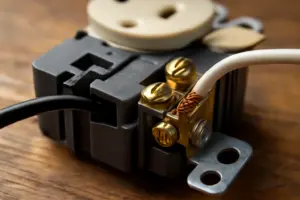
Then there is the mechanical problem, which is the one I find more often. A heavy adapter with two or three cords hanging off it acts as a lever on the receptacle contacts. Those contacts are spring tension, and spring tension is exactly what degrades with age and heat. Loose contact means resistance, resistance means heat at the plug face, and heat accelerates the loosening. It is a loop that ends with a browned, brittle receptacle and scorch marks — the same failure mode as the backstabbed connections that fail behind the wall, just relocated to the front of the outlet where you can actually see it coming.
What to Do Instead
- Throw away the cube taps and the unfused outlet spiders. There is no correct way to use them.
- If you need more outlets in one spot, use one listed power strip with an integral breaker, plugged straight into the wall. One per receptacle. Never chained.
- If you keep needing more outlets in the same spot, that is the wall telling you it is short a receptacle. Adding one is a modest job and it solves the problem permanently — which is the actual answer the fire code is pushing you toward.
When to Call a Licensed Electrician
You can replace an extension cord with a properly rated one. You can unplug a dangerous setup and stop using it. But if you’re asking “should I run an extension cord to my garage?” or “can I plug my freezer into an extension cord long-term?” the answer is: call a licensed electrician. Those are permanent solutions that need permanent wiring.
A licensed electrician will assess the location where you need power, determine what amperage the circuit should be, and install an outlet box with proper NEC-compliant wiring. Yes, this costs more upfront than another extension cord—typically $150 to $300 per outlet, depending on distance and complexity. But it’s a one-time cost that eliminates extension cord fire risk for that location permanently, and it adds value to your home because the next inspector won’t see red flags.
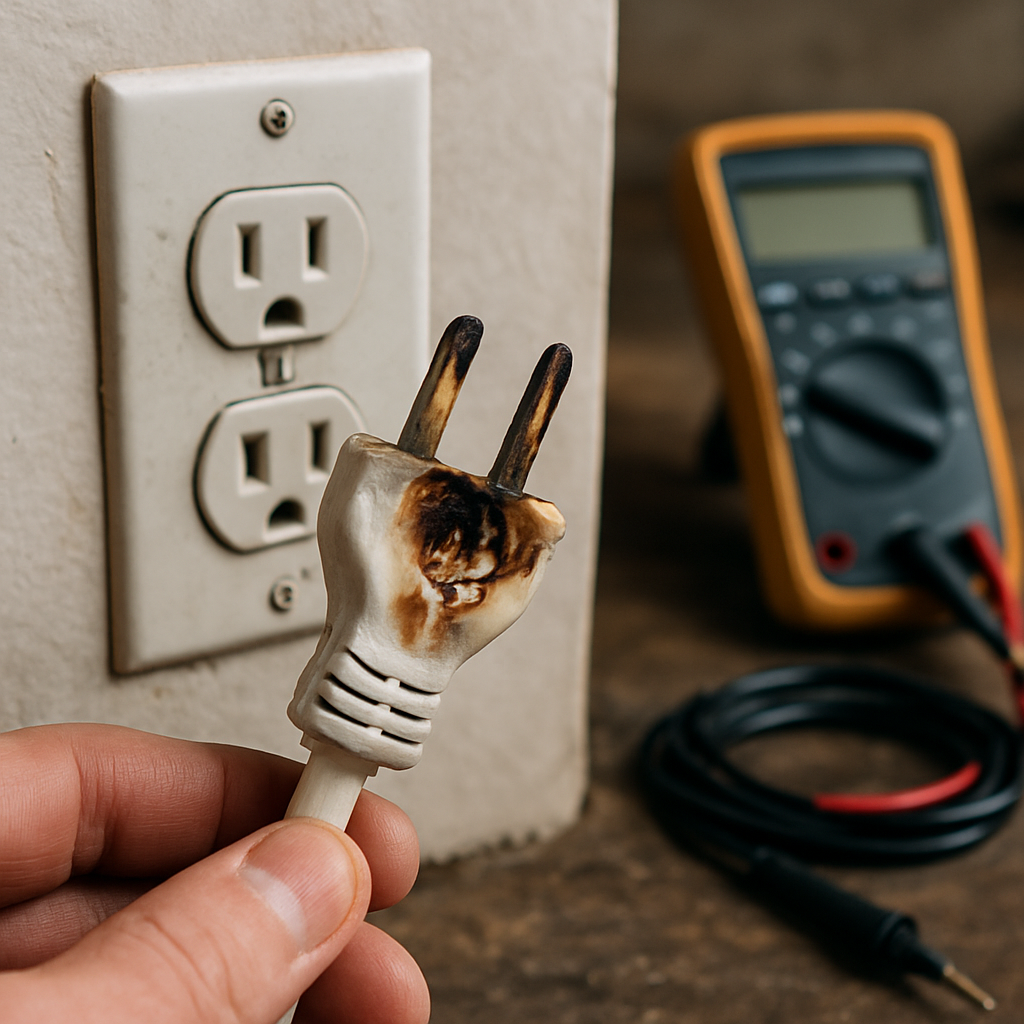
Also call a licensed electrician if you find melted cords, burn marks on outlets, or any sign that an extension cord has overheated in your home. That’s evidence of a serious problem that needs professional diagnosis.
The Takeaway: Replace or Install
After 12 years in this profession, my recommendation is simple: extension cords are for temporary use. If you’re using the same extension cord for the same device month after month, you’ve crossed from temporary to permanent, and you need to install a proper outlet. That means calling a licensed electrician, pulling a permit if your jurisdiction requires one, and getting the work inspected. It sounds like overkill until you understand what extension cord fire risk actually is—it’s the slow degradation of an undersized, overstressed temporary solution that’s being used as if it were permanent.
The cost of a permanent outlet is far less than the cost of replacing a home, and it’s incomparably less than the cost of a house fire. Every extension cord I’ve pulled out of a crawlspace during an inspection tells the same story: someone needed power in a place where there wasn’t an outlet, and instead of solving that problem properly, they solved it with a cord that was never designed for the job. Don’t be that homeowner. Identify the problem now, and call a licensed electrician to install the solution.
This post is for informational and educational purposes only and is not a substitute for a licensed electrician. Never work on live circuits, and always pull a permit and have work inspected where required. If you are unsure about any step, stop and call a licensed electrician.Frequently Asked Questions
What wire gauge extension cord do I need for a space heater?
A 1,500-watt space heater draws 12 to 15 amps, so you cannot safely use a 16 AWG cord rated for only 13 amps. Use a 12 AWG cord rated for 15 amps at 50 feet instead. Never use an undersized cord; the wire heats up, insulation breaks down, and fires start.
How long can extension cords be used permanently?
Extension cords are rated for temporary use only—typically 90 days or less, not permanent wiring. If you’ve plugged in the same cord for longer than 90 days, you need a permanent outlet installed by a licensed electrician. Over time, insulation degrades from heat cycling, UV exposure, moisture, and physical wear, compounding fire risk.
Is it safe to run an extension cord under carpet?
No. Running cords under carpet prevents heat dissipation and traps heat inside the cord insulation. Foot traffic also damages the insulation. This is one of the fastest ways to create a fire. If you see a cord under a rug, stop using it immediately and install a permanent outlet.
What does a warm extension cord mean during normal use?
A warm cord means the wire inside is overheating and the insulation is breaking down. Stop using it immediately. This indicates the cord is undersized for the load or has been used unsafely for too long. Have a licensed electrician install a proper permanent outlet for that device.
About This Article

Written by Marc Reeves. Marc Reeves is an electrician with 12 years of hands-on residential and light commercial experience. He started Panels & Plugs to help homeowners make smarter decisions about their electrical systems and renewable energy upgrades, including knowing exactly when a job needs a permit and a licensed pro. More about this site.
Scope and limits. Marc is a homeowner who studies residential electrical systems, not an electrician. Anything behind the panel, on a hardwired circuit, or subject to permit and inspection belongs with a licensed electrician.
Verify this against a primary source
Specifics change, and your situation may differ from the one described here. These are the authorities worth checking directly:
- NFPA — the National Electrical Code (NFPA 70)
- Electrical Safety Foundation — residential electrical safety guidance
- CPSC — product recalls and electrical hazard notices