Every time I get a call about connecting a portable generator to a house, the same question comes up: do I need a transfer switch, or is an interlock kit good enough? Both do the same core job of preventing backfeed into the utility lines—which is the thing that kills lineworkers—but they get there differently, and the price and flexibility trade-offs matter more than most homeowners expect going in. After 12 years of installing both systems, inspecting dozens of failed setups, and watching how people actually use generators during outages, I can tell you there’s no one-size-fits-all answer. But there is a right answer for your specific situation, and I’m going to walk you through how to find it.
| System | Cost (Total Installed) | Installation Time | Backfeed Prevention | Requires User Procedure |
|---|---|---|---|---|
| Manual Transfer Switch | $1,800–$3,500 | 6–12 hours | Automatic (mechanical isolation) | No |
| Transfer Panel | Mid-range (not specified) | More involved than interlock | Automatic (circuit selection limits load) | No |
| Interlock Kit | $500–$1,200 | 2–4 hours | Manual (breaker sequencing required) | Yes |
What Both Systems Actually Do (And Why It Matters)
Let me start with the thing that keeps me up at night: backfeed. When you plug a generator into your home without any safety device between the generator and the utility lines, and you’re not careful about which breakers you’ve turned off, current can flow backward into the power lines. I’ve never personally encountered a lineworker who was killed that way, but I’ve met three electricians who’ve witnessed it secondhand, and I’ve inspected three homes where backfeed was actively happening when I arrived. The homeowners had no idea.
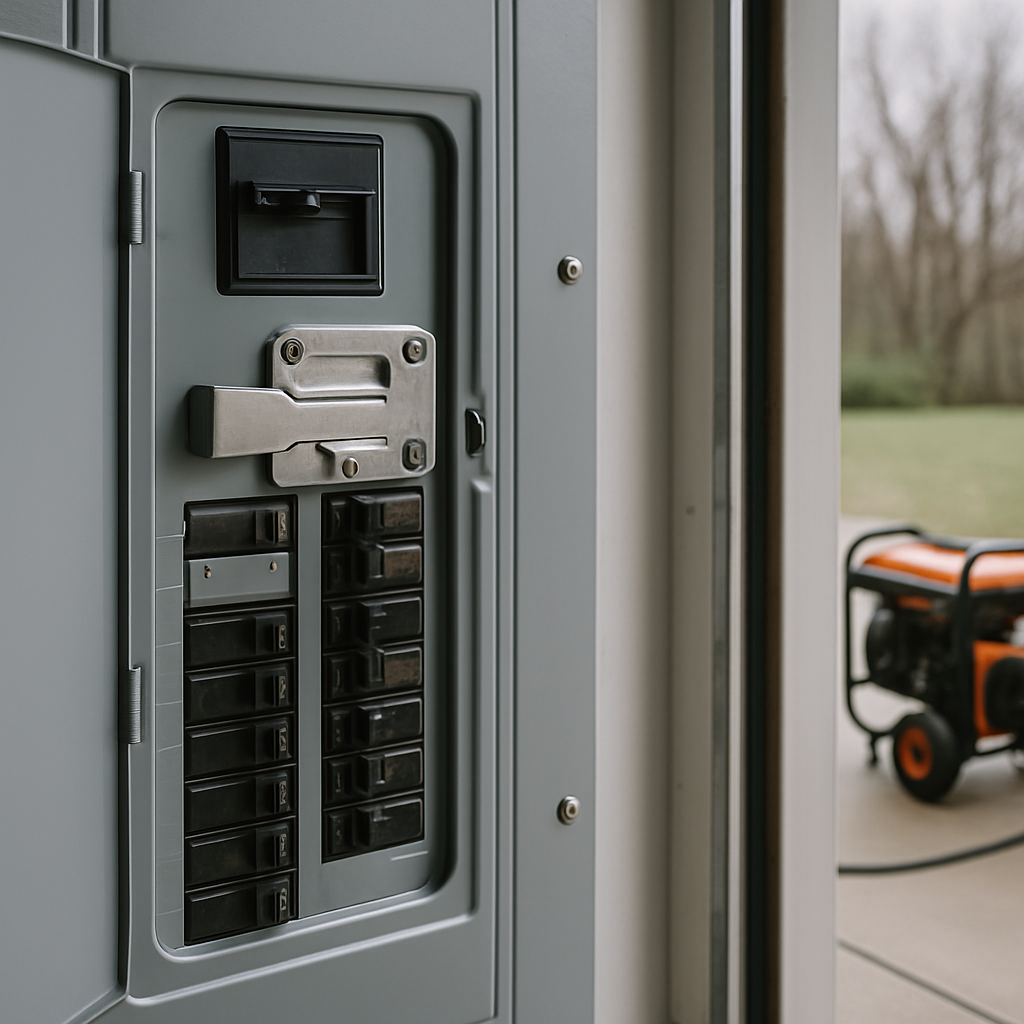
Both a manual transfer switch and an interlock kit solve this problem, but the mechanism is different. A transfer switch is a mechanical device—usually a 200-amp rated unit mounted next to your main panel—that physically prevents you from drawing power from both the utility and the generator at the same time. An interlock kit is a lockout mechanism that prevents the main breaker and the generator breaker from being on simultaneously. One is mechanical force. The other is operator discipline enforced by hardware.
The National Electrical Code (NEC Article 702) allows both methods, as long as they’re installed correctly and meet local inspection requirements. But “allowed” and “right for you” are two different things.
Manual Transfer Switch: Automatic Safety, Higher Cost
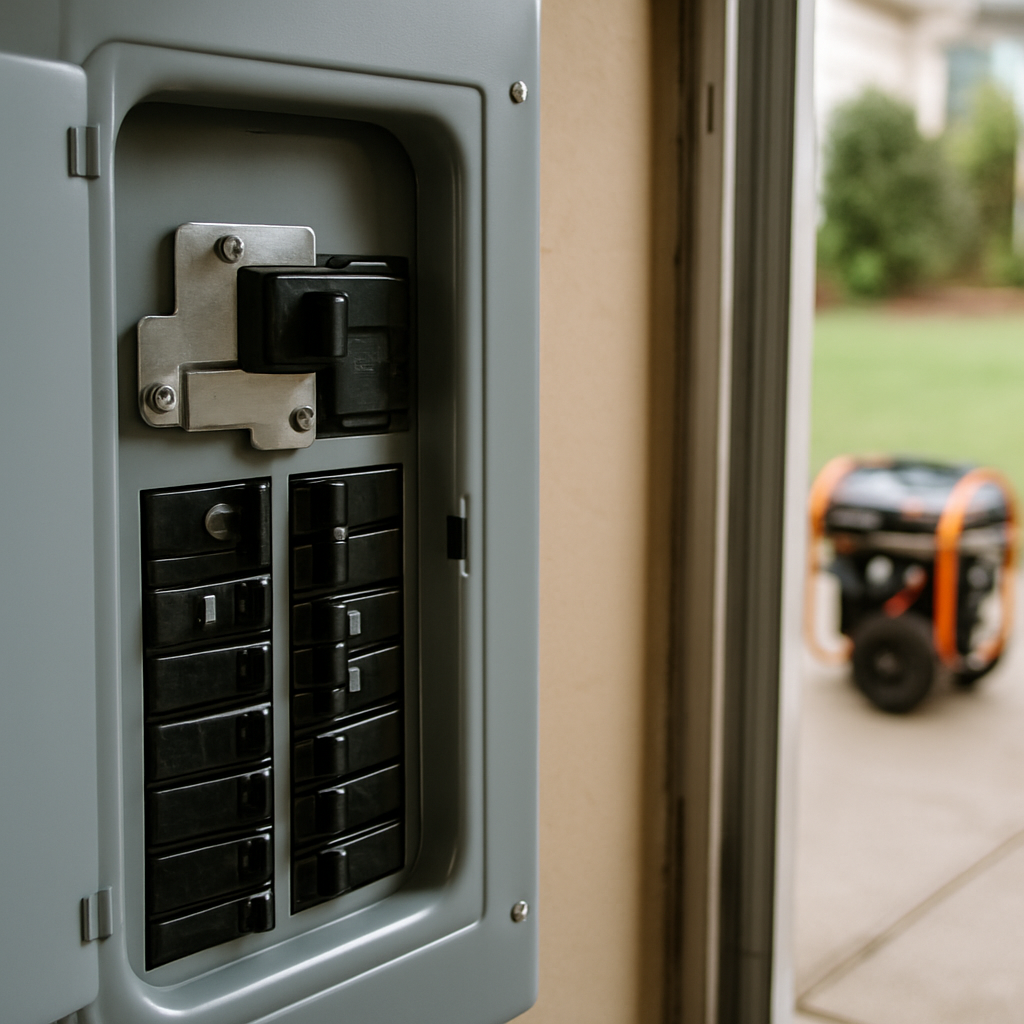
A manual transfer switch is what you want if you value absolute, hands-off prevention of backfeed. Here’s how it works: you have a single large lever or rotary switch mounted in an enclosure next to your main electrical panel. That switch physically connects your home’s load to either the utility lines or the generator—never both. When you flip the switch from utility to generator position, internal contacts open the utility connection before the generator connection closes. The mechanical design makes it physically impossible to have both sources live at the same time.
I’ve installed transfer switches rated from 100 amps to 400 amps, though for most residential setups—especially homes with portable generators—we’re looking at 100 to 200 amps. A typical 200-amp manual transfer switch costs between $800 and $1,500, plus installation labor. A qualified electrician will charge 6 to 12 hours for the install, depending on your panel layout and whether you need new conduit runs. So plan on $1,800 to $3,500 total, all in.
The trade-off is flexibility. With a transfer switch, you’re only powering a subset of your home’s circuits—the ones you’ve decided to run through the switch. A 200-amp transfer switch backing a portable 7.5-kW generator (roughly 31 amps at 240V) sounds like you could run everything, but you can’t: your air conditioner, electric range, and electric water heater will quickly overload the generator. Most people use a transfer switch to selectively power essential circuits: refrigerator, well pump, furnace, lights, and a few outlets. The switch itself doesn’t limit what you *can* connect—only what makes sense to connect safely.
Interlock Kit: Lower Cost, Higher Operator Responsibility
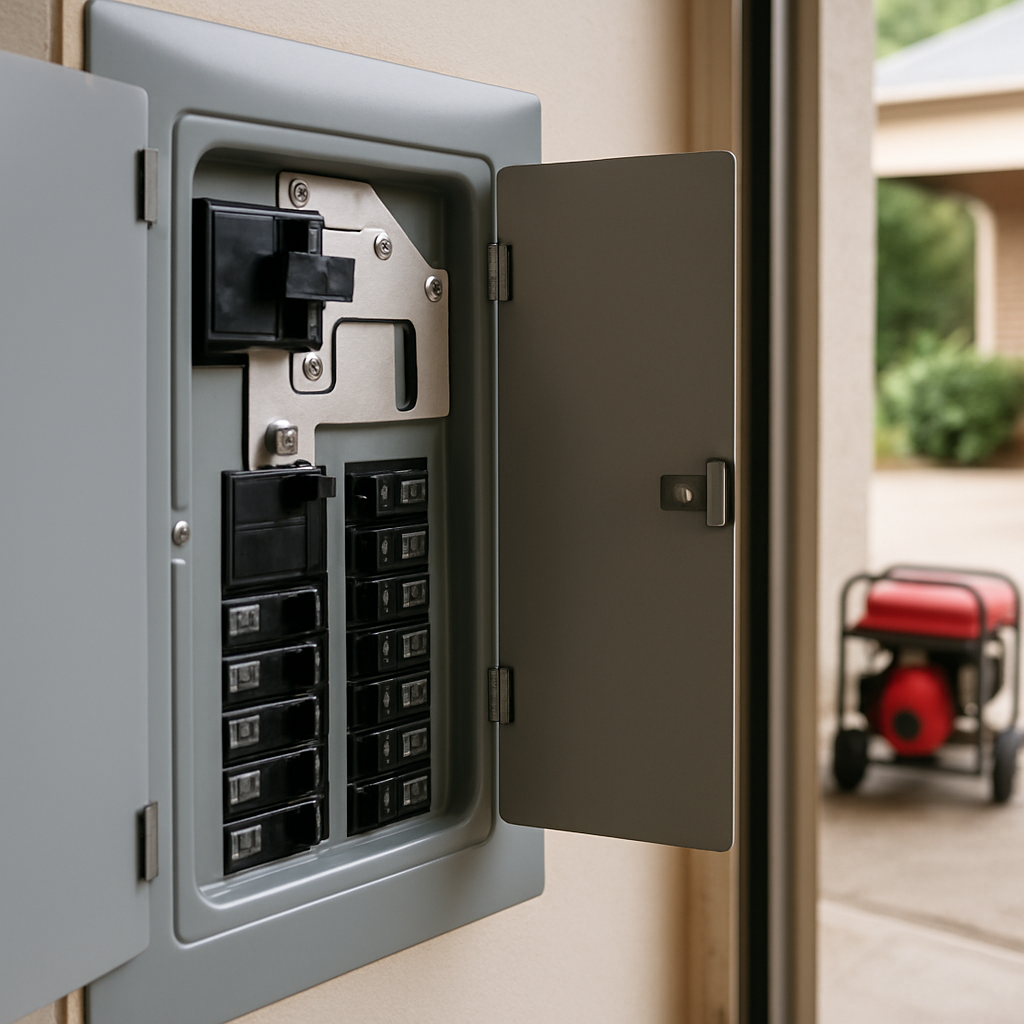
An interlock kit is a metal bracket, usually paired with a specific generator inlet or breaker configuration, that physically prevents the main breaker and a separate generator breaker from being on at the same time. The interlocked breakers literally can’t both be engaged—if the main breaker is on, the interlock pushes the generator breaker off, and vice versa.
The upside is cost. An interlock kit runs $150 to $400 for the hardware, and installation is faster—usually 2 to 4 hours of electrical labor. Total cost: $500 to $1,200. That’s genuinely a huge difference. I’ve installed interlock kits for homeowners who were happy to save $2,000 and understood the limitations.
But here’s where operator discipline enters the picture. An interlock prevents both breakers from being *on*, but it doesn’t automatically switch anything. You have to manually turn off the main breaker, confirm it’s off, and then flip on the generator breaker. Then, when the power comes back, you reverse the process—turn off the generator, wait for it to stabilize, then turn the main breaker back on. If you mess up that sequence—say, you’re tired, or a family member turns on the main breaker while you’re not looking—backfeed can still happen.
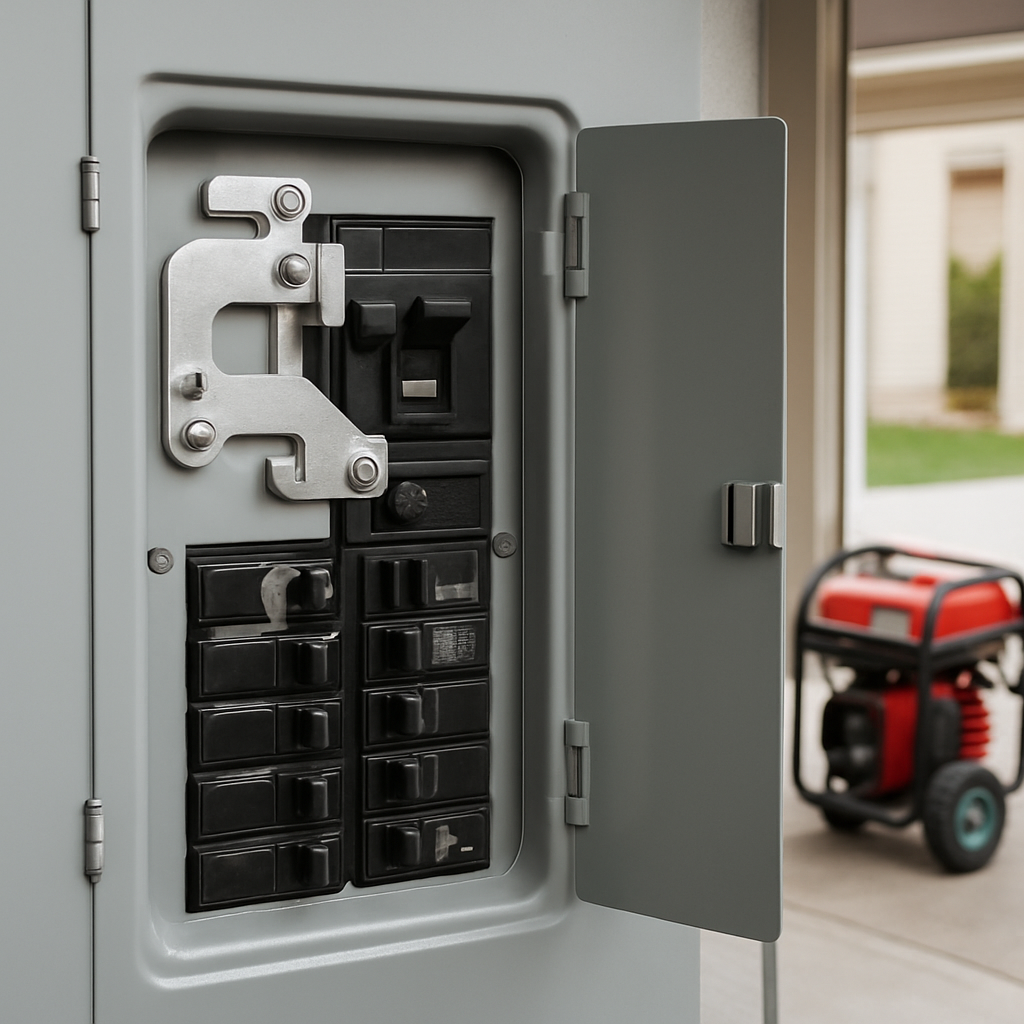
I learned this the hard way about eight years ago. I installed an interlock kit for a customer in a rural area who’d had three outages in one winter. Nice guy, careful type, or so I thought. Three months later, I got a call—his wife had come home during a power outage, found the generator running, saw the main breaker was off, and flipped it back on because she didn’t understand the interlock. Fortunately, the lineworkers were nowhere near the distribution transformer at that moment. But I sat in that driveway and looked at the interlock setup and realized that hardware can’t prevent human error, only make it harder. I’ve been much more cautious about recommending interlock kits to anyone I’m not 100% confident will use them correctly every single time.
Transfer Switch vs Interlock Kit: The Real Comparison
Let me lay this out in the clearest terms I can:
- Transfer Switch: Automatic backfeed prevention. You flip one lever, and the system guarantees isolation. Higher cost ($1,800–$3,500). Takes longer to install. Slightly bulkier. Limited to selective circuit support unless you install a larger, more expensive model.
- Interlock Kit: Manual backfeed prevention. You must correctly sequence two breakers every time. Lower cost ($500–$1,200). Faster install. Depends entirely on user behavior. Works fine if you’re disciplined and communicate the procedure to everyone in the household.
The question isn’t which is “better” in the abstract. It’s which matches your household and your tolerance for procedure-dependent safety.
Where a Transfer Panel Fits (And Why the Names Confuse Everyone)
Plenty of people searching this topic are comparing “interlock kits vs transfer panels,” which is a slightly different question than the one above — because “transfer panel” usually refers to a specific product that is not the same as the service-rated transfer switch I have been describing. Three different things get called roughly the same name, so here they are separated out.
- Service-rated manual transfer switch. A large unit, typically 200 amps, installed ahead of or beside the main panel. It switches the entire house between utility and generator in one motion. This is the higher-cost option covered earlier.
- Transfer panel (manual transfer switch panel). A small pre-wired subpanel — commonly six to ten circuits — that mounts next to your main panel and comes as a kit with a power inlet box and a generator cord. Each circuit gets its own three-position switch: utility, off, generator. Brands like Reliance Controls and Generac sell these as complete assemblies.
- Interlock kit. A listed sliding plate on your existing panel that makes it physically impossible to have the main breaker and the generator breaker on at once. No new panel, no circuit relocation.
Transfer Panel vs Interlock Kit
These two are the ones people genuinely cross-shop, because they sit close in price and both suit a portable generator. The difference is flexibility versus foolproofness.
- Circuit selection is permanent on a transfer panel. At install time, the chosen circuits are physically moved out of your main panel and into the transfer panel. That decision is expensive to revisit — adding the circuit you forgot means going back into the panel. An interlock lets you power any breaker in your existing panel, including things you did not anticipate.
- Overload protection is the transfer panel’s real strength. Because only the selected circuits can ever be energized, you cannot accidentally ask a 5,000-watt generator to run the whole house. With an interlock, nothing stops you from leaving the electric range breaker on — managing total load is entirely on you, every single outage.
- 240-volt loads favor the interlock. Most transfer panels are built around 120-volt branch circuits, with limited or no support for a well pump or a 240-volt appliance. An interlock has no such limitation as long as the generator can supply it.
- Operation is simpler on the transfer panel. Flip each circuit switch to “generator.” There is no sequencing to get wrong and nothing to explain to a spouse or a house-sitter at 2 a.m. in a storm.
- Cost lands between the two options above. A transfer panel kit is typically a few hundred dollars in hardware plus the inlet box, and installation is less involved than a service-rated switch but more involved than an interlock, because circuits have to be relocated.
My read: if the household includes anyone who will not reliably follow a written procedure during an outage, the transfer panel’s inability to be operated wrong is worth real money. If you want maximum flexibility for the lowest cost and you trust the procedure, the interlock wins. Both are legitimate under NEC Article 702 when installed correctly — and note that an interlock must be a kit listed for your specific panel. Shop-made brackets and generic plates fail inspection, and they should.
When to Call a Licensed Electrician
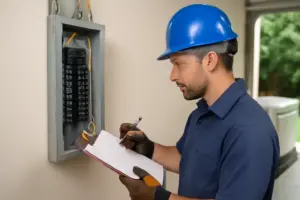
Here’s what I need to be direct about: installing either system requires pulling a permit and having it inspected by your local authority having jurisdiction (AHJ). That’s not optional—it’s NEC code, and it’s there because backfeed kills people. If you’re handy and have done residential electrical work before, you might be tempted to do this yourself. Don’t. Not because you can’t physically do it, but because the testing, documentation, and inspection requirements are beyond a typical homeowner’s scope.
I’ve had homeowners call me to inspect DIY interlock installations that looked right on the surface but had bonding and grounding issues that would have failed any competent inspection. Call a licensed electrician if:
- You’ve never worked on your electrical panel before.
- You’re uncertain about proper grounding or bonding.
- Your panel is old, damaged, or not clearly labeled.
- You’re not comfortable pulling a permit and scheduling inspection.
- You don’t know whether your local code allows the system you’re planning.
That’s basically everyone. Call a licensed electrician. Seriously.
My Recommendation
If you can afford it, get a manual transfer switch. The extra $1,500 to $2,500 buys you a system that works the same way every time, regardless of who’s home or how tired anyone is. It’s mechanical. It’s foolproof. And if you ever sell your home, a transfer switch adds real value—home inspectors and homebuyers see it as a legitimate safety upgrade.
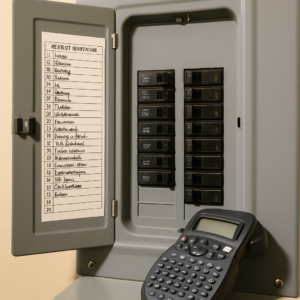
If budget is genuinely the limiting factor, an interlock kit is safe—*if* you commit to the discipline it requires and you ensure every household member understands the breaker sequence. Write it down. Laminate it. Put it on the generator. Make the procedure impossible to forget or misinterpret.
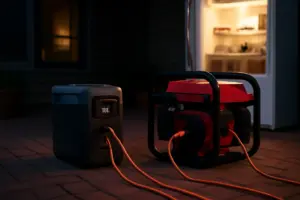
What I won’t recommend is skipping both and just running extension cords or plugging the generator directly into an outlet. That’s backfeed waiting to happen, and it’s not worth the risk.
This post is for informational and educational purposes only and is not a substitute for a licensed electrician. Never work on live circuits, and always pull a permit and have work inspected where required. If you are unsure about any step, stop and call a licensed electrician.Frequently Asked Questions
What does backfeed mean with a portable generator?
Backfeed happens when current flows backward into the utility power lines—usually because both the generator and utility breakers are on simultaneously without a transfer switch or interlock. This risk is why backfeed kills lineworkers. Both a manual transfer switch and an interlock kit prevent it, but through different mechanisms.
How much does a manual transfer switch cost installed?
A typical 200-amp manual transfer switch costs between $800 and $1,500 for the unit itself. Installation labor runs 6 to 12 hours depending on your panel layout and conduit needs. Plan on $1,800 to $3,500 total, all in.
Can I install a generator interlock kit myself?
No. Installing either system requires pulling a permit and having it inspected by your local authority having jurisdiction. Testing, documentation, and inspection requirements are beyond a typical homeowner’s scope. Call a licensed electrician to avoid bonding and grounding issues that would fail inspection.
What’s the difference between an interlock kit and a transfer panel?
An interlock is a bracket on your existing panel that prevents the main and generator breakers from being on together—you manage load yourself. A transfer panel is a pre-wired subpanel with six to ten circuits, each with its own switch, so overload is impossible. Transfer panels cost more to install but are simpler to operate.
About This Article

Written by Marc Reeves. Marc Reeves is an electrician with 12 years of hands-on residential and light commercial experience. He started Panels & Plugs to help homeowners make smarter decisions about their electrical systems and renewable energy upgrades, including knowing exactly when a job needs a permit and a licensed pro. More about this site.
Scope and limits. Marc is a homeowner who studies residential electrical systems, not an electrician. Anything behind the panel, on a hardwired circuit, or subject to permit and inspection belongs with a licensed electrician.
Verify this against a primary source
Specifics change, and your situation may differ from the one described here. These are the authorities worth checking directly:
- NFPA — the National Electrical Code (NFPA 70)
- Electrical Safety Foundation — residential electrical safety guidance
- CPSC — product recalls and electrical hazard notices