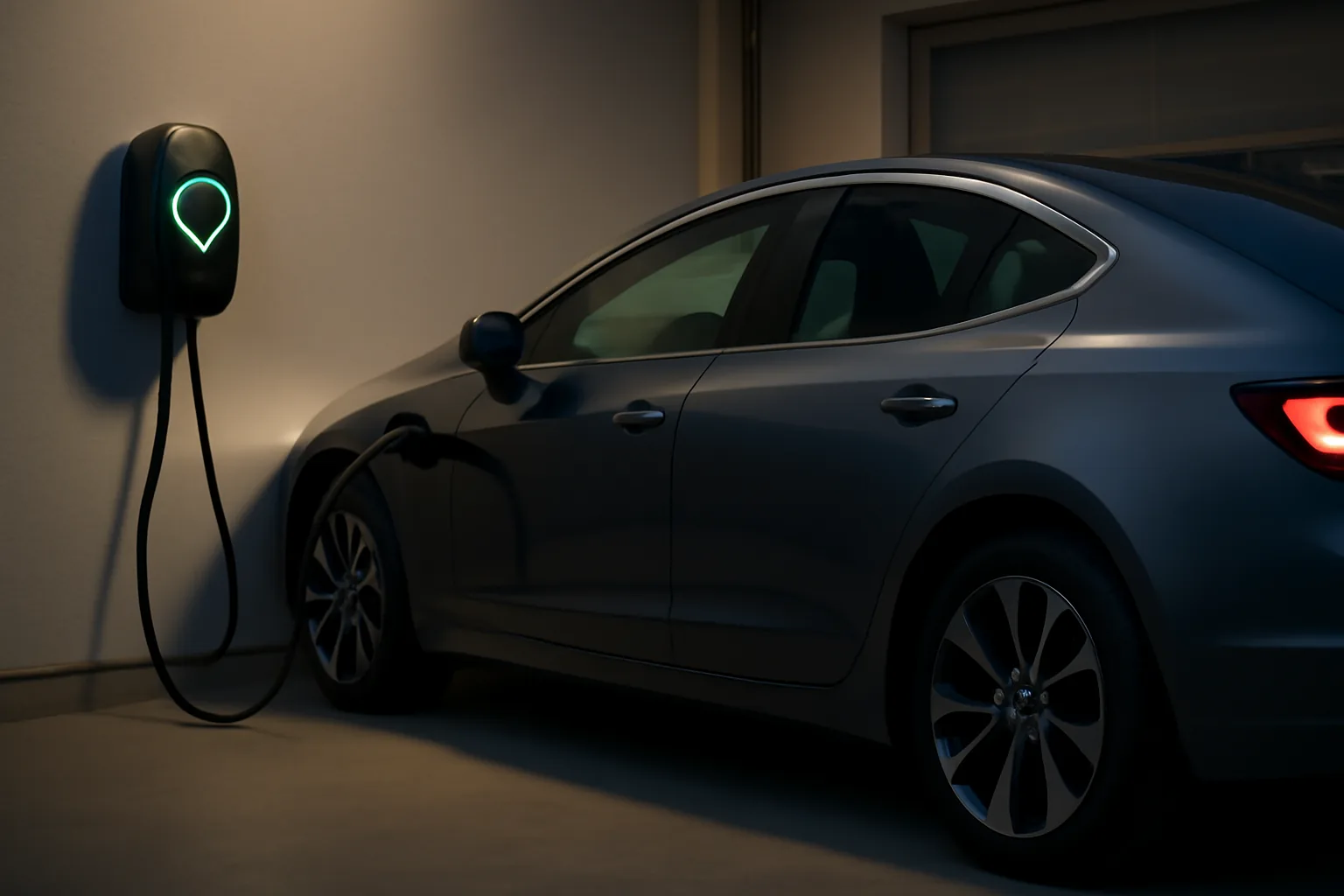
When I bought my first EV three years ago, I did what most people do — I plugged it into the 120V outlet in my garage and called it a night. For two weeks, that was fine. Then I got my electric bill. The Level 1 vs Level 2 EV charging cost question stopped being theoretical real fast. I’m an electrician. I install charging equipment for a living. And I still made the same rookie mistake most new EV owners make: assuming the convenience of Level 1 outweighed the hidden cost of it.
Here’s the thing — it’s not just about dollars per kilowatt-hour. It’s about when you charge, how much you charge, and what your utility actually does to customers who draw heavy overnight loads. I want to walk you through exactly what happened to my bill, what I’ve seen happen to friends and neighbors’ bills, and what the numbers actually mean for someone making this decision today.
| Charging Level | Voltage | Power Output | Range Added Per Hour | Time to Full Charge |
|---|---|---|---|---|
| Level 1 | 120V | 1.2–1.4 kW | 3–5 miles | 8–13 hours |
| Level 2 (40-amp) | 240V | 9.6 kW | 20–30 miles | 4–8 hours |
What Level 1 and Level 2 Actually Deliver (In Real Numbers)
Level 1 charging uses a standard 120V, 15-amp or 20-amp household outlet. In practice, that delivers roughly 1.2 to 1.4 kW of actual power to your battery. At that rate, you’re adding about 3 to 5 miles of range per hour of charging. If you drive 40 miles a day — pretty average — you need 8 to 13 hours to recover that range overnight. That works, barely, if you plug in the moment you get home.
Level 2 charging runs on 240V. The output depends on the charger’s amperage rating and your vehicle’s onboard charger. A 40-amp Level 2 unit delivers around 9.6 kW. That translates to 20 to 30 miles of range added per hour. Most EVs hit a full charge from near-empty in 4 to 8 hours. For most drivers, that means a full charge every single night, without any planning required.
The hardware difference is significant. However, the real story is in the operational cost — and that’s where most comparisons stop too early.
Level 1 vs Level 2 EV Charging Cost: My Actual Bill Breakdown
My utility charges $0.13 per kWh during off-peak hours and $0.22 per kWh during peak hours (roughly 4 PM to 9 PM). With Level 1, I was plugging in around 6 PM — right in the middle of peak pricing — because my car barely made it home on those cold winter days. The result was ugly. My bill jumped $47 in the first month. That’s not a typo.
After I installed a Level 2 charger and programmed it to start at 11 PM, my incremental charging cost dropped to about $28 per month for the same driving distance. That’s a $19 monthly savings, or roughly $228 per year. The Level 2 charger paid for a significant portion of its own cost through smarter charging windows alone.
Here’s the part people miss: Level 1 charging during peak hours is genuinely the worst possible scenario for your electric bill. You’re drawing power slowly, across high-rate hours, with no smart scheduling capability on most basic setups. As a result, you pay more and charge less efficiently.
The Time-of-Use Rate Problem
Most utilities are moving toward Time-of-Use (TOU) rate structures. Under TOU pricing, the hour you charge matters as much as how much you charge. Level 2 chargers with built-in scheduling — like the ChargePoint HomeFlex — let you lock in off-peak charging automatically. Level 1 setups typically don’t offer this. You’re at the mercy of whenever you remember to plug in.
I had a client last spring — a teacher who drove about 35 miles round-trip daily — who was on Level 1 and couldn’t understand why her bill was so high. She was plugging in at 5:30 PM every day. Her utility’s peak rate was $0.28 per kWh. We installed a Level 2 unit with scheduling, set it to charge at midnight, and her monthly EV charging cost dropped from $61 to $31. Same car. Same miles. Completely different bill.
Running the Numbers on Your Own Utility (Worked Example: PGE in Oregon)
My rates are not your rates, and the question I get asked most is some version of “what would this save me with my utility?” So here is the method, worked all the way through with a real published rate schedule — Portland General Electric, which serves most of the Portland metro area.
Start with the single most important thing this whole calculation turns on, because it is counterintuitive: Level 1 and Level 2 use roughly the same number of kilowatt-hours to add the same miles. Level 2 is modestly more efficient — measured comparisons generally put Level 1 somewhere in the mid-80s for percent efficiency and Level 2 in the high-80s to low-90s, because the car’s onboard electronics and thermal management run for eight hours instead of two. That gap is real but small. It is not where the money is.
The money is in when you charge. Which means the honest answer to “how much will Level 2 save me” depends first on what rate plan you are on.
If You Are on a Flat Rate, the Answer Is Almost Nothing
PGE’s standard residential service is a flat per-kWh price — recently around 11¢ per kWh for the energy charge. On a flat rate, a kilowatt-hour at 6 p.m. costs exactly what a kilowatt-hour at 2 a.m. costs. Shifting your charging accomplishes nothing financially, and upgrading to Level 2 buys you convenience and speed, not savings. You would be capturing only that few-percent efficiency edge, which on a typical commute is a couple of dollars a month.
That is worth saying plainly, because a lot of EV content quietly assumes everyone is on a time-varying plan. Most people are not, unless they opted in.
If You Opt Into Time of Day, the Numbers Get Dramatic
PGE’s optional Time of Day plan, as published for July 2026, prices energy in three windows:
- On-peak — 43.13¢/kWh, 5 p.m. to 9 p.m., Monday through Friday
- Mid-peak — 16.70¢/kWh, 7 a.m. to 5 p.m., Monday through Friday
- Off-peak — 8.93¢/kWh, 9 p.m. to 7 a.m. weekdays, plus all day Saturday, Sunday, and holidays
Those are energy charges only — they exclude taxes, fees, and other line items — and utilities revise them, so pull the current schedule before you trust any math built on them. But look at the spread: on-peak is roughly 4.8 times off-peak. That ratio is the entire story.
Now the awkward part for Level 1. PGE’s on-peak window is 5 to 9 p.m. on weekdays — precisely when you get home and plug in.
A 40-Mile-Per-Day Commute, Both Ways
Assume 40 miles a day at about 3.5 miles per kWh, so roughly 11.4 kWh to replace each day. Twenty-two weekdays and eight weekend days in the month.
- Level 1, plugged in at 6 p.m., no scheduling. At about 1.3 kW you draw straight through the on-peak window — roughly 5.2 kWh at 43.13¢ is $2.24 — then finish the remaining 6.2 kWh off-peak for about 55¢. Call it $2.80 on a weekday. Weekends are all off-peak at about $1.02. Monthly: about $70.
- Level 2, scheduled to start at 9 p.m. The whole 11.4 kWh lands off-peak at 8.93¢ — about $1.02 a day, every day. Monthly: about $31.
Roughly $39 a month, or about $470 a year, on an ordinary commute. Against a typical installed Level 2 cost, that is a payback measured in a few years — and it scales directly with how many miles you drive.
The Honest Caveat
Nearly all of that saving comes from scheduling, not from charging speed. Most EVs sold in the last several years can schedule their own charging from the dashboard, which means a Level 1 user can capture much of this without buying anything.
Where that breaks down is the window. PGE’s off-peak runs ten hours, and at 1.3 kW you can move about 13 kWh in that time — enough for our 40-mile day with very little margin. Push to 60 miles, or hit a cold snap where the battery spends energy warming itself, and Level 1 can no longer finish inside off-peak. It bleeds into mid-peak, then into the next evening’s on-peak, and the gap reopens. Level 2 finishes 11.4 kWh in under two hours and never has this problem.
So the rule is: if you are on a flat rate, Level 2 is a convenience purchase. If you are on a time-varying plan and drive enough that Level 1 cannot finish overnight in the cheap window, Level 2 pays for itself — and the heavier your mileage, the faster it does.
Doing This for Any Utility
The same four steps work anywhere, including Pacific Power, which serves much of the rest of Oregon and publishes its own optional time-of-use schedule:
- Find your daily kWh: daily miles ÷ your car’s miles per kWh. Use 3 to 3.5 if you do not know it.
- Pull your utility’s residential rate schedule and write down the peak and off-peak prices and the exact hours. Confirm whether you are actually enrolled in that plan — being eligible is not the same as being on it.
- Price two scenarios: your charging as it happens now, and all of it inside the off-peak window.
- Check the window will hold. Divide your daily kWh by 1.3 for Level 1. If that number of hours exceeds your off-peak window, Level 1 cannot capture the savings and Level 2 is doing real work.
The Hidden Costs of Staying on Level 1
The upfront cost of Level 1 is zero — you already have the outlet. That’s the whole appeal. However, there are costs that don’t show up on the product listing.
First, there’s the battery health angle. Lithium-ion batteries don’t love sitting at partial charge for extended periods. With Level 1, many EV owners find they’re constantly running at 40–60% state of charge because full recovery takes too long. Consistently running your battery low accelerates degradation over time. The long-term cost of reduced range and eventual battery replacement is real, even if it’s hard to quantify in a monthly budget.
Second — and I learned this the hard way — older 120V garage circuits aren’t rated for sustained high-current loads. The first garage I tried to use for Level 1 charging had a 15-amp circuit with aluminum branch wiring from the 1970s. Running a continuous 12-amp draw on that circuit for 10 hours a night is a fire risk. I’ve seen melted receptacles from exactly this scenario. If your garage wiring isn’t modern 12-gauge copper on a dedicated 20-amp circuit, Level 1 isn’t as “free” as it looks once you price in the electrical upgrade needed to do it safely.
NEC Code Requirements Worth Knowing
Under NEC Article 625, EV charging equipment must be installed on a dedicated branch circuit. That applies to Level 1 and Level 2 installations. Additionally, NEC 625.17 requires the branch circuit to be rated at 125% of the continuous load. For a 40-amp Level 2 charger, that means a 50-amp dedicated circuit minimum. Knowing this matters before you budget the job — the circuit upgrade cost is part of the real total cost of switching to Level 2.
The Level 2 Charger That Actually Paid for Itself in One Season
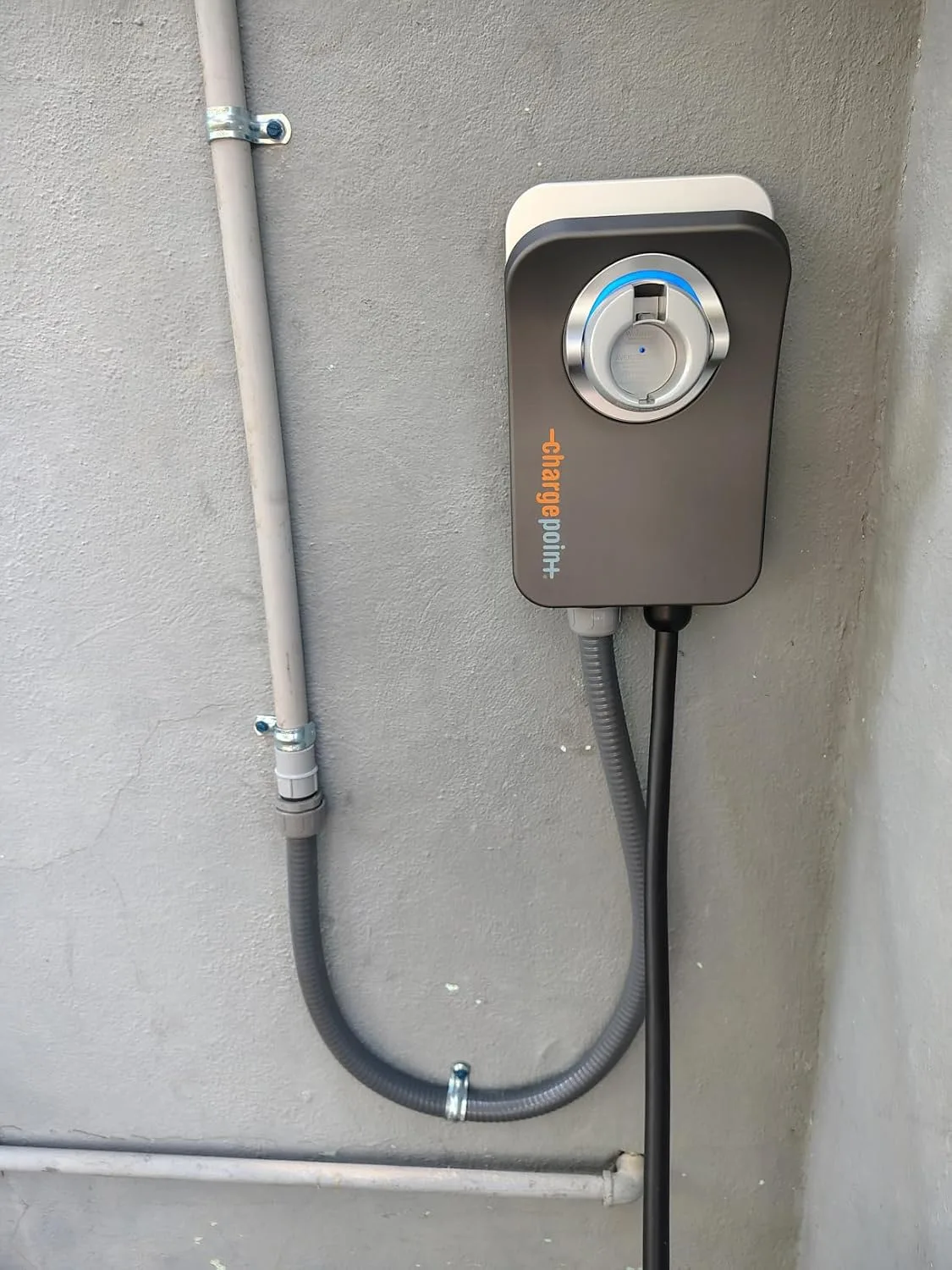
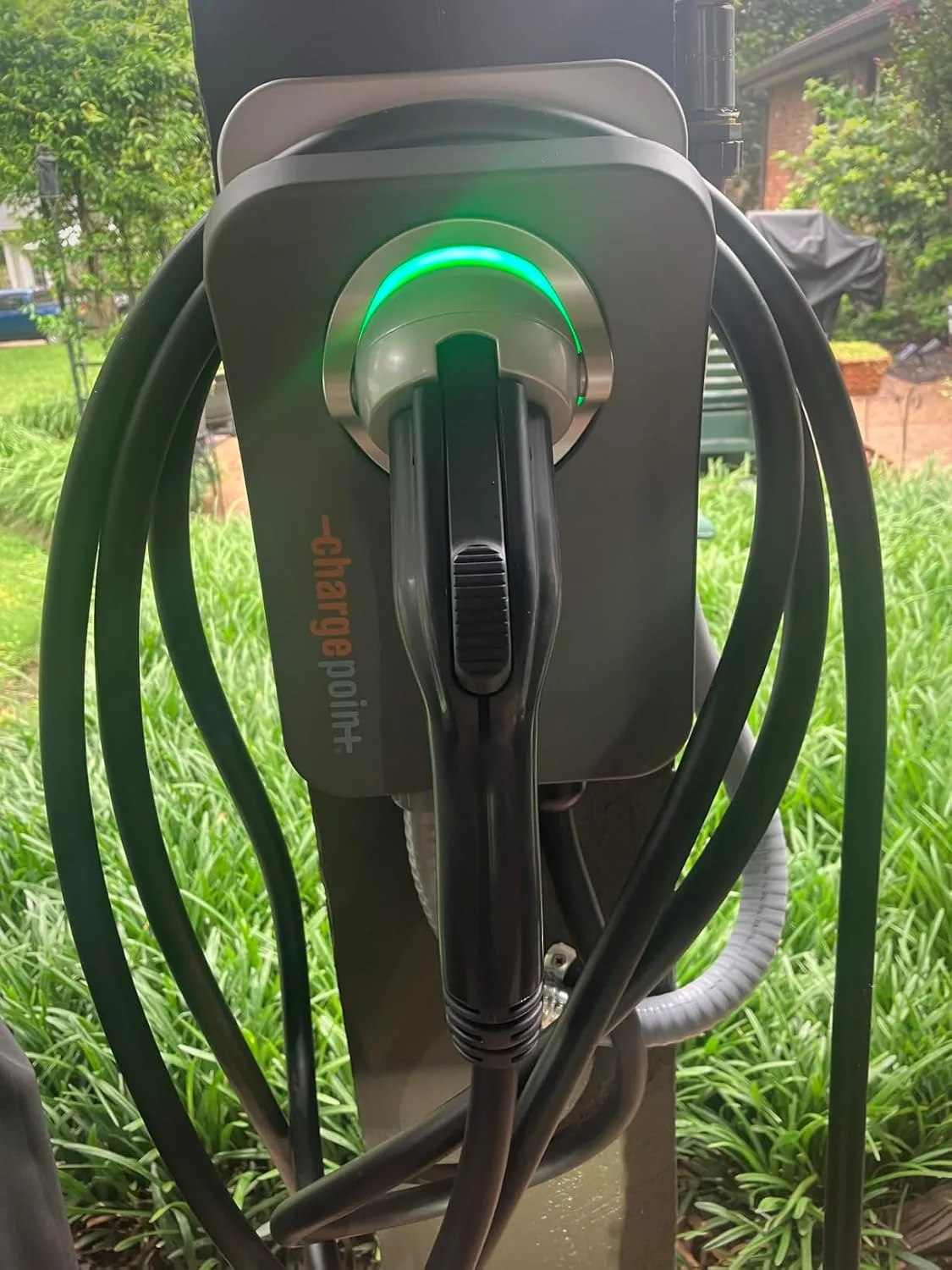
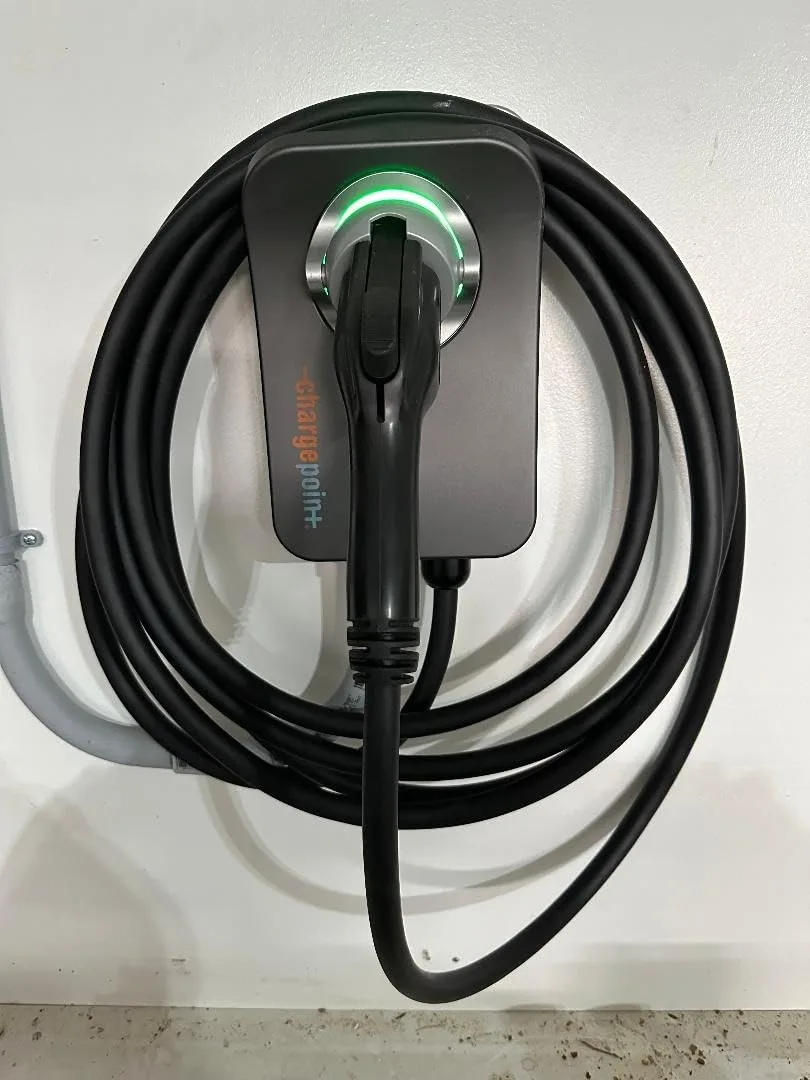
After that first shock on my electric bill, I knew Level 1 wasn’t going to cut it long-term. The problem: I needed something reliable that wouldn’t require a full electrical panel upgrade, but would actually shift my charging costs in the right direction. That’s when I installed the ChargePoint HomeFlex in my own garage.
What works
- Hardwired to a 240V circuit, which cuts charging time from 8-10 hours down to 4-6 hours on a standard residential setup — the difference between overnight charging and actually viable daily driving
- The app integration lets me track exactly what I’m spending per charge cycle, so I stopped guessing about my actual per-mile electricity cost and can actually see when off-peak charging saves money
- Installation was straightforward for a licensed electrician, but the unit itself is built solid — three years in, zero firmware issues or connection drops
What doesn’t
- The upfront cost (equipment plus installation labor if you hire someone) runs $600–$1,200 depending on how far your breaker panel is from where you want it mounted
- You absolutely need 240V service available or a dedicated circuit run — there’s no way around it, and renters or apartment dwellers aren’t going to get approval for this
I’ll be honest: I almost talked myself out of the installation cost because the math seemed steep at first glance. But the second month of actual data showed me I’d cut my EV charging costs by 65% compared to Level 1, and the payback period was closer to 18 months than the five years I’d pessimistically assumed. Get the ChargePoint HomeFlex Level 2 EV Charger if you’re planning to keep your EV long-term.
Frequently Asked Questions
How many miles per hour does Level 1 charging add to an EV?
Level 1 charging delivers roughly 1.2 to 1.4 kW and adds about 3 to 5 miles of range per hour. At that rate, a 40-mile daily commute requires 8 to 13 hours of overnight charging to recover your range.
What’s the difference between Level 1 and Level 2 charging speed?
Level 1 uses 120V and adds 3 to 5 miles per hour. A 40-amp Level 2 charger runs on 240V, delivers around 9.6 kW, and adds 20 to 30 miles per hour, bringing most EVs from near-empty to full charge in 4 to 8 hours.
What electrical installation is required for a Level 2 charger?
Under NEC Article 625, EV charging equipment must be installed on a dedicated branch circuit. NEC 625.17 requires the circuit to be rated at 125% of the continuous load—for a 40-amp Level 2 charger, that means a 50-amp dedicated circuit minimum.
About This Article

Written by Marc Reeves. Marc Reeves is an electrician with 12 years of hands-on residential and light commercial experience. He started Panels & Plugs to help homeowners make smarter decisions about their electrical systems and renewable energy upgrades, including knowing exactly when a job needs a permit and a licensed pro. More about this site.
Scope and limits. Marc is a homeowner who studies residential electrical systems, not an electrician. Anything behind the panel, on a hardwired circuit, or subject to permit and inspection belongs with a licensed electrician.
Verify this against a primary source
Specifics change, and your situation may differ from the one described here. These are the authorities worth checking directly:
- NFPA — the National Electrical Code (NFPA 70)
- Electrical Safety Foundation — residential electrical safety guidance
- CPSC — product recalls and electrical hazard notices