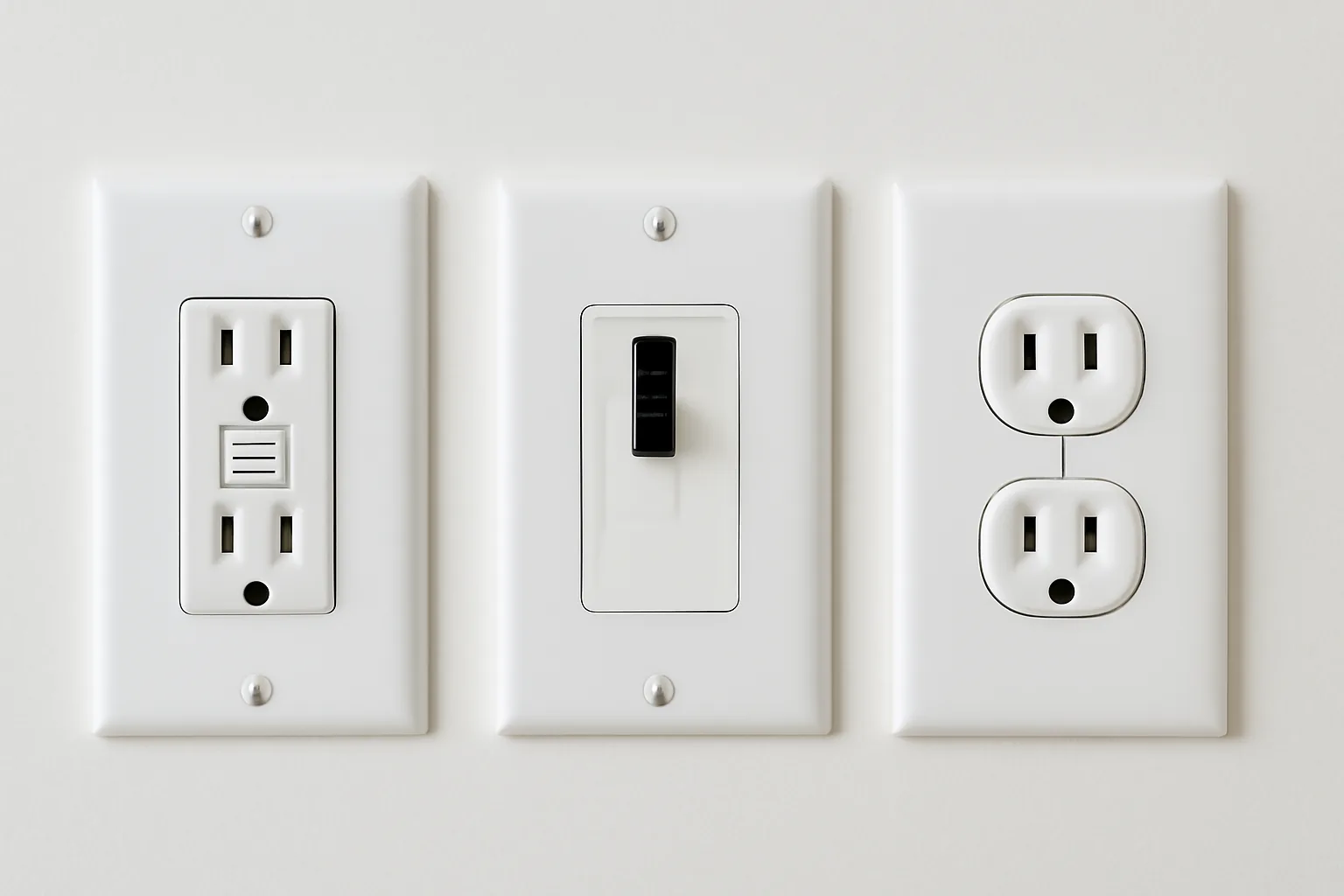

Last year, a homeowner called me out to troubleshoot a tripped breaker in her newly renovated bathroom. When I opened the panel, I immediately saw the problem — her contractor had installed a standard AFCI breaker where a GFCI outlet was required. It’s one of the most common mix-ups I see on the job. If you’re searching for clear answers on GFCI vs AFCI outlet where to use, you’re asking exactly the right question. Getting this wrong isn’t just a code violation — it’s a genuine safety hazard.
I’ve been a licensed electrician for 12 years. In that time, I’ve wired hundreds of homes, pulled permits in four states, and seen every variation of this confusion play out in the field. The short version: GFCI protects people from electrocution near water. AFCI protects people from electrical fires caused by arc faults in wiring. Dual-function outlets do both. Each one belongs in specific rooms — and the 2023 NEC spells it out clearly.
This post breaks it all down by room, by code, and by real-world installation experience. No vague “it depends” answers. Just straight answers backed by 12 years of field work.
What GFCI Actually Does — And Why It Matters
A Ground Fault Circuit Interrupter monitors the current flowing through a circuit. Specifically, it compares the current going out through the hot wire to the current returning through the neutral wire. If there’s a difference of just 5 milliamps or more, it trips in about 1/40th of a second. That’s fast enough to stop your heart from going into fibrillation from an electrocution event.
Water is the main enemy here. When water creates an unintended path to ground — like a plugged-in hair dryer falling into a sink — the GFCI detects that leak and cuts power instantly. Standard breakers won’t catch this. They’re designed to trip under far higher current loads. A GFCI is your last line of defense in wet environments.
In my experience, most homeowners don’t realize that one GFCI outlet can protect an entire downstream circuit. That’s the “load” side wiring I use on almost every bathroom installation. You wire the GFCI outlet first, then daisy-chain additional standard outlets from its load terminals. One outlet protects them all — which saves real money on multi-outlet runs.
What AFCI Does — And Why It’s Different
An Arc Fault Circuit Interrupter detects a different kind of danger entirely. Arc faults happen when electricity jumps across a gap — think a nail through a wire inside a wall, a pinched cord under furniture, or old wiring with cracked insulation. These arcs generate intense heat and can ignite wood framing or insulation before any smoke detector would trigger.
The first time I pulled apart a wall after an electrical fire, the damage started at a wire pinched behind a baseboard. The AFCI breaker that should have been there wasn’t — it was an older home, pre-2008 code requirements. That’s when this technology became real to me. Not theoretical. Real.
AFCI protection is now required by the 2020 and 2023 NEC in virtually all habitable rooms — bedrooms, living rooms, dining rooms, hallways, and more. It’s typically delivered at the breaker level, not the outlet level. However, AFCI outlets do exist and can be used in specific retrofit situations where replacing the breaker isn’t practical.
GFCI vs AFCI Outlet Where to Use: A Room-by-Room Breakdown
This is the section most people need. Let me walk through each area of the home and tell you exactly what code requires — and what I personally install.
Bathrooms
GFCI protection is required at every bathroom receptacle. Full stop. The 2023 NEC (Section 210.8(A)(1)) is unambiguous on this. I install 20-amp GFCI outlets in every bathroom I wire — even if the circuit is 15-amp — because bathroom circuits are required to be 20-amp dedicated circuits. Matching the amperage rating eliminates any compatibility issues.
You do not need AFCI protection in bathrooms under most circumstances. Bathrooms are specifically carved out in NEC 210.12. That said, some local jurisdictions have amended this. Always check your local amendments before pulling a permit.
Kitchens
Kitchens require GFCI protection for all receptacles within 6 feet of a sink. The 2023 NEC expanded this — now essentially all countertop receptacles need GFCI protection, not just those near the sink. The small appliance circuits (two 20-amp dedicated circuits) both require GFCI coverage.
Kitchens also require AFCI protection in many jurisdictions adopting the 2020 or 2023 NEC. This is where dual-function outlets or dual-function breakers become the right call. I’ll cover those in a moment. For new kitchen builds, I almost always specify dual-function breakers at the panel rather than dual-function outlets at the receptacle — it’s cleaner and less expensive per circuit.
Bedrooms
Bedrooms are ground zero for AFCI requirements. The 2002 NEC first required AFCI in bedrooms, and it’s been expanding ever since. Today, GFCI is not required in bedrooms unless there’s a wet bar or sink present. AFCI is absolutely required. I handle this at the breaker — typically a 15-amp AFCI breaker runs the bedroom circuit.
Garages, Outdoors, and Crawl Spaces
GFCI protection is required in garages, outdoors, and accessible crawl spaces. These are wet or potentially wet environments. No AFCI requirement applies here under the base NEC, though again, check local amendments. I use 20-amp GFCI outlets in garages because most power tools draw significant amperage. A 15-amp GFCI will nuisance-trip constantly under tool loads.
Living Rooms, Dining Rooms, and Hallways
These spaces require AFCI protection under the 2020/2023 NEC. GFCI is generally not required unless the room has a wet bar or similar feature. Standard outlets behind AFCI breakers are the typical solution. However, if you’re doing a retrofit in an older home without AFCI breakers, an AFCI outlet device at the first outlet in the run is a code-compliant alternative under NEC 210.12(D).
When You Need Dual-Function Protection
Dual-function devices combine both GFCI and AFCI protection in one unit — either a breaker or a receptacle. These are required wherever both hazards exist. Specifically, kitchens, laundry areas, and sometimes finished basements in newer code cycles require both types of protection simultaneously.
Dual-function breakers run about $45–$65 each versus $8–$15 for a standard breaker. That’s a significant cost increase. However, when both protections are needed, there’s no workaround. I learned this the hard way on a 2019 kitchen remodel where I installed separate GFCI outlets and a standard AFCI breaker. The inspector flagged it immediately. A dual-function breaker would have been the correct call from the start — and would have saved me a re-inspection fee and a half-day callback.
Dual-function outlets (receptacle style) cost around $25–$40 each. They’re useful in retrofit situations where the panel is inaccessible or where installing a new breaker isn’t practical. They’re not my first choice for new construction, but they’re a legitimate and code-compliant solution in the right context.
The GFCI Outlet That Finally Stopped Me Second-Guessing My Bathroom Installs
Once you understand the difference between GFCI and AFCI, you need an outlet you can trust to actually work — especially in wet areas where people’s lives depend on it. The self-test feature on this one has saved me from shipping a bad unit to a job site more than once.
What works
- Built-in self-test button lets you verify the outlet is actually protecting before you close up the wall — no guessing, no callbacks.
- The 20-amp rating handles bathroom vanities, heated towel racks, and hair dryers without nuisance trips that drive homeowners crazy.
- Reset is smooth and consistent — I’ve used these on dozens of installs and they don’t develop the sticky feeling cheaper units get after a year or two.
What doesn’t
- It’s a single outlet, not a dual-function unit — so you’ll still need separate AFCI protection on the circuit if your local code requires arc-fault detection in the bathroom.
- The test button is a little stiff out of the box; takes a few presses before it feels natural, which means you might worry you’re doing it wrong the first time.
I once installed a batch of cheaper GFCIs on a renovation and had three of them fail the self-test within weeks — that’s when I switched to these and haven’t looked back. Grab the ELEGRP GFCI Outlet 20 Amp with Self-Test if you want an outlet that actually proves it’s protecting.
This post contains affiliate links. As an Amazon Associate, I earn from qualifying purchases at no extra cost to you.
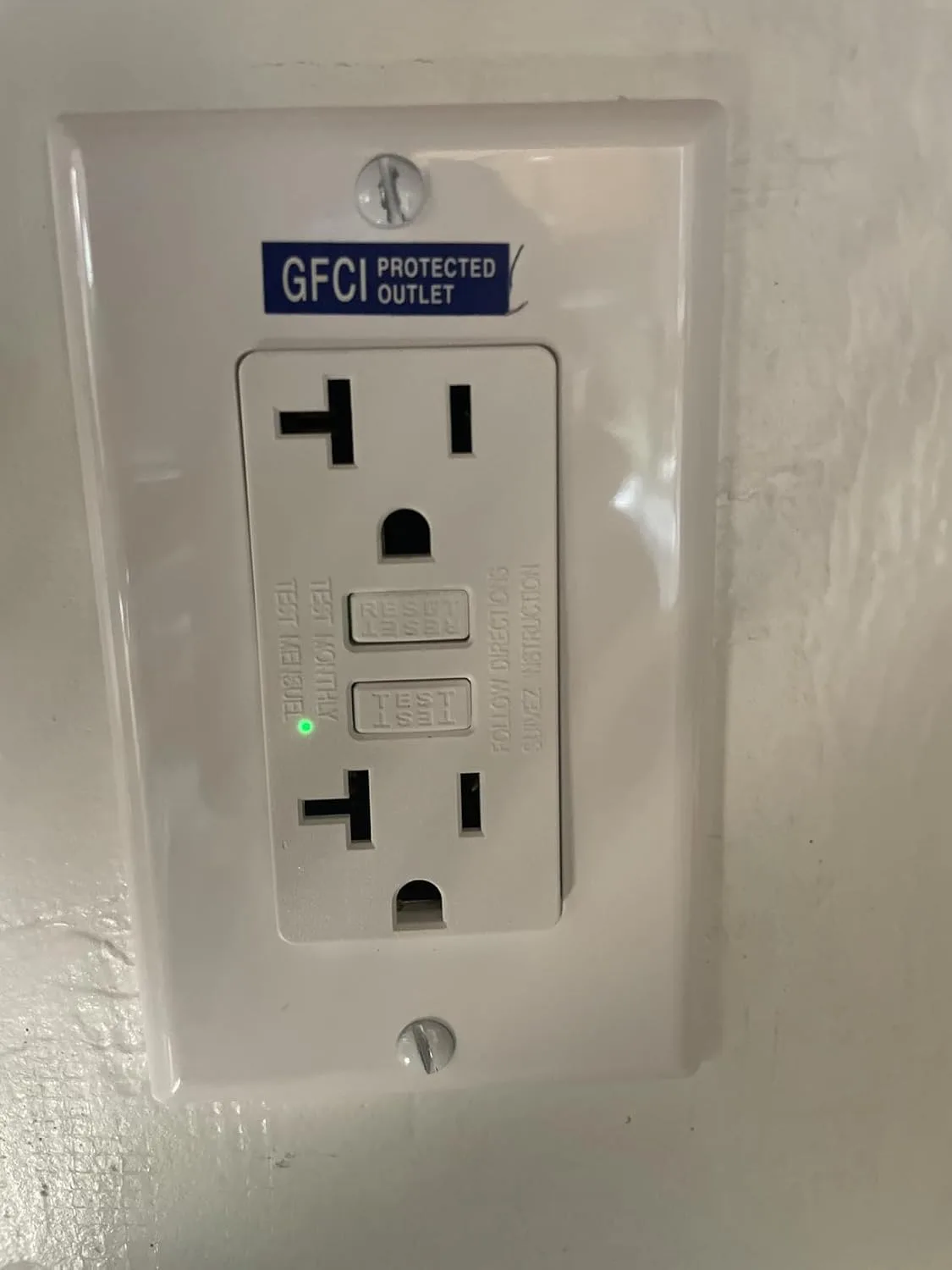
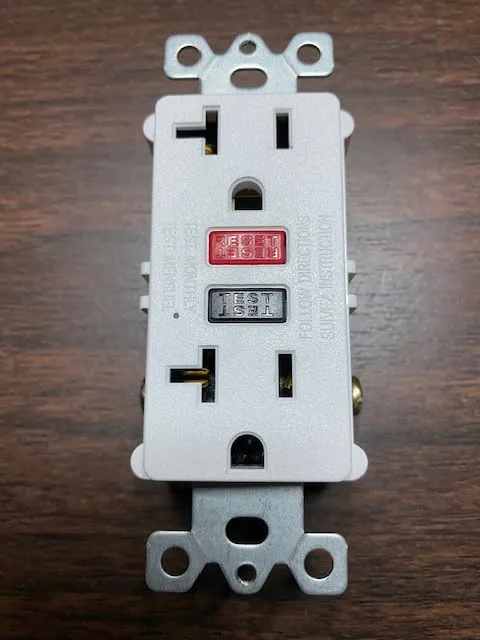
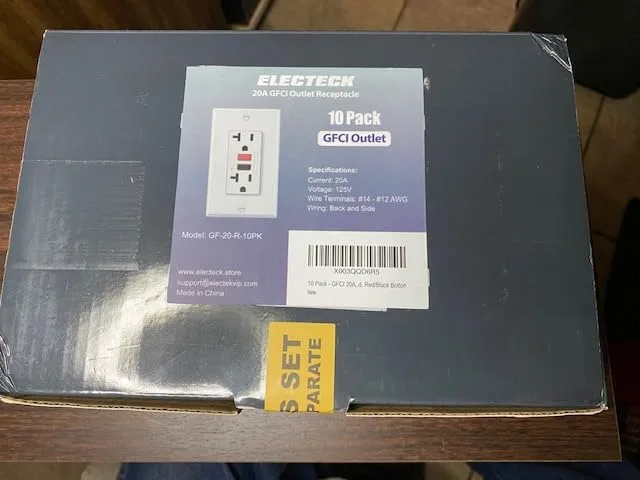
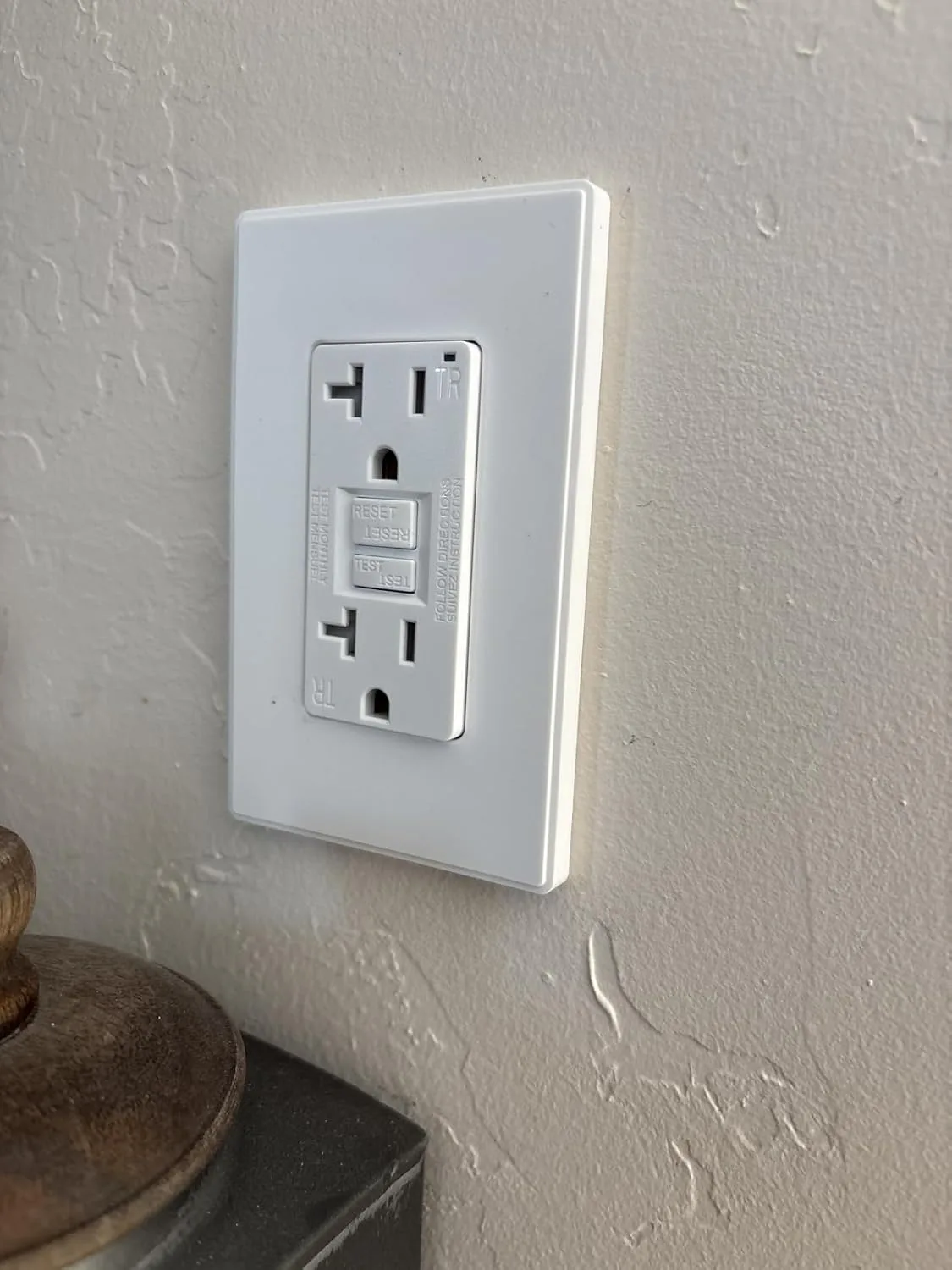
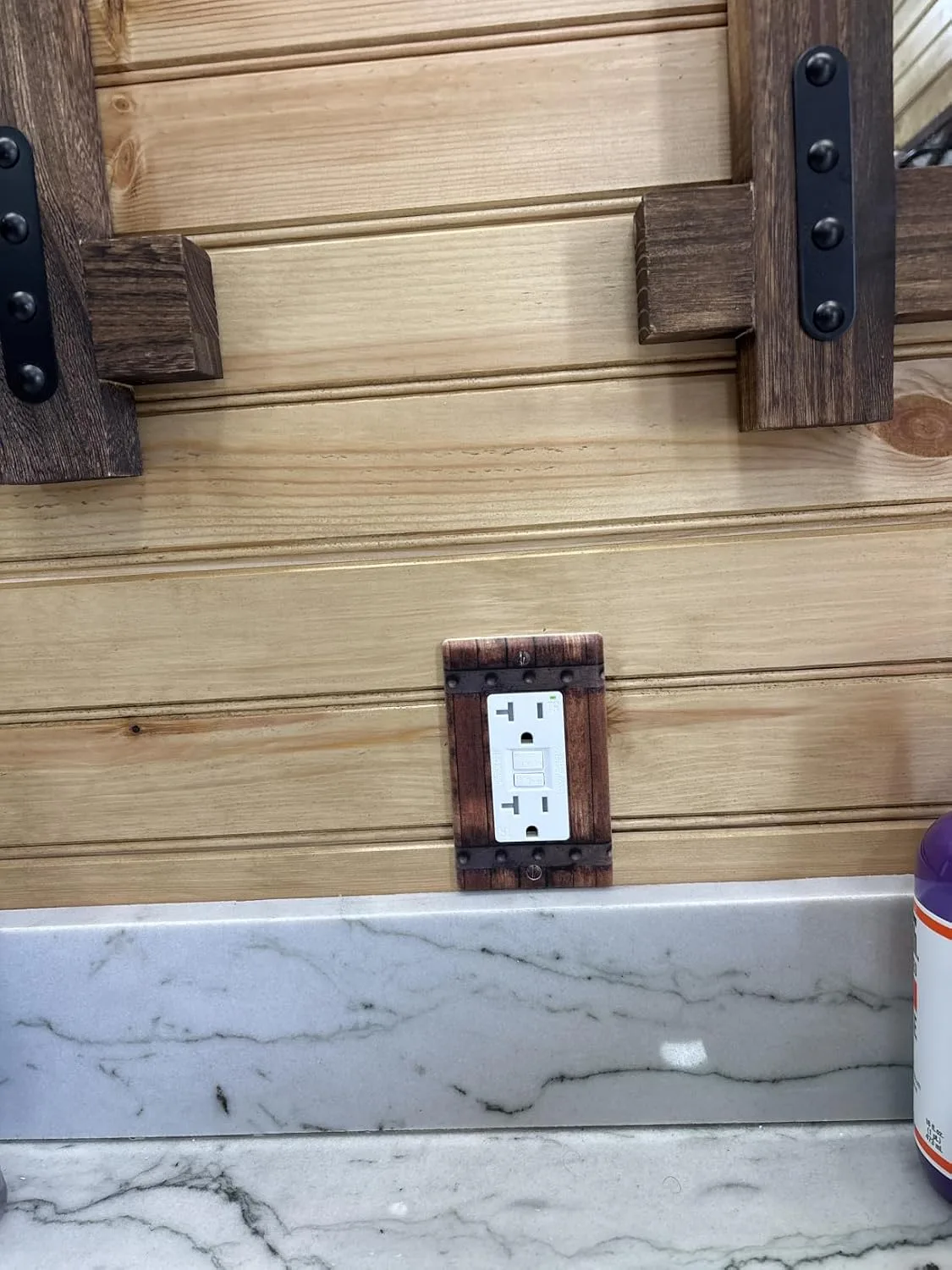
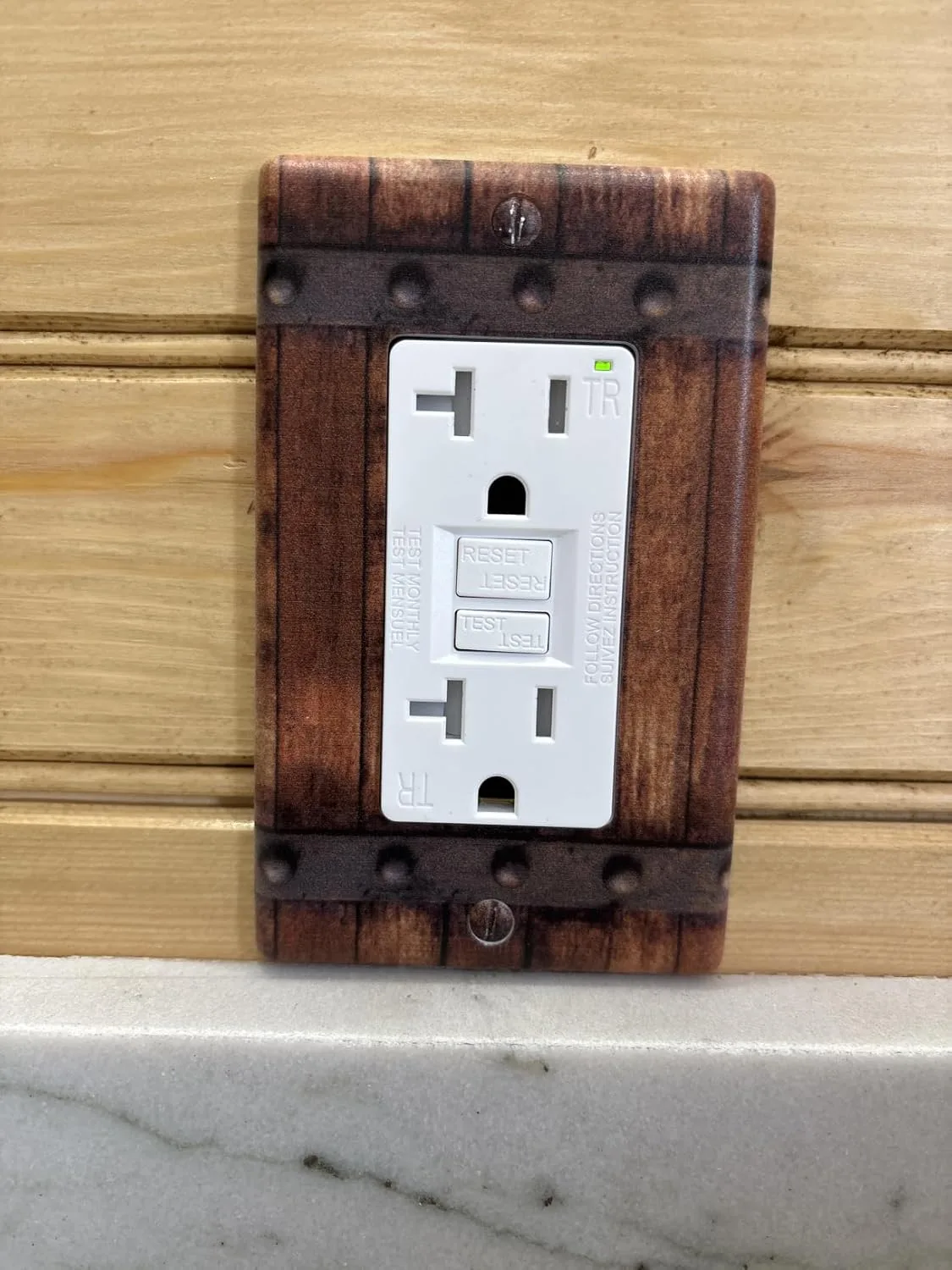
ELEGRP GFCI Outlet 20 Amp with Self-Test
I’ve installed these dozens of times and the reset never gets sticky like cheaper units after a year.
Check Price on Amazon →