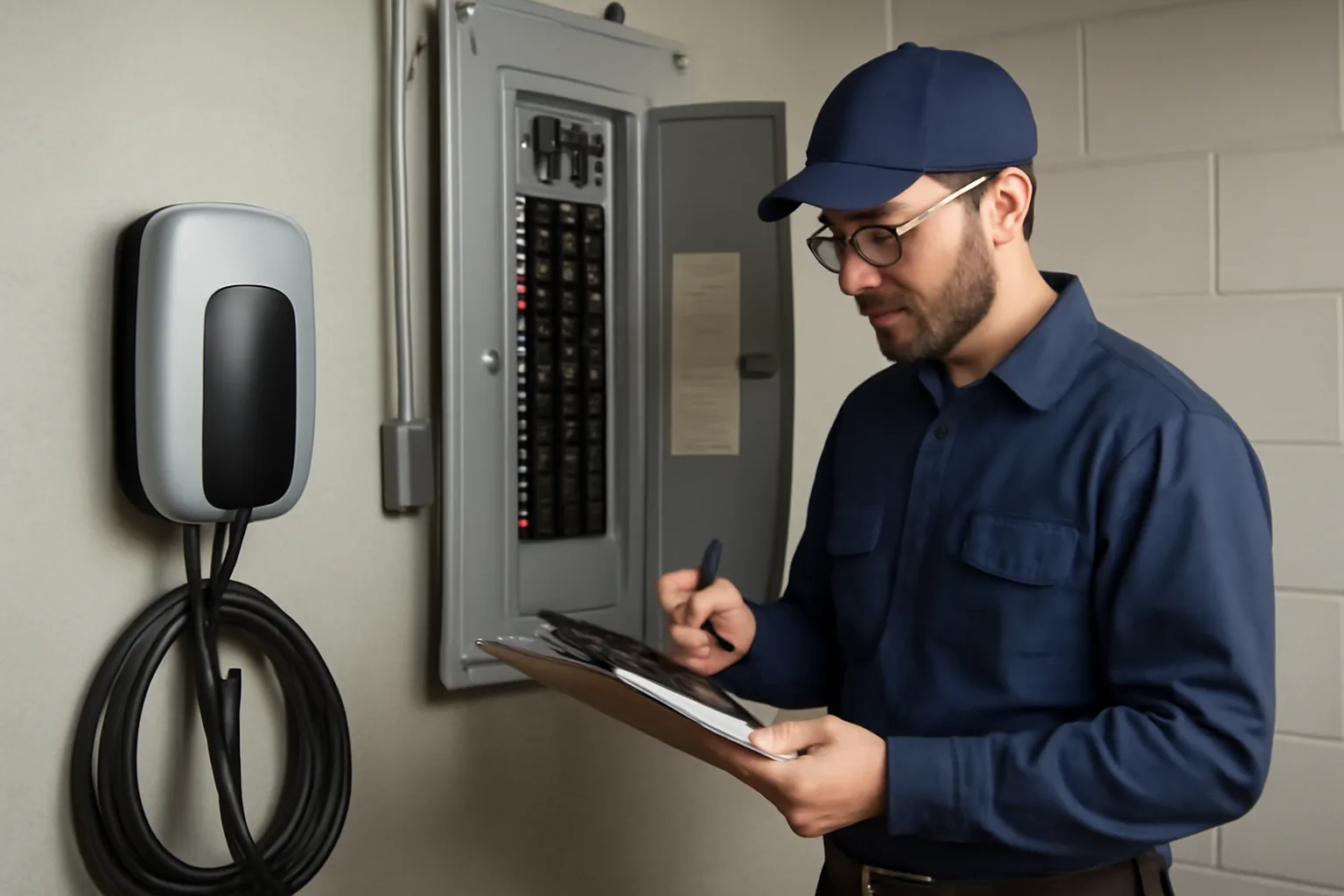

Last fall, a homeowner called me in a panic. His electrician had just quoted him $4,200 for a full panel upgrade before installing a Level 2 EV charger. He wanted a second opinion. After running a proper panel upgrade for EV charger load calculation, I told him the honest truth: he didn’t need a new panel at all. A 50-amp circuit was perfectly safe to add. That phone call saved him over $3,500. Situations like that one are exactly why I wrote this post.
Too many homeowners get upsold on panel upgrades they simply don’t need. Contractors sometimes jump straight to “you need a 200-amp panel” without ever doing the math. In my 12 years as an electrician, I’ve seen this play out dozens of times. The fix is straightforward: run the load calculation first, then make the decision.
In this post, I’ll walk you through exactly how I calculate available capacity before adding an EV charger. I’ll show you the real numbers, reference the NEC requirements, and tell you when a panel upgrade is genuinely necessary. Let’s get into it.
What a Load Calculation Actually Tells You
A load calculation isn’t guesswork. It’s a structured method — defined in NEC Article 220 — for determining how much electrical load a panel can safely carry. Specifically, it compares your panel’s rated capacity against the total demand of your home’s circuits. The result tells you whether you have headroom for a new load like an EV charger.
Here’s the core concept: your 200-amp panel isn’t actually delivering 200 amps at all times. Most homes run at 40–60% of their panel’s rated capacity under normal conditions. That leftover capacity is what we’re looking for. A Level 2 EV charger on a dedicated 50-amp circuit draws a continuous load of 40 amps — that’s 80% of the breaker rating, per NEC 625.42 and the continuous load rule under NEC 210.20.
So the real question becomes: does your panel have 40+ amps of spare capacity after accounting for everything else? That’s what the math tells us. And honestly, it’s not complicated once you know the steps.
Panel Upgrade for EV Charger Load Calculation: Step-by-Step
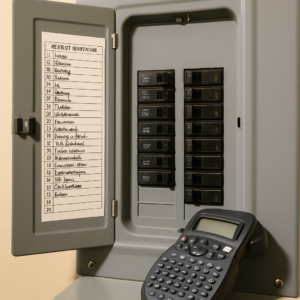
I use a standard residential load calculation every single time before recommending anything to a client. Here’s the simplified version I walk through on-site. Grab your panel schedule and follow along.
Step 1 — Find Your Panel’s Total Rated Capacity
Check the main breaker. Most homes have either a 100-amp or 200-amp service. Multiply that by 240 volts to get total volt-amps (VA). A 200-amp panel gives you 48,000 VA of total capacity. That’s your ceiling.
Step 2 — Calculate Your General Lighting and Small Appliance Load
Per NEC 220.12, general lighting load is calculated at 3 VA per square foot of living space. A 2,000-square-foot home equals 6,000 VA for lighting. Add 1,500 VA for each small appliance circuit (typically two required) and 1,500 VA for the laundry circuit. That’s another 4,500 VA. Apply the demand factor from NEC Table 220.42 — 100% of the first 3,000 VA, then 35% of the remainder.
Step 3 — Add Your Fixed Appliance Loads
List every major fixed appliance: HVAC, electric water heater, electric range, dryer, and dishwasher. Use nameplate ratings when available. For example, a 4-ton heat pump might draw 5,000 VA. An electric water heater typically runs 4,500 VA. An electric range often hits 8,000–12,000 VA. Add them all up. Apply a 75% demand factor to fixed appliances per NEC 220.53 if you have four or more.
Step 4 — Compare Total Load Against Panel Capacity
Add up all your loads. Divide the total VA by 240 volts to get amps. If that number — plus the 40-amp continuous EV charger load — falls below your panel’s rating, you’re good to go. No upgrade needed. In my experience, a 200-amp panel serving an all-electric home with a 2,500-square-foot footprint often lands around 130–160 amps of calculated demand. That leaves real headroom for an EV circuit.
I learned this the hard way back in 2016. I was three years into my license, and I advised a client to upgrade their panel before I’d actually run the numbers. A senior electrician on the job laughed — kindly — and showed me the calc. We had 55 amps of spare capacity. I’ve never skipped the math since.
When You Genuinely Do Need a Panel Upgrade
I’m not here to pretend panel upgrades are never necessary. Sometimes they absolutely are. Here’s what I watch for in the field.
First, check your service size. A 100-amp panel serving a modern all-electric home is already under stress before you add anything. If your calculated load exceeds 80 amps and you want to add a 40-amp continuous EV load, you’re past the safe limit. That panel needs to be upgraded — full stop. A 200-amp service upgrade typically runs $1,500–$3,000 depending on your area and whether the utility needs to upgrade the meter base.
Second, look at your physical panel space. Even if the math works, you need an open double-pole breaker slot for a 50-amp circuit. If your panel is tandem-breaker’d to capacity with zero open slots, you have a space problem. However, this doesn’t always mean a full upgrade. A subpanel in the garage — often $600–$900 installed — can solve this without touching your main service.
Third, consider future load growth. If you’re adding a second EV, a heat pump, or planning a kitchen remodel, it may make economic sense to upgrade now rather than return in two years. That’s a conversation worth having with your electrician before any work begins.
The Load Calculation Tool That Makes Panel Upgrades Predictable
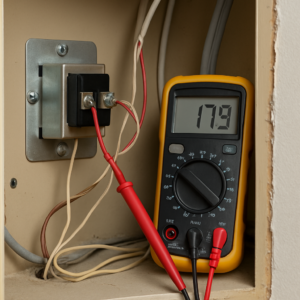
Before you commit to a panel upgrade, you need accurate data on your home’s actual demand. This digital load calculation device eliminates guesswork and shows electricians exactly what capacity you’re working with.
What Works
- Provides precise amperage readings that inform panel upgrade decisions and EV charger sizing
- Eliminates costly over-specification by measuring actual loads instead of theoretical maximums
- Professional-grade accuracy helps justify upgrade costs to both electricians and homeowners
What Doesn’t
- Requires basic electrical knowledge to interpret readings safely—not a plug-and-play solution for DIYers
- Won’t replace a licensed electrician’s professional load calculation for final code compliance
Check current pricing on Amazon. Disclosure: As an Amazon Associate I earn from qualifying purchases.
current pricing
I measured my real load instead of guessing, and saved thousands by skipping an unnecessary upgrade.
Check Price on Amazon →