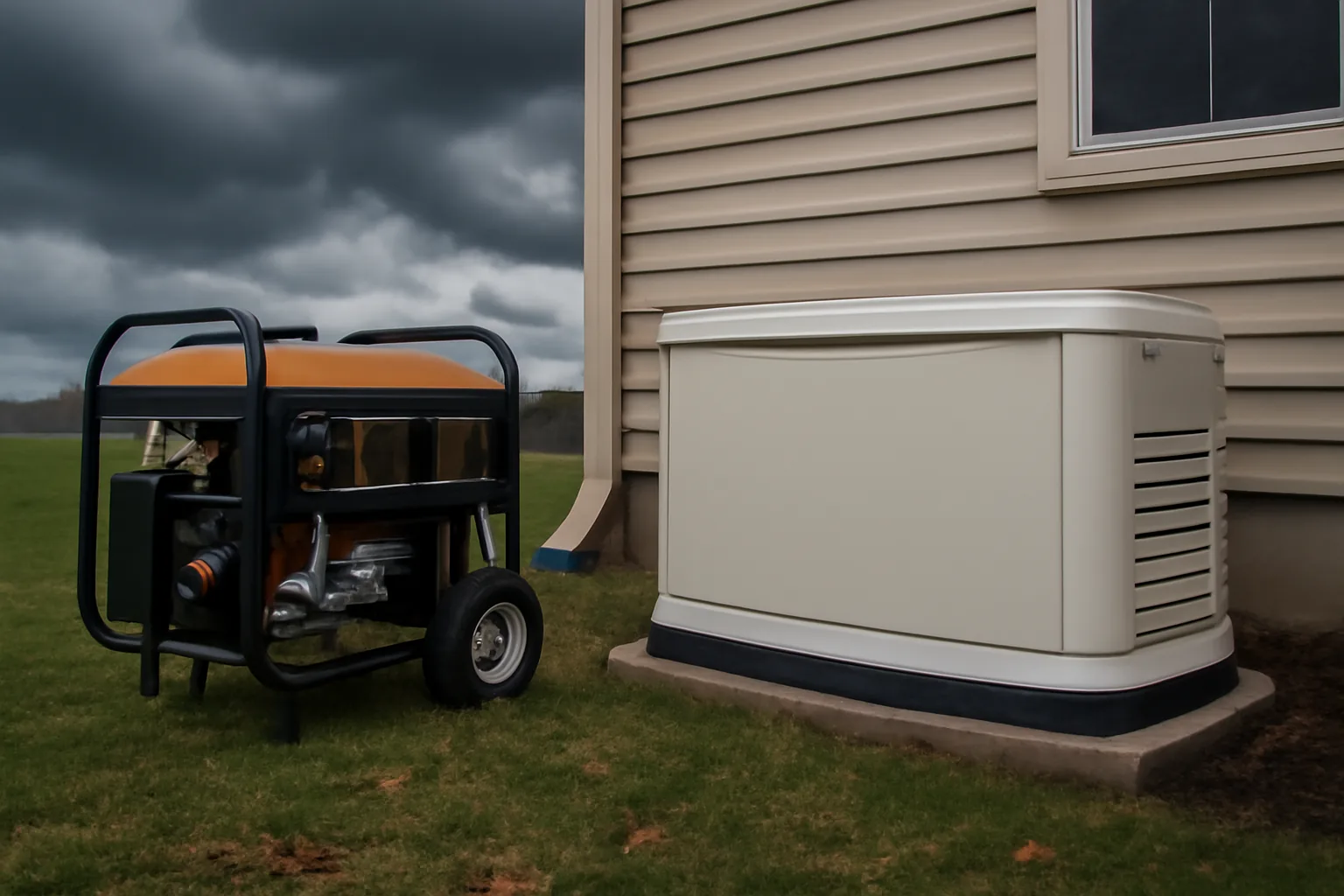
The portable vs standby generator debate comes up in nearly every conversation I have with homeowners after a bad storm season. And honestly, most people come in with the wrong assumptions before we even start talking. They think standby is always better, or that portable means “good enough for camping.” Neither of those things is true — and making the wrong call can cost you thousands of dollars or leave you without power when you need it most.
I’ve been doing my own electrical work for 12 years. In I’ve made the mistake of recommending undersized generators early on, and I watched homeowners realize mid-outage that they couldn’t run the appliances that mattered most to them. that time, I’ve helped install a good number of standby generator systems, wired plenty of transfer switches, and personally owned three portable generators. I’ve seen both types fail at the worst moments, and I’ve seen both types perform flawlessly for decades. What I haven’t seen is a single answer that works for every homeowner. That said, I can absolutely tell you which factors determine the right choice — and I’ll give you my honest recommendation for most households by the end of this post.
Let’s break this down the way I’d explain it standing in your driveway after a site visit. No fluff, no sales pitch — just the information you need to make a smart, safe decision for your home.
| Attribute | Standby Generator | Portable Generator |
|---|---|---|
| Installation cost | $5,000–$15,000 | $500–$1,500 |
| Transfer switch cost | Included in install | $300–$800 |
| Start time after outage | Within seconds (automatic) | 5–15 minutes (manual) |
| Fuel type | Natural gas or propane | Gasoline or propane |
| Typical wattage for essentials | 22 kW (example) | 7,500–12,500 watts |
| Best for medical equipment users | Yes — automatic | No — requires manual start |
| Best for frequent travelers | Yes — runs unattended | No — requires on-site operation |
| Noise level | Not stated | Around 76 dB |
| Portability | Permanently installed | Wheeled; can relocate or evacuate with it |
| Code requirement for home connection | Automatic transfer switch (ATS) | Listed transfer switch or interlock device (NEC Article 702) |
Portable vs Standby Generator: Understanding the Core Differences
A standby generator is a permanently installed unit that sits outside your home, connects directly to your electrical panel via an automatic transfer switch (ATS), and starts itself within seconds of detecting a power outage. It runs on natural gas or propane through a dedicated fuel line. No action required from you — it just works.
A portable generator, by contrast, is a wheeled unit you store in your garage or shed. When the power goes out, you roll it out, add fuel, start it, and connect your loads either through a manual transfer switch or a generator-ready inlet on your panel. It takes 5 to 15 minutes to get running. That time gap matters more than most people realize at 2 a.m. in January.
The cost difference is significant. A quality standby generator with installation runs between $5,000 and $15,000 depending on size and complexity. A capable portable generator runs $500 to $1,500, with transfer switch installation adding another $300 to $800. For many households, that gap in cost is the deciding factor — and that’s a perfectly reasonable place to land.
When a Standby Generator Is the Right Answer
Standby makes sense in specific, concrete situations. If you or someone in your home depends on medical equipment — oxygen concentrators, home dialysis, powered wheelchairs — automatic power restoration isn’t a luxury, it’s a safety requirement. I installed a 22kW Generac for a client in 2021 whose wife used a CPAP and had a basement sump pump. They’d already lost their finished basement once to a flooded sump during an outage. The standby paid for itself the first time it kicked on.
Standby also makes sense if you travel frequently or own a second property. You can’t manually start a portable when you’re in another state. In my experience, remote homeowners and snowbirds almost always need standby — there’s no viable alternative when no one is home to operate the equipment.
Finally, consider your outage frequency. If you live in an area with multiple multi-day outages per year — think rural areas, coastal storm zones, or regions with aging grid infrastructure — the convenience and reliability of standby justifies the premium. However, if your area loses power twice a year for a few hours at a time, a portable generator covers you completely at a fraction of the cost.
When a Portable Generator Is the Smarter Buy
Here’s what I tell most of friends and neighbors: for the average homeowner with a healthy family, occasional outages, and a budget under $3,000 all-in, a portable generator with a proper transfer switch installation is the right call. You get 80% of the protection at 20% of the cost. That math is hard to argue with.
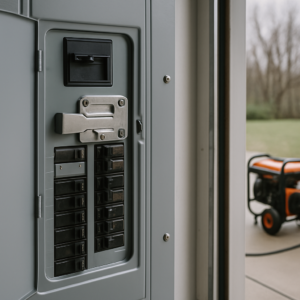
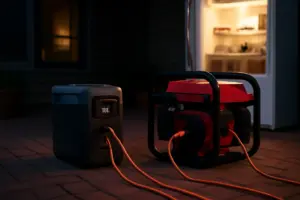
The key word there is “proper.” I’ve seen homeowners run extension cords directly from a portable generator into the house through a window or door. That is a code violation, a fire hazard, and a carbon monoxide risk all wrapped into one. The NEC (National Electrical Code) Article 702 covers optional standby systems, and any connection to your home’s wiring must go through a listed transfer switch or interlock device. Full stop.
I learned this lesson the hard way early on — not my own house, but a call I got from a homeowner who’d backfed their panel without a transfer switch. Fortunately, the utility crew saw the backfeed indicator and cut power to the street before anyone got hurt. That was the last time I treated this as a minor concern. Always use a transfer switch. Always.
How Much Wattage Do You Actually Need?
Sizing is where most people go wrong. They either overbuy (paying for capacity they’ll never use) or underbuy (tripping breakers the first time they turn on the refrigerator and the sump pump simultaneously). Here’s a quick framework I use on job sites:
- Refrigerator: 800–1,200 starting watts, 150–200 running watts
- Sump pump (1/2 HP): 2,150 starting watts, 1,050 running watts
- Window AC (10,000 BTU): 2,200 starting watts, 1,500 running watts
- Furnace blower motor: 2,000 starting watts, 800 running watts
- Lights, phone chargers, router: 300–600 watts running
Add up your running watts first, then identify your largest single starting load. Your generator’s surge (peak) wattage must exceed that starting load on top of everything else already running. For most three-bedroom homes, a 7,500 to 12,500 watt portable generator covers all the essentials comfortably.
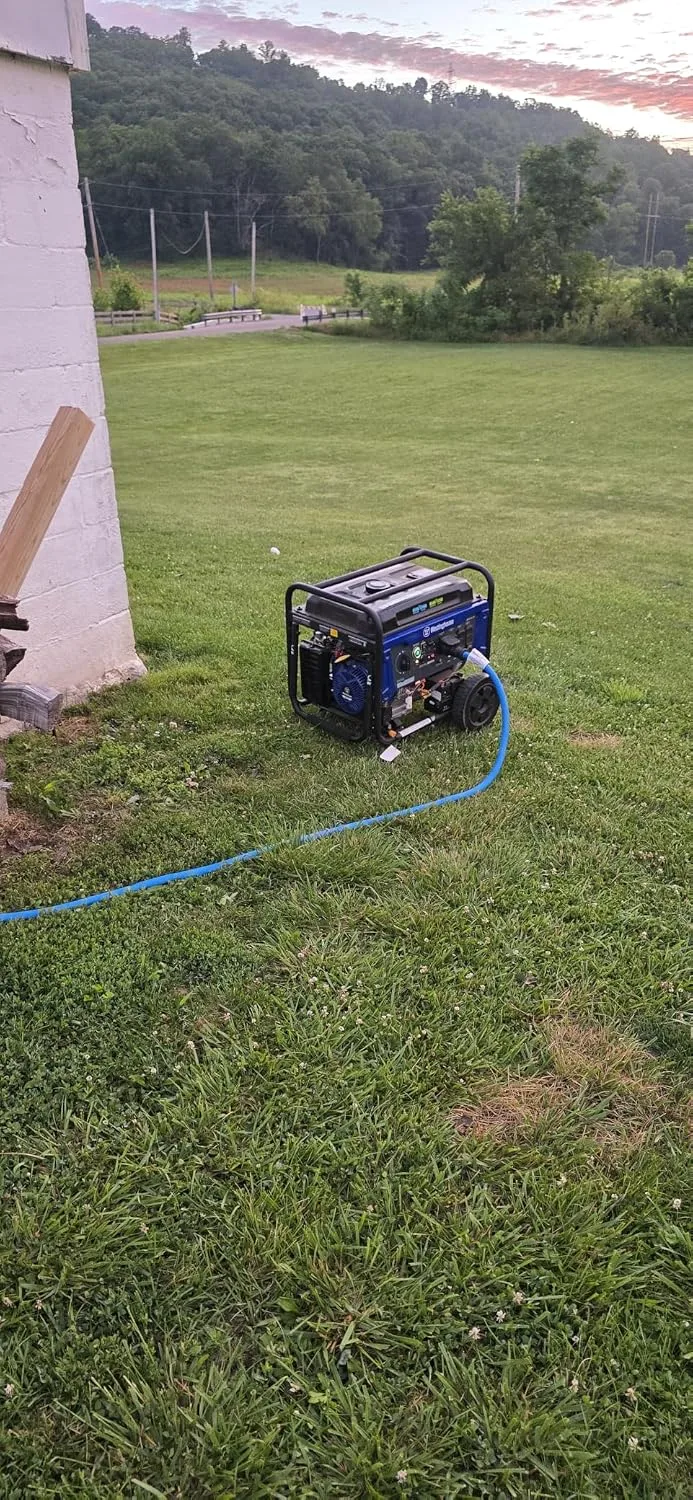
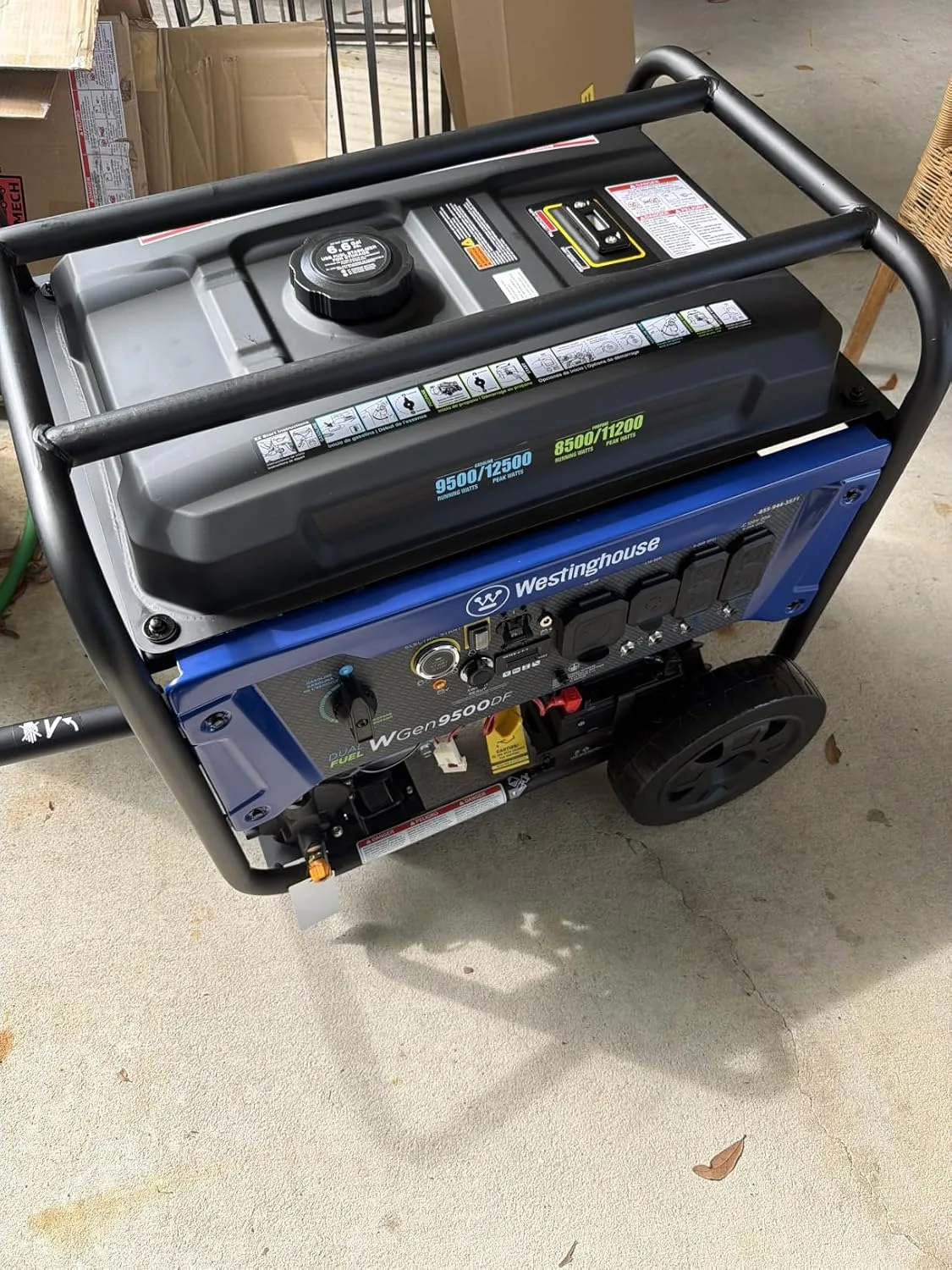
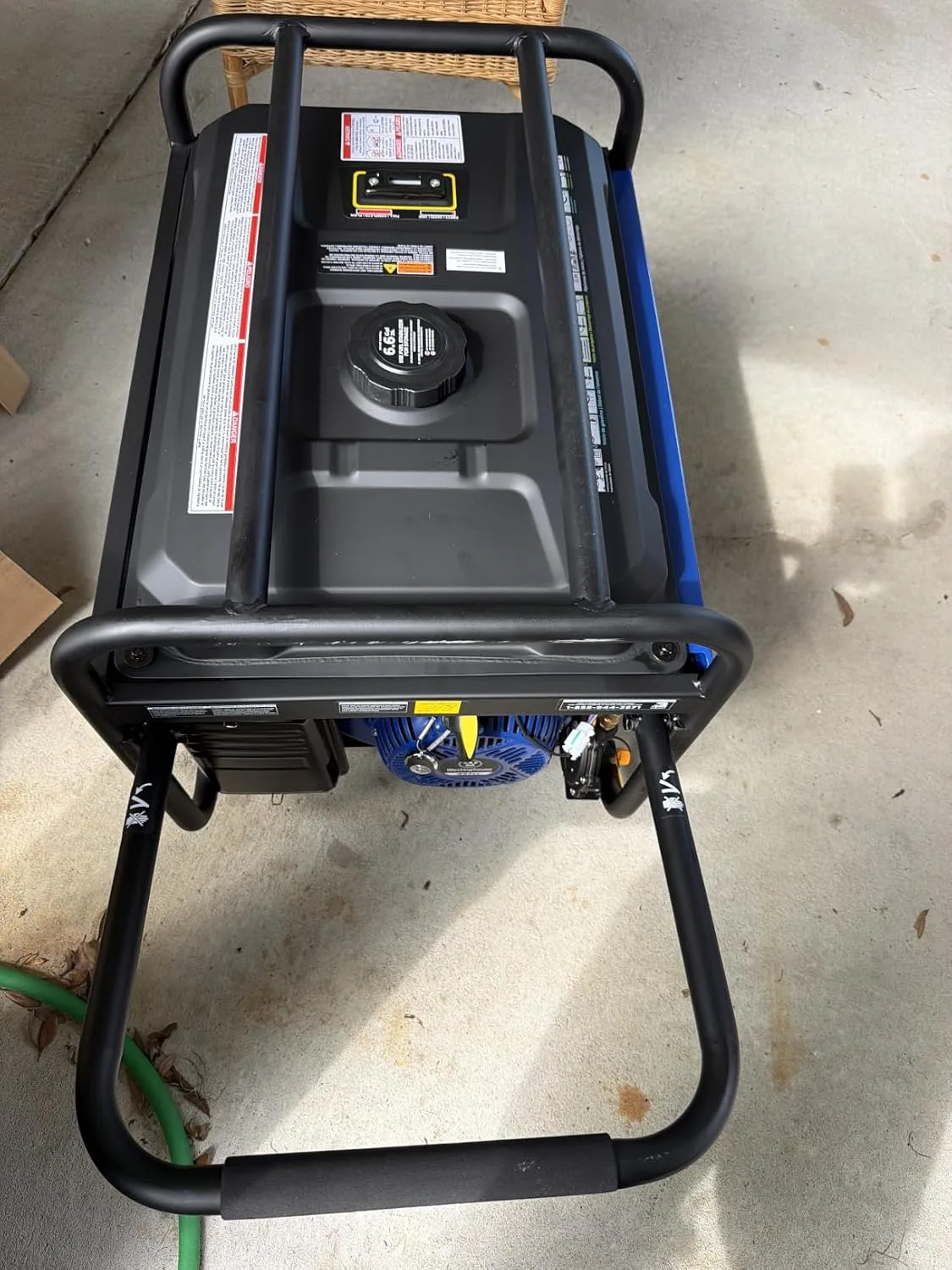
The Portable That Actually Powers a House During an Outage
Most homeowners underestimate what wattage they actually need when the grid goes down. A true portable that can handle real household loads—not just a few outlets—changes the game between a manageable outage and a stressful scramble.
What works
- 12,500 watts of peak power means you can actually run a refrigerator, sump pump, and a few other essentials simultaneously without tripping the breaker or overloading the engine.
- Dual fuel flexibility—propane or gasoline—gives you real peace of mind because propane doesn’t go stale like gas does sitting in your shed for six months between storm seasons.
- Still portable enough to move or reposition if you need to power different parts of your property, or even take it with you if you evacuate—something a standby unit will never do.
What doesn’t
- You have to manually connect it and manage load prioritization—no automatic switchover like a standby unit, so it requires you to think about which circuits matter most during an outage.
- At this wattage, it’s heavy enough that solo setup isn’t ideal, and noise levels run around 76dB, which matters if you’re in a neighborhood or running it overnight.
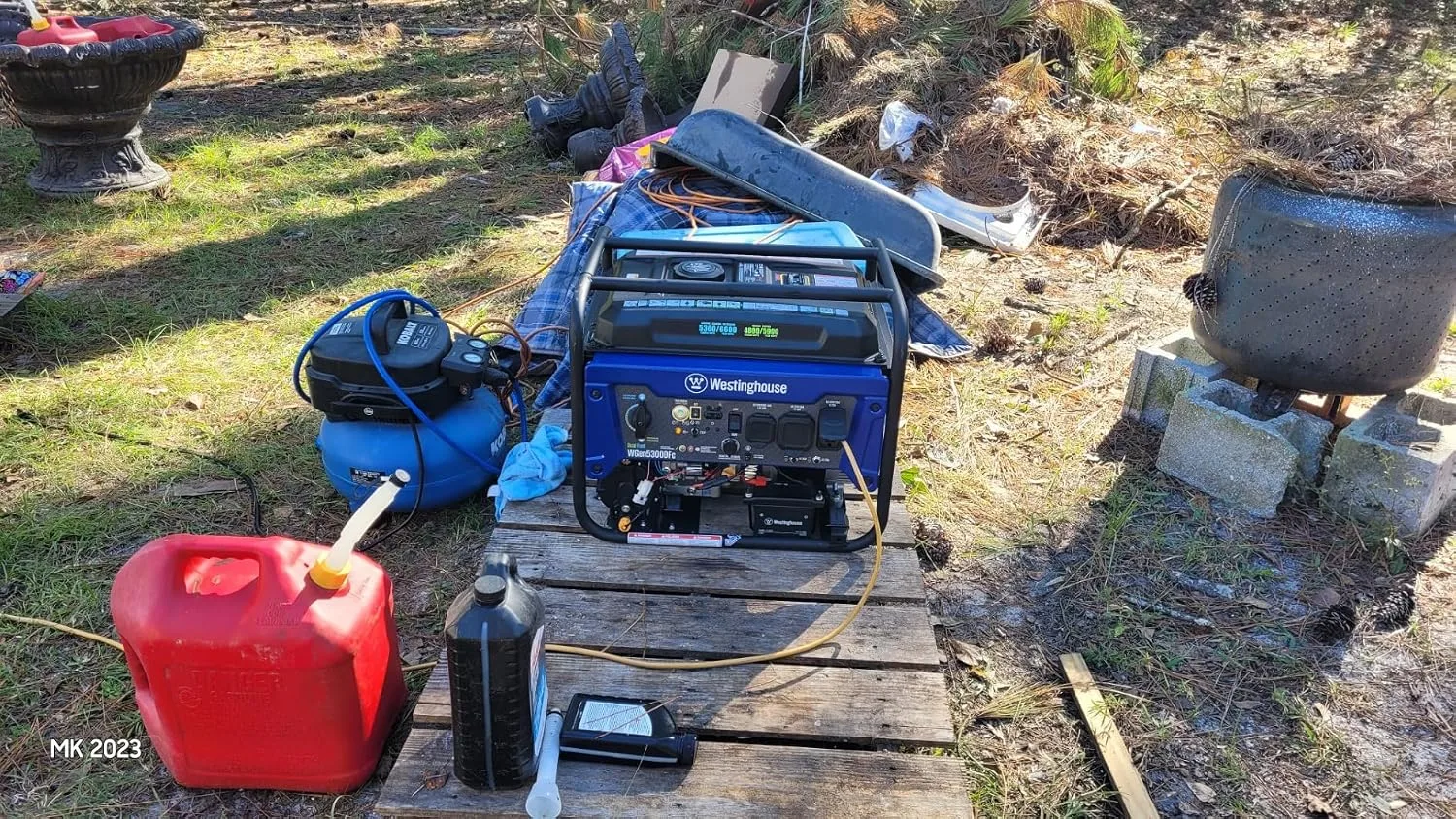
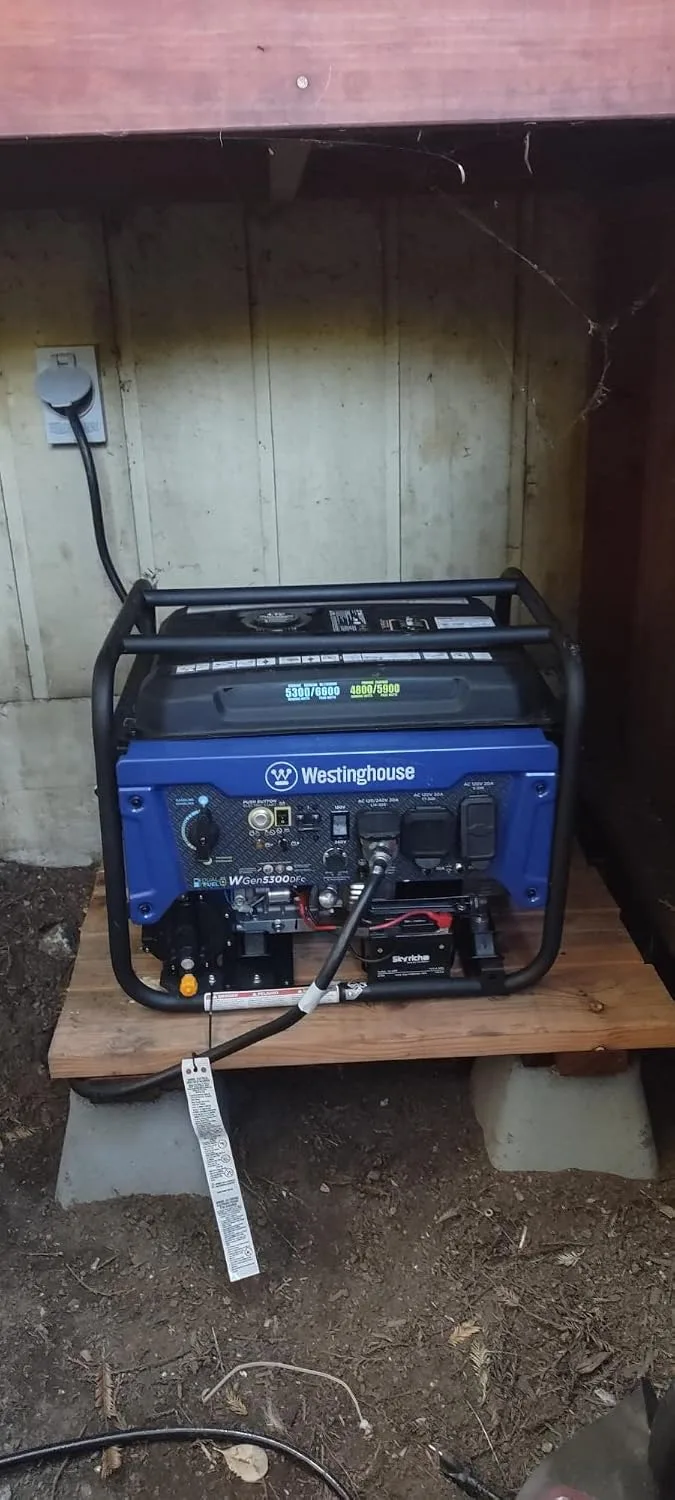
I almost dismissed this class of generator until a client’s three-day outage showed me how quickly backup power becomes the difference between a minor inconvenience and real household stress. Westinghouse 12500 Watt Dual Fuel Home Backup Portable Generator
Frequently Asked Questions
Can I run a portable generator through an extension cord into my house?
No. Running extension cords from a portable generator through a window or door is a code violation, fire hazard, and carbon monoxide risk. NEC Article 702 requires any connection to your home’s wiring to go through a listed transfer switch or interlock device. Always use a proper transfer switch.
What size portable generator do I need for essentials?
Most three-bedroom homes need 7,500 to 12,500 watts. Add your running watts first—refrigerator (150–200), sump pump (1,050), window AC (1,500), furnace blower (800). Then check that peak wattage exceeds your largest starting load on top of running loads to avoid tripping breakers.
When should I buy a standby generator instead of portable?
Buy standby if someone depends on medical equipment like oxygen or CPAP, you’re frequently away from home, or you experience multiple multi-day outages yearly. Otherwise, for average households with occasional outages and budgets under $3,000, a portable with proper transfer switch installation covers essentials at a fraction of the cost.
How much does a standby generator cost installed?
A quality standby generator with installation runs between $5,000 and $15,000 depending on size and complexity. A portable generator costs $500 to $1,500, with transfer switch installation adding another $300 to $800.
About This Article

Written by Marc Reeves. Marc Reeves is an electrician with 12 years of hands-on residential and light commercial experience. He started Panels & Plugs to help homeowners make smarter decisions about their electrical systems and renewable energy upgrades, including knowing exactly when a job needs a permit and a licensed pro. More about this site.
Scope and limits. Marc is a homeowner who studies residential electrical systems, not an electrician. Anything behind the panel, on a hardwired circuit, or subject to permit and inspection belongs with a licensed electrician.
Verify this against a primary source
Specifics change, and your situation may differ from the one described here. These are the authorities worth checking directly:
- NFPA — the National Electrical Code (NFPA 70)
- Electrical Safety Foundation — residential electrical safety guidance
- CPSC — product recalls and electrical hazard notices