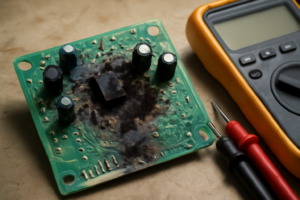
Last spring, I inspected a home where a single lightning strike had taken out the refrigerator, two smart TVs, a gaming console, and the homeowner’s home office computer. Total loss: roughly $6,800 in electronics. Every room had power strips. Some even had strips labeled “surge protector” right on the box. None of it mattered. That’s the conversation I keep having on job sites, and it’s exactly why whole-home surge protection deserves more attention than it gets.
Here’s what 16 years of residential electrical work has taught me: most homeowners genuinely believe a $25 power strip is protecting their equipment. It isn’t. Not even close. A power strip with a built-in MOV — that’s a metal oxide varistor, the component that actually absorbs surge energy — is a small, single-point band-aid on a problem that enters your home through every wire, pipe, and antenna lead connected to your electrical system.
In this post, I’m going to break down why point-of-use strips fall short, how whole-home surge protection actually works, what I personally install and recommend, and where the real danger zones are in a typical residential panel. I’ll also be straight with you about when this is a DIY job and when you need to call someone like me.
What a Power Strip Actually Does (And Doesn’t Do)
A standard power strip is a multi-outlet extension cord. Full stop. It offers zero surge protection. Even the strips marketed as surge protectors rely on small MOVs rated for maybe 200 to 400 joules of energy absorption. That sounds like a number that means something until you understand that a nearby lightning strike or a utility switching event can push transients well above 6,000 volts into your panel.
MOVs are also sacrificial components. They absorb surge energy and degrade with each event. After enough small surges — many of which you’ll never notice — the MOV is spent. The indicator light on most strips won’t tell you that. It just stays green. You think you’re protected. You’re not. I’ve pulled apart strips after surge events and found MOVs that had literally cracked in half. The strip was still powering devices just fine. The protection was gone.
That said, I’m not saying point-of-use protection is worthless. It absolutely has a role. However, it has to work as the last line of defense in a layered system — not the only line. When it’s your only protection, you’re leaving thousands of dollars of electronics exposed to anything that comes in through your service entrance.
Where Surges Actually Come From
Most people picture lightning when they think about power surges. Lightning is real, but it’s actually responsible for a smaller percentage of surge damage than most homeowners expect. According to the IEEE, roughly 80% of damaging transients originate inside the home. Your HVAC compressor cycling on, your refrigerator kicking off, a dimmer switch — all of these create small voltage spikes on your internal wiring.
External surges come from utility switching, downed lines, transformer issues, and yes, lightning. These enter through your service entrance — the point where the utility connects to your meter and panel. A surge entering there travels through every branch circuit in your home simultaneously. A power strip on one outlet can’t stop what’s already racing through your wiring to every connected device.
Specifically, I’ve seen HVAC-induced surges kill variable frequency drives, smart thermostats, and even panel-mounted breakers. In my inspection work, I routinely find evidence of past surge damage — scorched outlets, failed AFCI breakers, discolored wiring insulation — in homes where the owner had no idea anything had happened. The damage is often slow and cumulative before something finally fails completely.
How Whole-Home Surge Protection Works
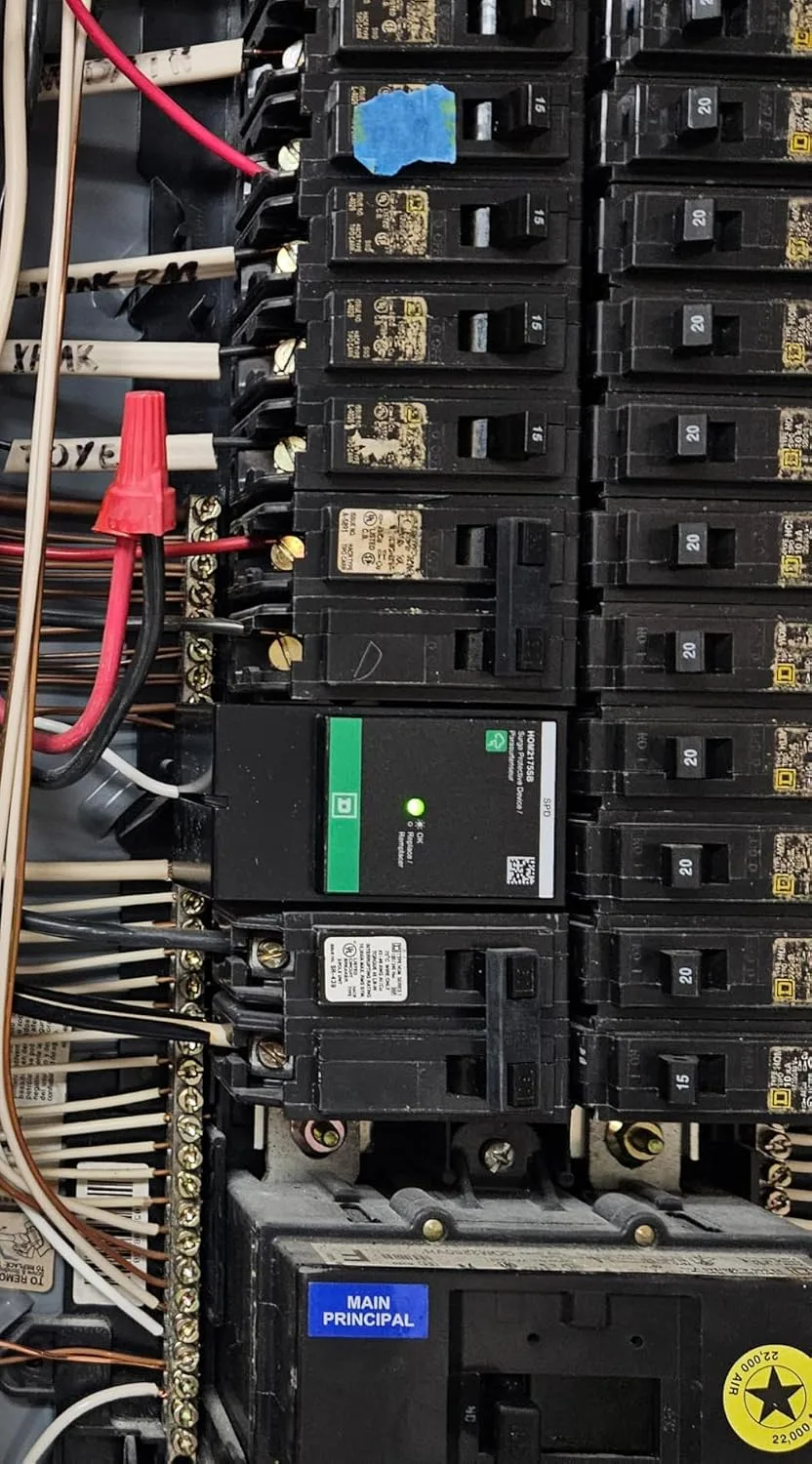
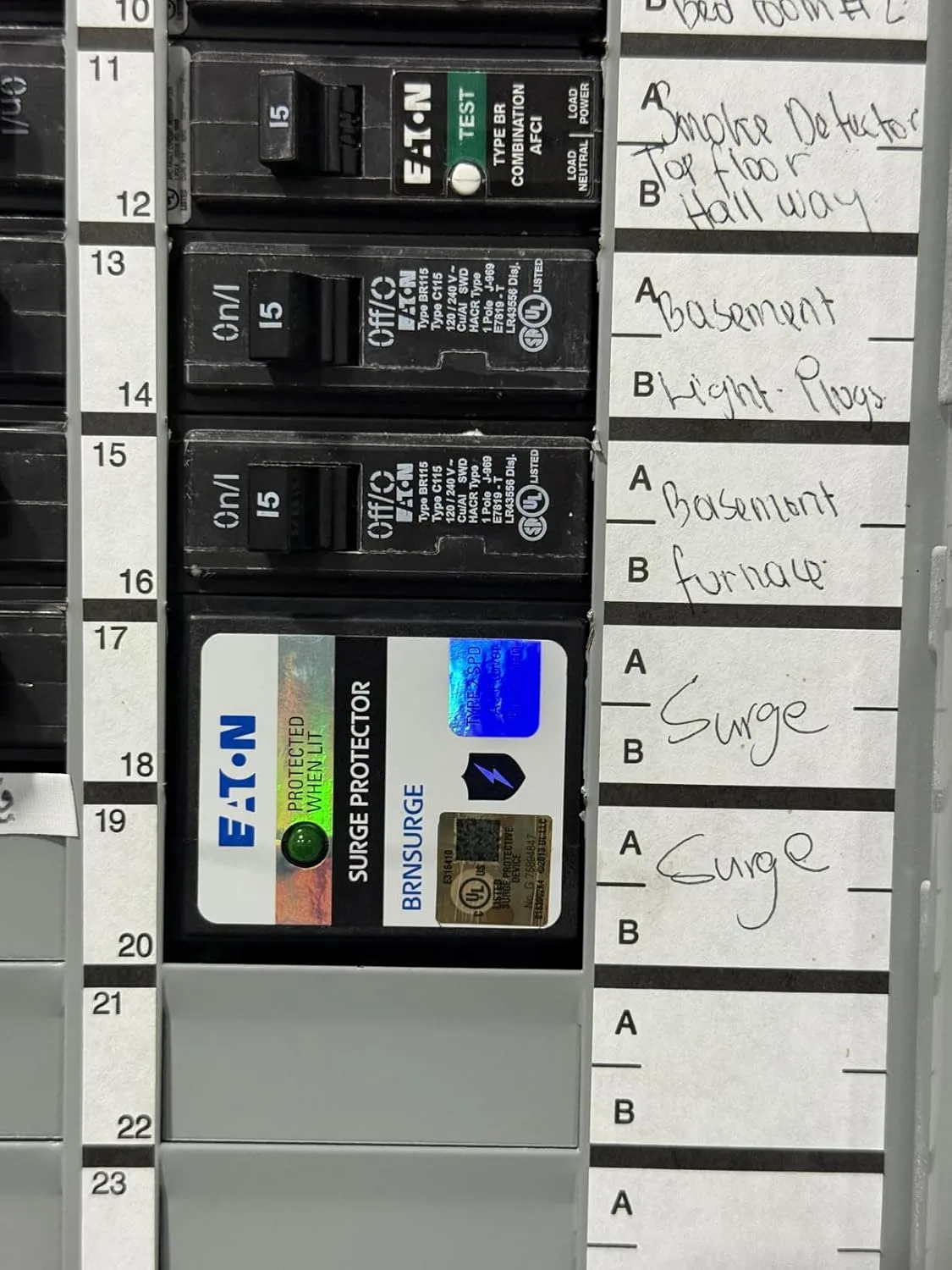
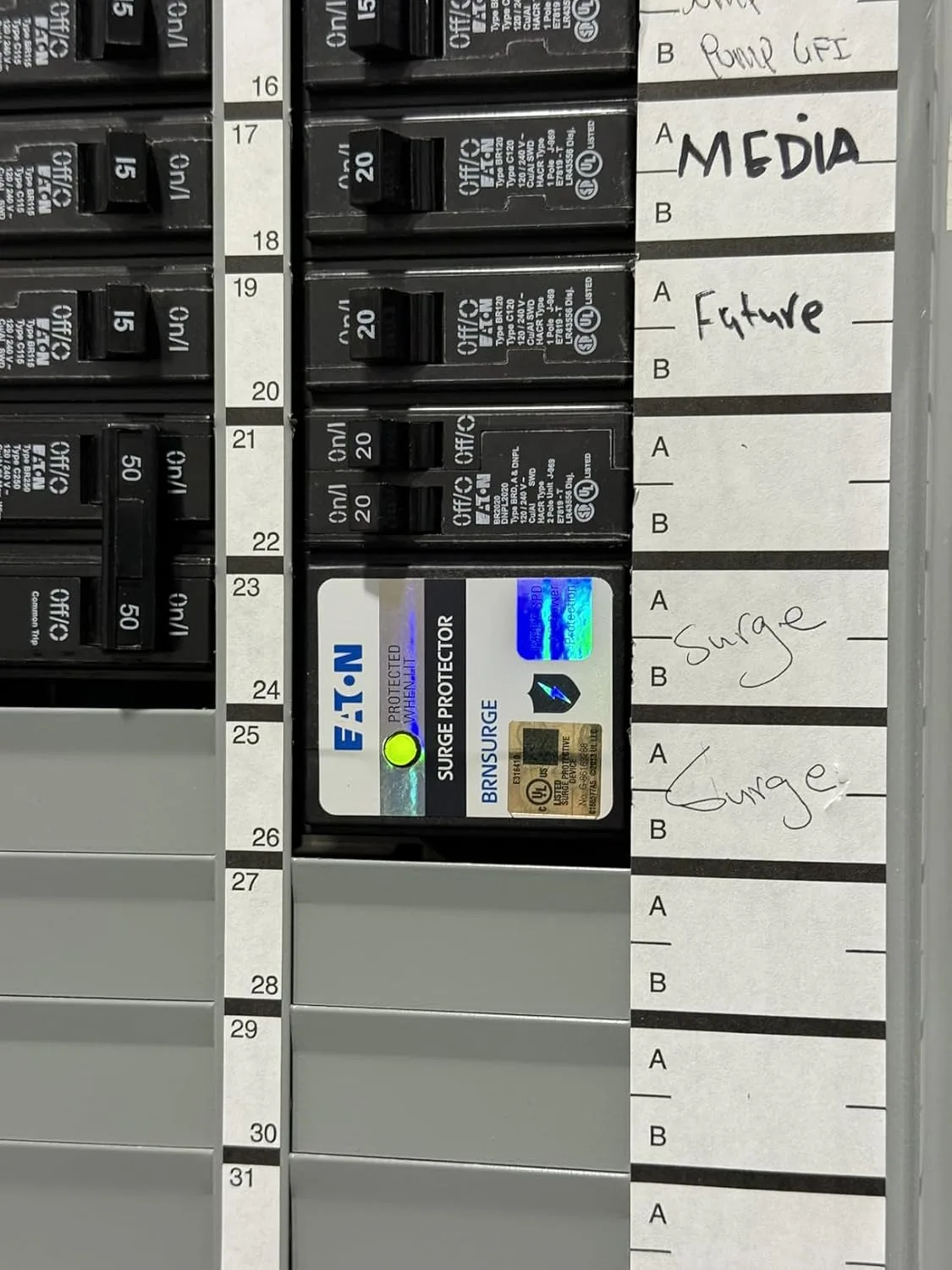
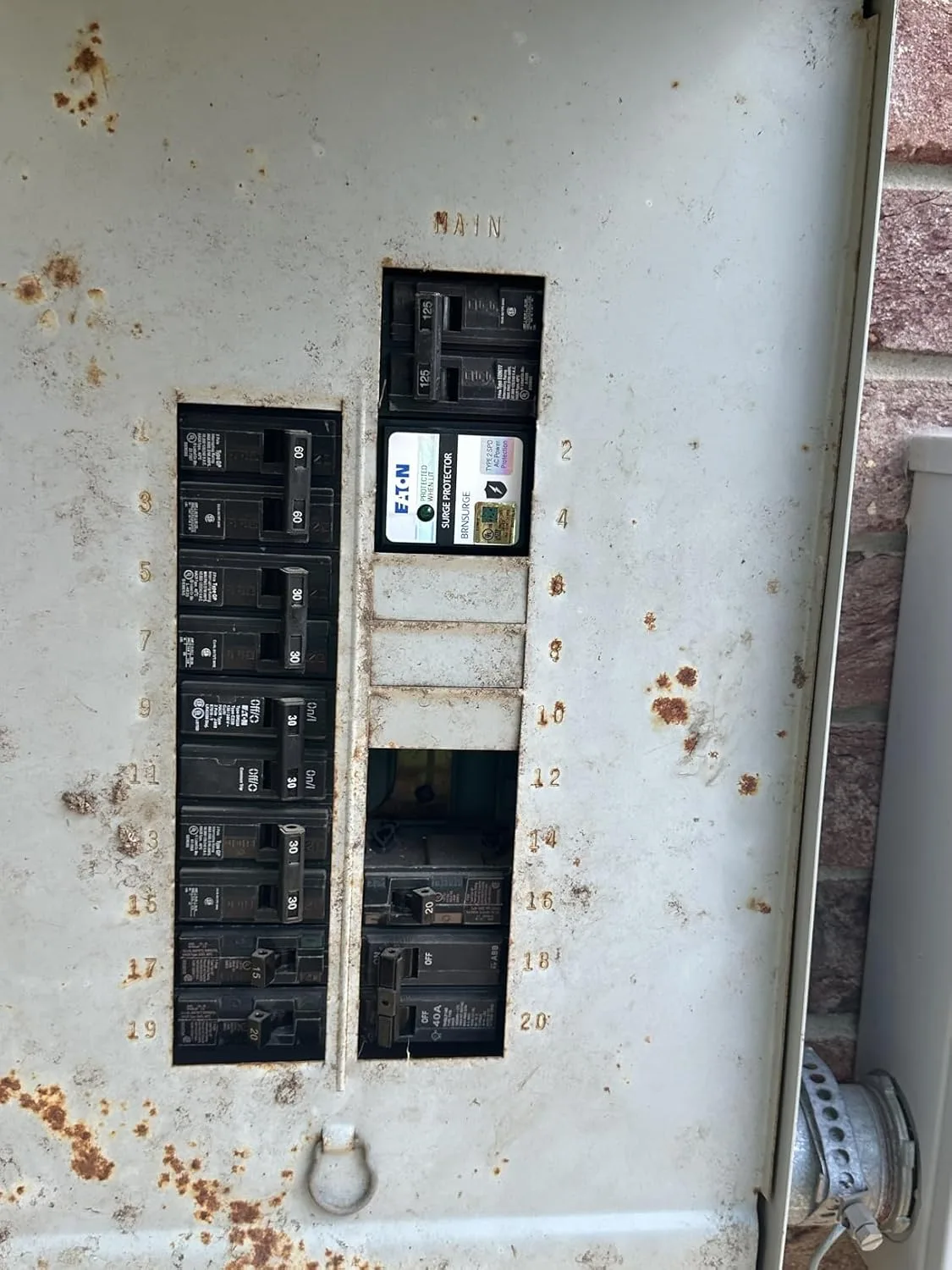
A whole-home surge protection device — sometimes called a TVSS (Transient Voltage Surge Suppressor) or SPD (Surge Protective Device) under NEC Article 285 — installs directly at your electrical panel. It monitors all incoming voltage across all three modes: line-to-neutral, line-to-ground, and neutral-to-ground. When a transient spike arrives, the SPD clamps the voltage and diverts the excess energy to ground before it can travel down your branch circuits.
The key specification to understand is the surge current rating, measured in kiloamperes (kA). A quality whole-home device is rated at 25kA or higher. Compare that to the 200-joule rating stamped on most power strips, and you start to see why the two aren’t in the same conversation. The NEC, specifically Section 230.67, now requires surge protection on new residential services — a change added in the 2020 code cycle. That tells you something about where the industry stands on this.
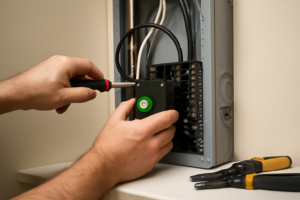
Installation takes me about 45 minutes on a straightforward panel with available space. The device ties into a dedicated double-pole breaker and connects to the panel’s grounding system. That ground connection is critical — it’s the path the diverted energy actually travels. A poor ground means a poor clamp. In my experience, homes with older grounding electrode systems sometimes need a ground upgrade before the SPD can do its job properly.
The Panel-Level Device That Actually Stopped a Lightning Strike on My Own House
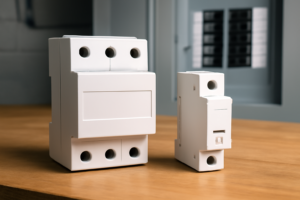
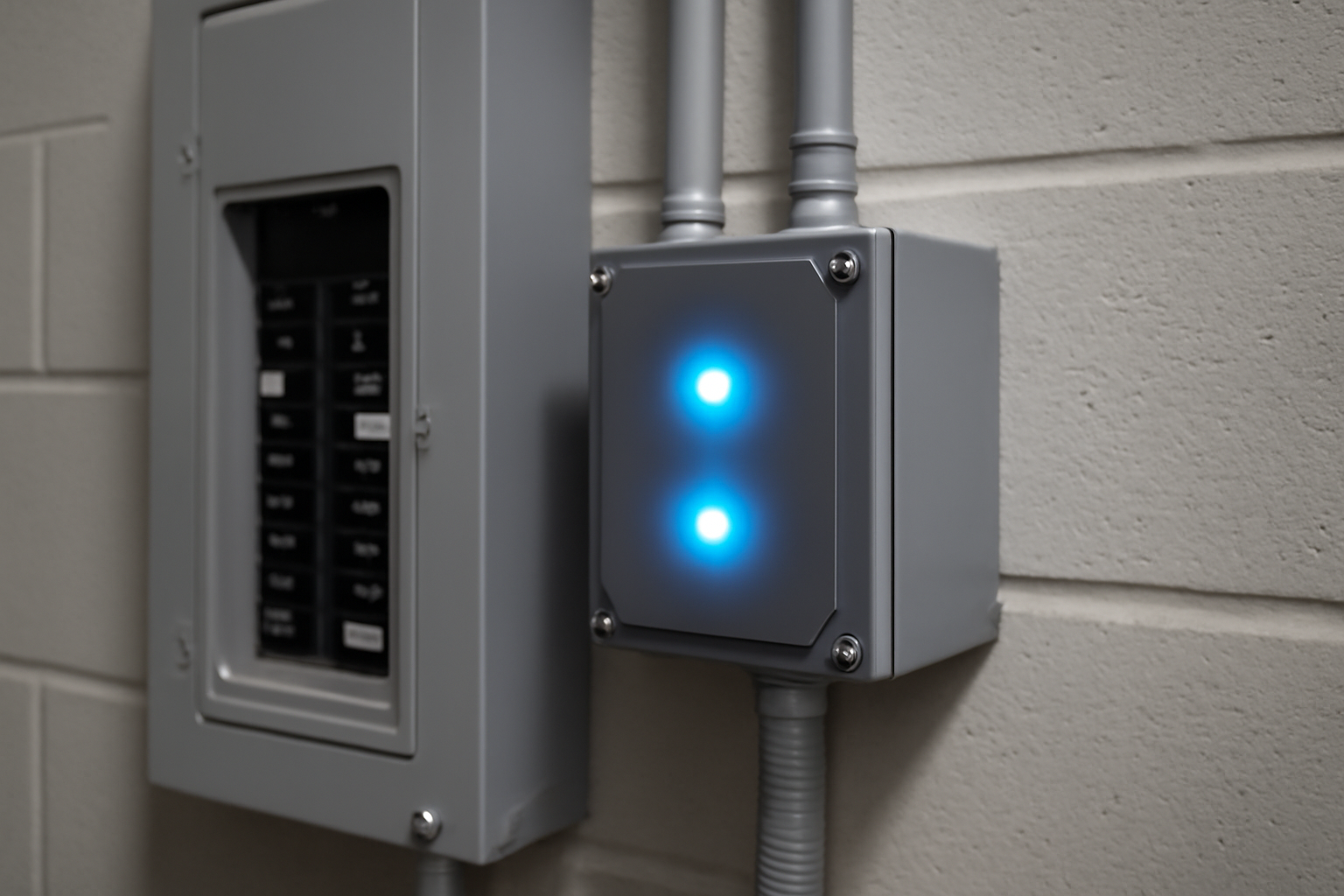
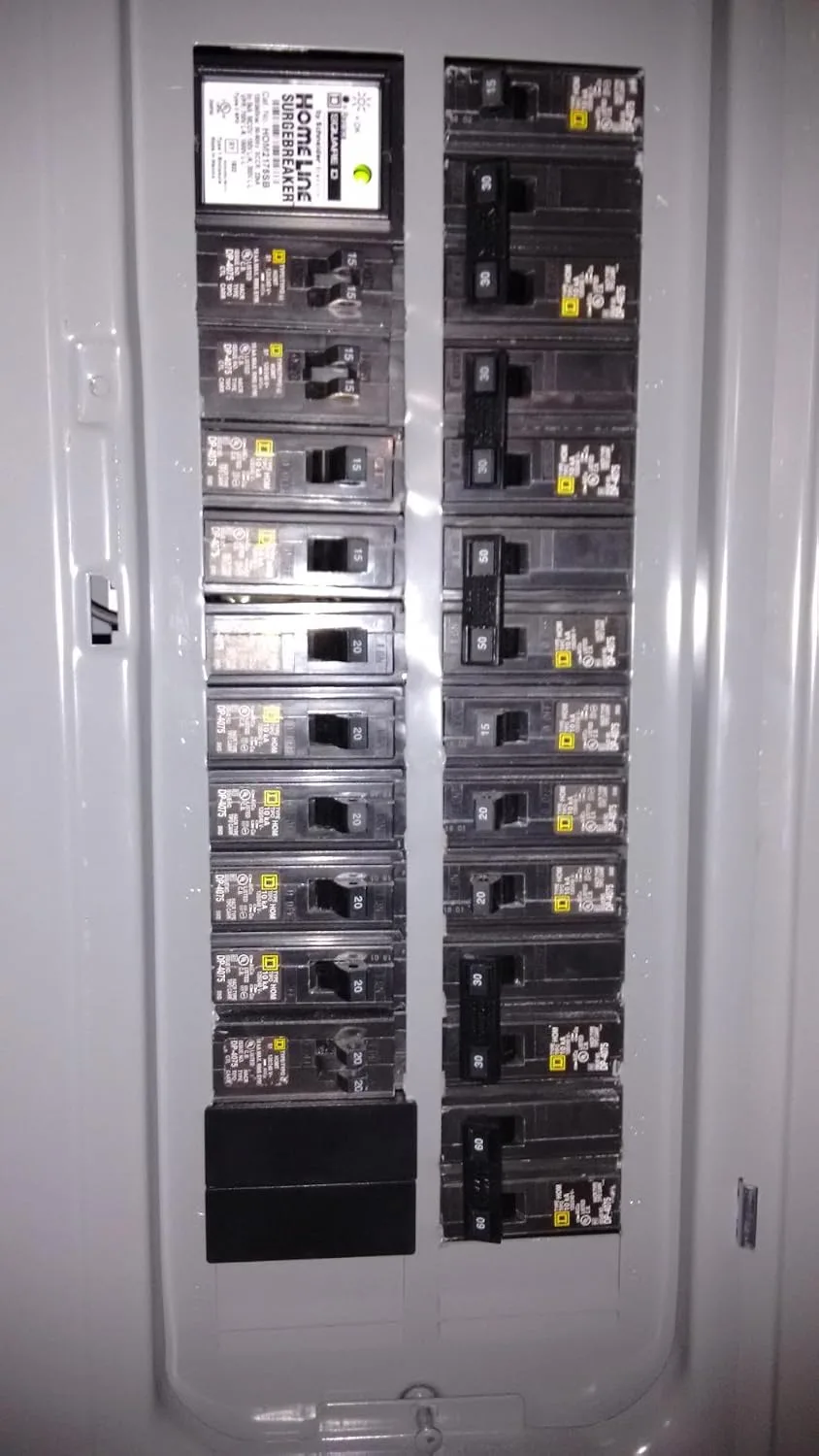
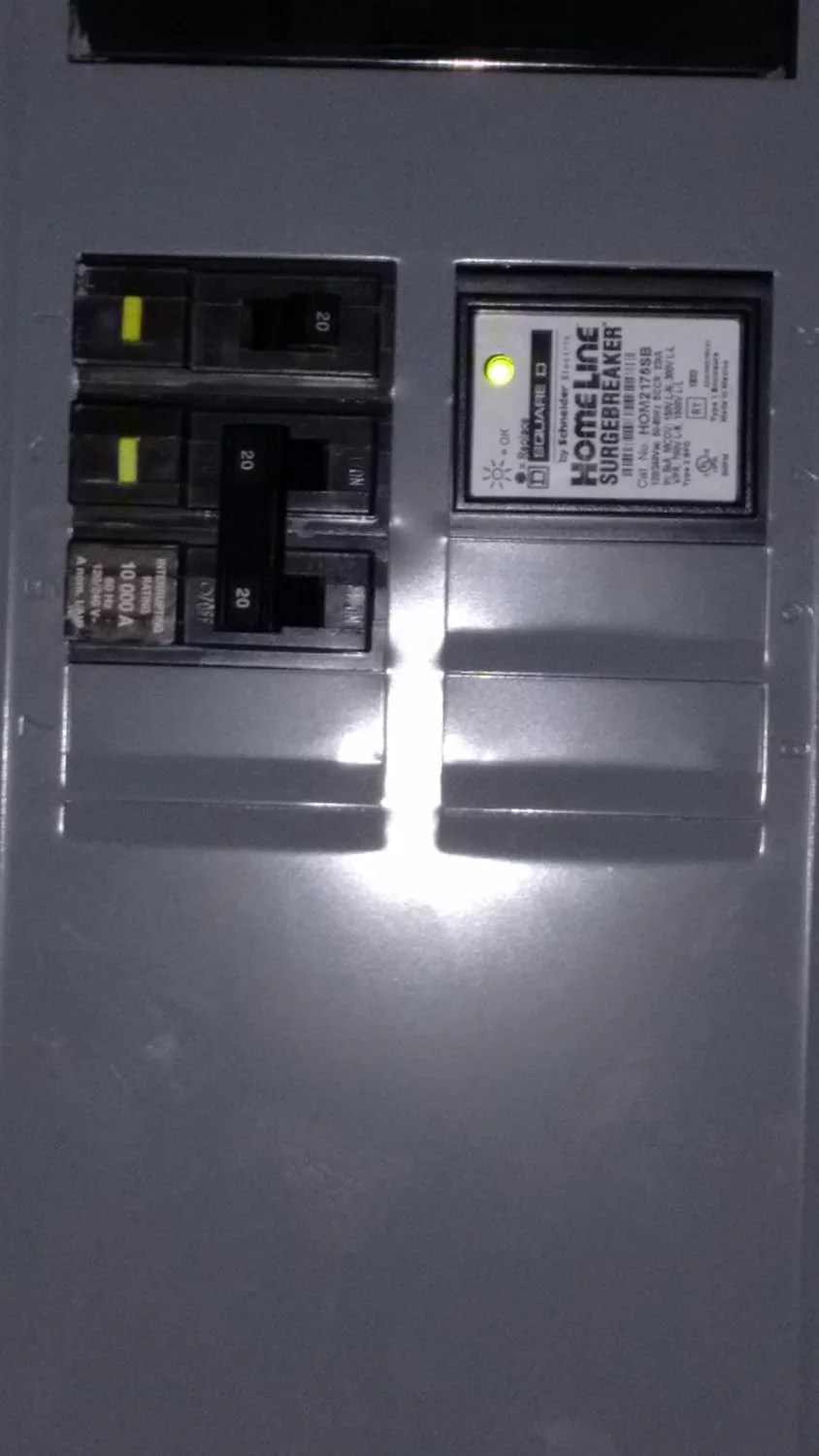
After that $6,800 loss, I stopped relying on outlet-level protection and installed whole-home surge protection at the main panel. This is where real defense happens — before the surge ever reaches your appliances. A whole-panel surge breaker is the closest thing I’ve found to actually preventing lightning damage.
What works
- Protects everything downstream at once — not just one outlet or one room, but your entire electrical system and every appliance in your home.
- Installs directly into your breaker panel where surges enter your house, which means it catches overvoltage before it has anywhere to go.
- Works silently and automatically — no outlets to plug things into, no indicator lights to ignore, just always-on protection 24/7.
What doesn’t
- Requires a licensed electrician to install (or at minimum, a solid understanding of panel work) — this isn’t a DIY-friendly retrofit for most homeowners.
- Won’t protect you against a direct lightning strike to your house roof — nothing will. But it does catch the indirect surges that travel through your power lines, which is where most real damage actually comes from.
I’ll admit, I hesitated on the cost and the panel work when I first priced it out. Then my neighbor two streets over had a transformer blow during a storm, and that surge fried his entire entertainment center despite three surge-protected strips. That sold me. If you’re serious about protecting your home the way I protect mine, get a Square D by Schneider Electric HOM2175SB Homeline SurgeBreaker installed before the next lightning season.
This post contains affiliate links. As an Amazon Associate, I earn from qualifying purchases at no extra cost to you.
This post contains affiliate links. As an Amazon Associate, I earn from qualifying purchases at no extra cost to you.