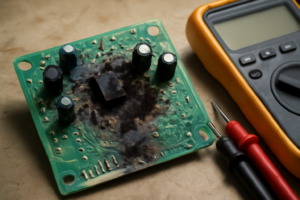
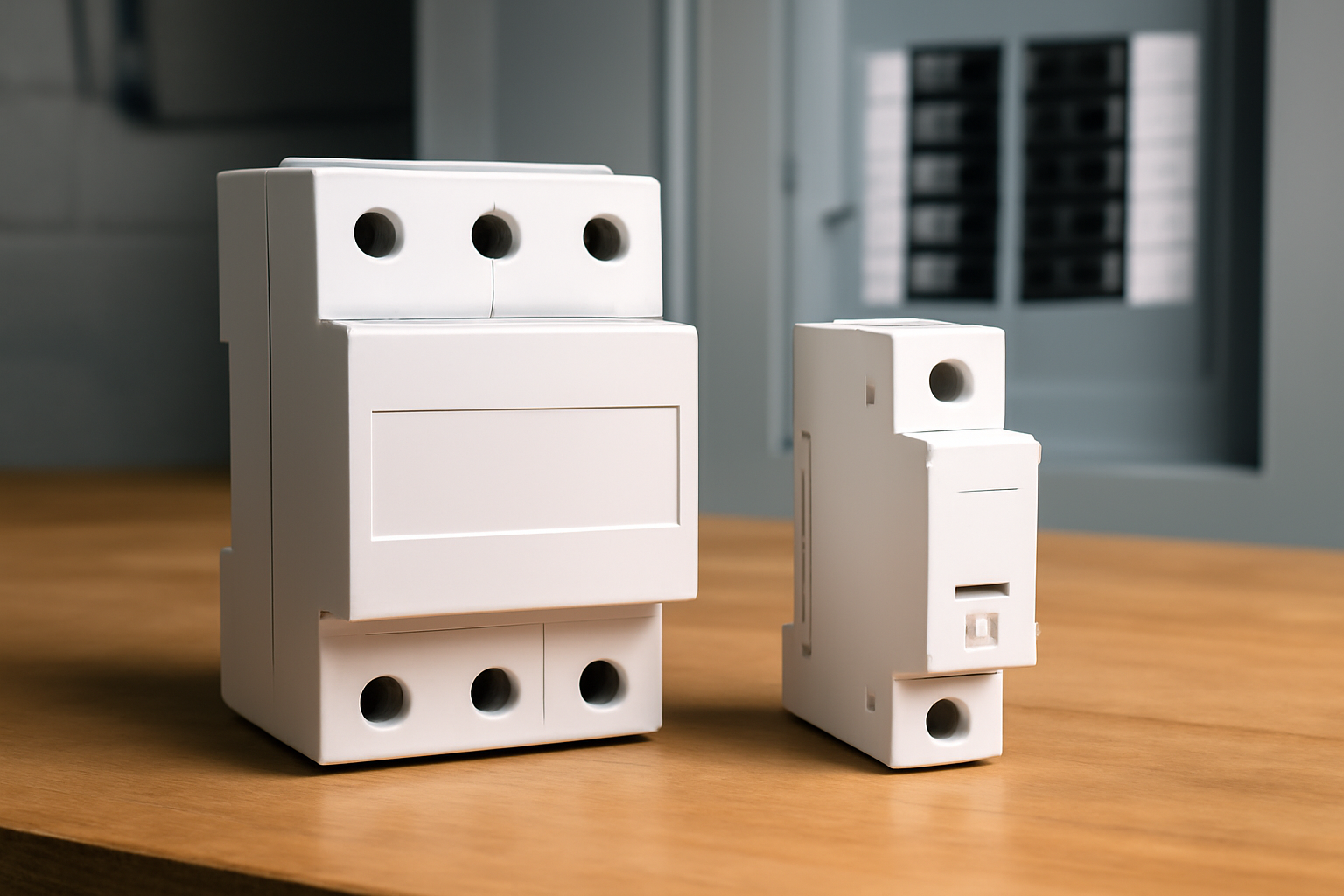

Last spring, I inspected a house in suburban Ohio where the homeowner had spent nearly $4,000 replacing a refrigerator, a smart TV, and a whole-home HVAC control board — all fried in a single lightning strike. When I opened the panel, there was no whole-home surge protection anywhere. There was, however, a $12 power strip surge protector plugged into the kitchen outlet. That strip did absolutely nothing for the HVAC board wired directly to the breaker. Understanding the difference between a Type 1 vs Type 2 surge protector could have saved that homeowner every dollar of that repair bill.
Forcing a breaker onto a bus it was not listed for gives you a loose, high-resistance connection. That connection heats up, and heat at a panel bus is how you get arcing and a panel fire — sometimes months after the install, long after it looked fine. Using a breaker in a panel it is not listed for also violates NEC 110.3(B), voids the panel’s UL listing, and is a common reason a fire claim gets denied.
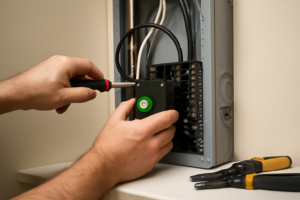
Your panel brand is on the label inside the door, along with a list of the breaker catalog numbers accepted. If the label is missing or unreadable, or if you are not certain, have a licensed electrician identify the panel and supply the matching SPD. There is a listed whole-home SPD for every common panel line — buy the one that matches yours.
Most people assume surge protection is surge protection. Buy a power strip, plug things in, done. That misconception costs homeowners thousands of dollars every year. In my 16 years of residential electrical work and home inspections, I’ve seen the damage firsthand — and I’ve seen how simple, well-placed protection prevents it entirely. This post breaks down exactly what each type does, where each one belongs, and which one your panel actually needs.
What Are Surge Protectors and Why Does “Type” Matter?
Check your panel brand first — this unit is listed for Square D Homeline loadcenters only.
Surge protective devices — SPDs in the trade — are categorized under ANSI/UL 1449 and referenced in the NEC (National Electrical Code) under Article 285. The Type classification tells you where the device is designed to be installed and how much energy it can safely absorb. Getting the wrong type in the wrong location doesn’t just reduce effectiveness — it can actually create a hazard. That’s not me being dramatic. I’ve seen improperly installed SPDs arc internally during high-energy surges because they weren’t rated for their location.
Surge energy travels fast. A lightning strike nearby injects voltage spikes that can reach tens of thousands of volts in microseconds. Internally generated surges — from motors, compressors, and HVAC systems cycling on and off — are smaller but happen dozens of times a day. Both types of events destroy sensitive electronics over time. The key is stopping that energy at the right point before it reaches your devices.
Type 1 vs Type 2 Surge Protector: The Core Difference
Here’s how I explain it to homeowners during inspections: Type 1 stands guard at the front door, and Type 2 stands guard inside the house.
Type 1 SPDs are installed between the utility service entrance and the main panel — specifically on the line side of the main breaker. They’re designed to handle high-energy, externally generated surges, including direct or nearby lightning strikes. Type 1 devices can withstand an impulse current (Iimp) of 25kA or more per mode. Because they sit ahead of the main disconnect, they require utility coordination in some jurisdictions and are almost always a licensed-electrician-only installation. In my experience, they’re more common in commercial applications, though they do exist in residential settings with exposed overhead service lines.
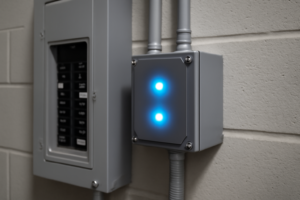
Type 2 SPDs install on the load side of the main breaker — typically in or adjacent to the main panel or a sub-panel. They handle the bulk of what residential homes actually face: utility-side surges that make it past the meter, and internally generated transients from motors and compressors. Type 2 devices are rated for a maximum continuous operating voltage (MCOV) that aligns with residential 120/240V single-phase systems. Their surge current rating (In) typically runs from 20kA to 80kA depending on the model. These are the devices most residential electricians are installing today, and they’re what the 2020 NEC now recommends for new residential construction under Section 230.67.
That NEC 230.67 update is significant. It made SPD installation in dwelling unit service equipment essentially mandatory in new construction under the 2020 code cycle. Many states are still adopting it, but the direction is clear: whole-home surge protection is no longer optional best practice — it’s code direction.
Do You Need a Type 1, a Type 2, or Both?
In 16 years of residential electrical work, the honest answer is: most homeowners need a Type 2, and almost none actually need a Type 1 alone. Here’s why.
Type 1 devices handle external, high-energy events — primarily direct lightning. However, utilities install their own surge suppression equipment at the transformer level. That doesn’t mean you’re fully protected, but it does mean a Type 2 device installed at your panel handles the majority of real-world residential surge events effectively. The IEEE recommends a layered protection strategy, and for most homes, that means a Type 2 at the panel combined with point-of-use strips at sensitive electronics.
That said, there are specific situations where a Type 1 makes sense — or where a combination Type 1/2 device (which do exist) is the right call. If your home has an overhead service drop in a high-lightning-strike area, if you’re on rural unprotected distribution lines, or if you’ve had documented lightning damage in the past, upgrading to a Type 1 or combination unit is worth the additional $150–$300 in equipment cost. I always flag this during home inspections for properties in Florida, the Gulf Coast, and rural Midwest regions.
A Quick Reality Check on Surge Ratings
Don’t get distracted by raw kA numbers alone. A 40kA Type 2 device isn’t automatically twice as good as a 20kA unit for typical residential use. What matters more is the clamping voltage — the voltage level at which the device activates — and how quickly it responds. Lower clamping voltage means better protection for sensitive electronics. For residential 120/240V systems, look for a clamping voltage under 400V line-to-neutral. Most quality units land between 330V and 400V at standard test conditions.
The Breaker That Actually Stops Lightning Before It Reaches Your Panel
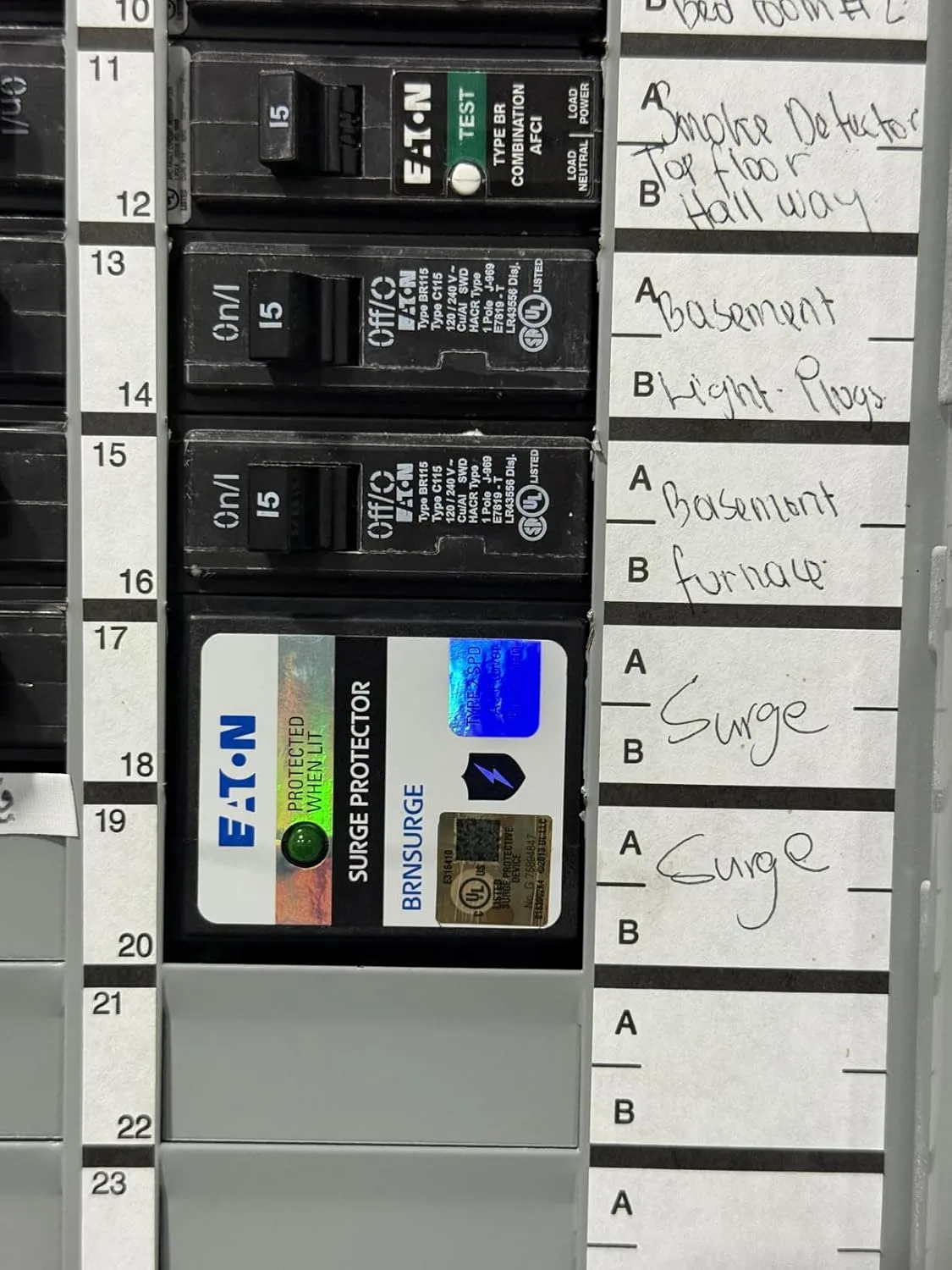
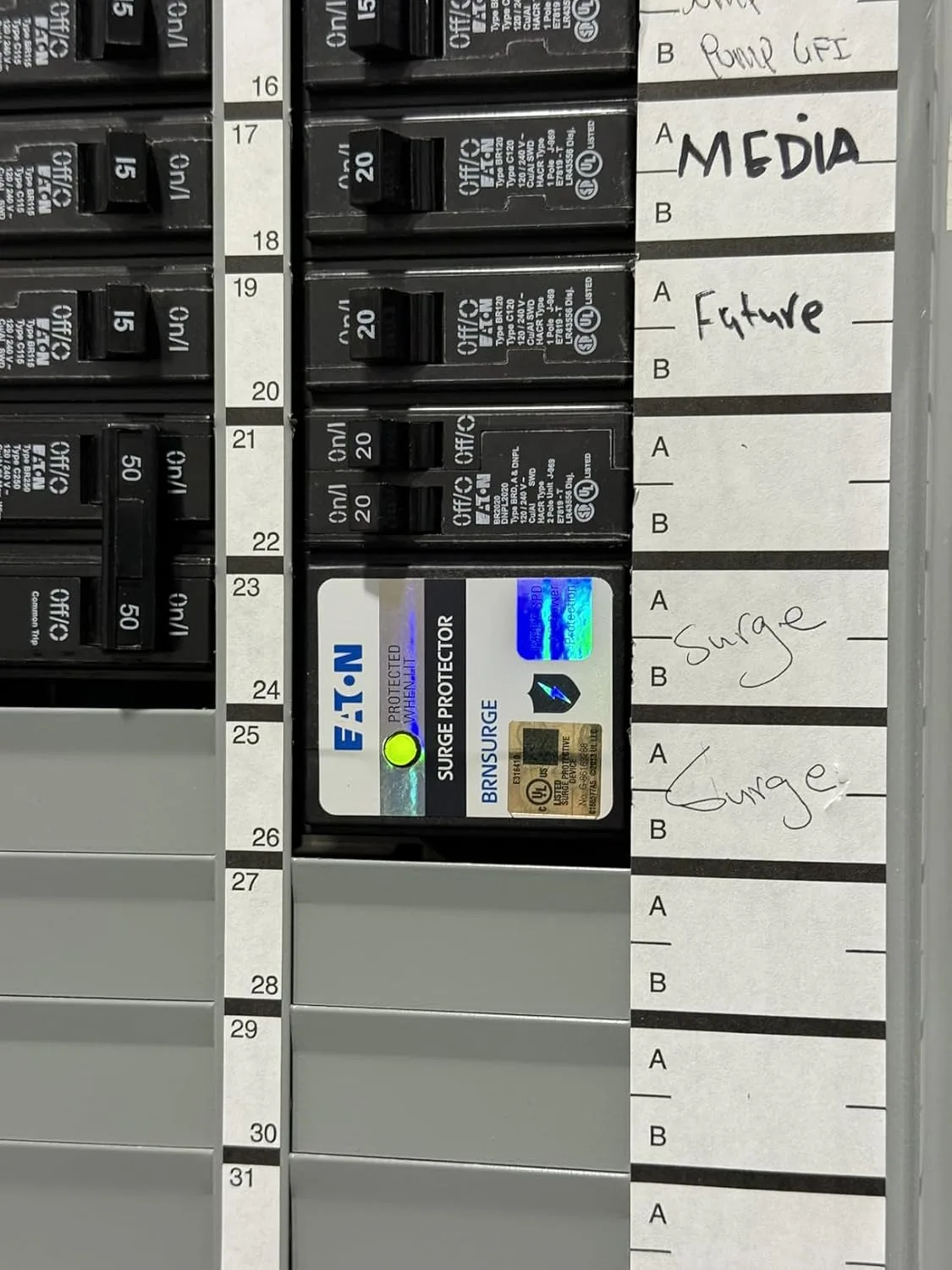
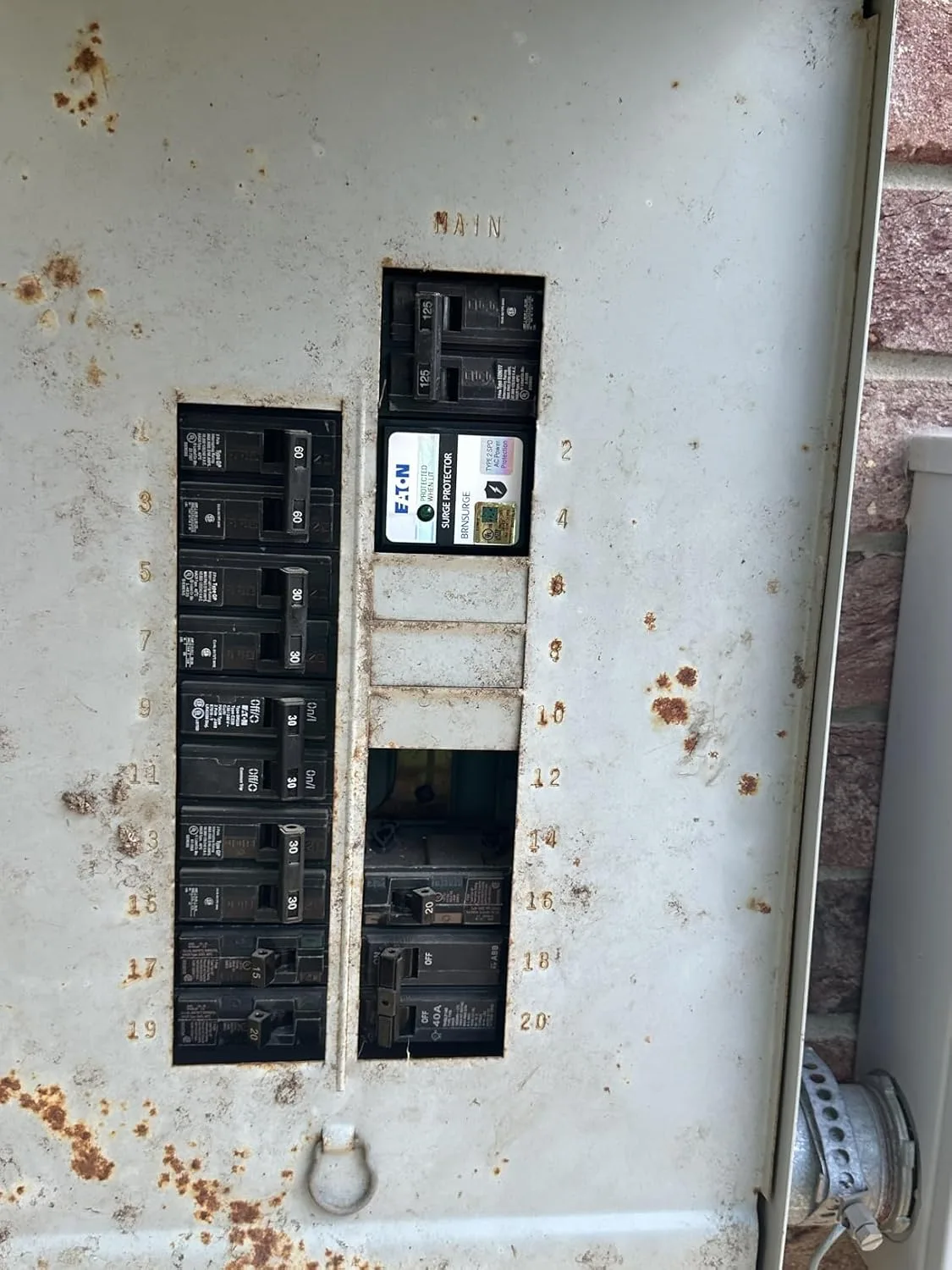
After that Ohio job, I realized most homeowners think a $12 power strip is enough protection. It isn’t — you need a Type 1 or Type 2 surge protector installed at the panel itself, where the real damage enters your house. The Square D SurgeBreaker is the closest thing to a genuine whole-home defense I’ve found that fits a standard breaker slot.
What works
- Installs directly into your breaker panel like a normal breaker — no external box or additional equipment to clutter your installation
- Provides Type 2 protection that catches surge voltage at the panel entry point, before it spreads to every circuit in your house
- Costs a fraction of what you’ll spend replacing a smart fridge, HVAC board, or TV after a single lightning event
What doesn’t
- Won’t protect against a direct lightning strike to your roof — nothing will short of a lightning rod system, but it handles the 90% of surges that come through utility lines
- Takes up one full breaker slot, which matters if your panel is already tight (most aren’t, but it’s worth checking before you buy)
I hesitated the first time I quoted one to a client — the breaker itself felt almost too simple compared to the industrial whole-home units I’d seen before. But after watching that refrigerator repair bill, I stopped second-guessing and started installing them. Have one installed while your panel still has room — matched to your panel line. On a Square D Homeline panel that’s the HOM2175SB SurgeBreaker; on a QO, Eaton, Siemens, or GE panel you need that line’s own listed SPD instead.
This post contains affiliate links. As an Amazon Associate, I earn from qualifying purchases at no extra cost to you.
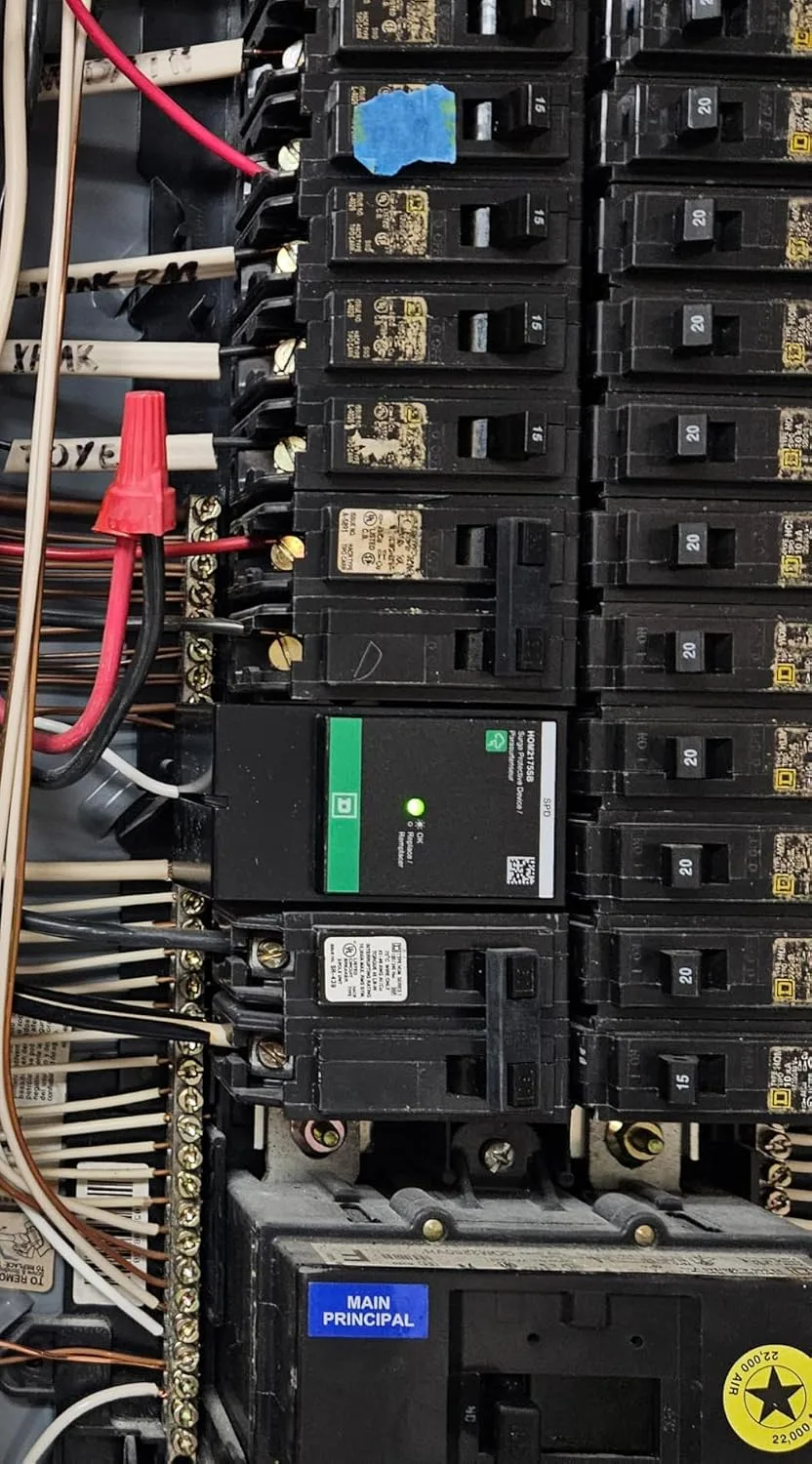
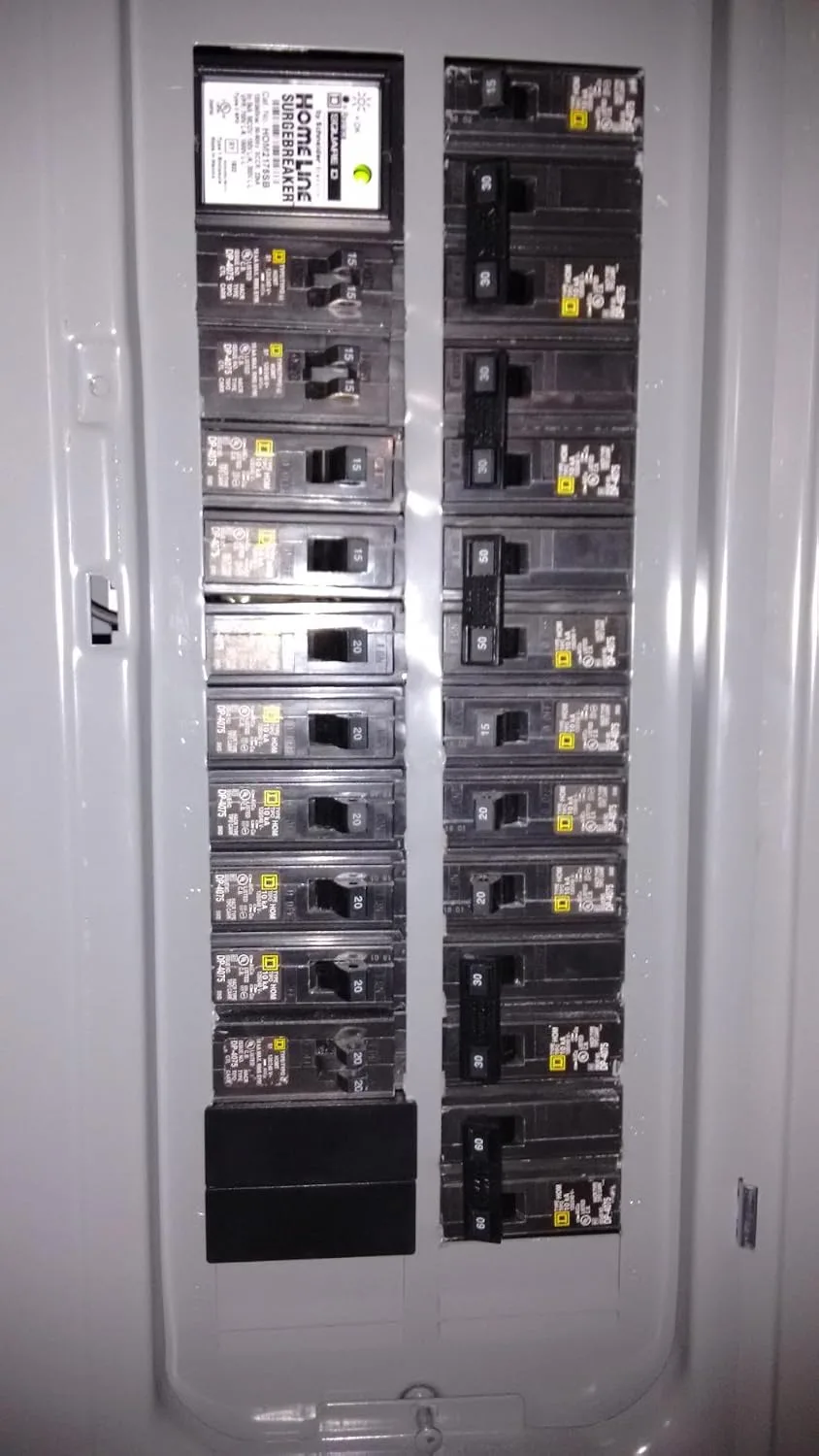
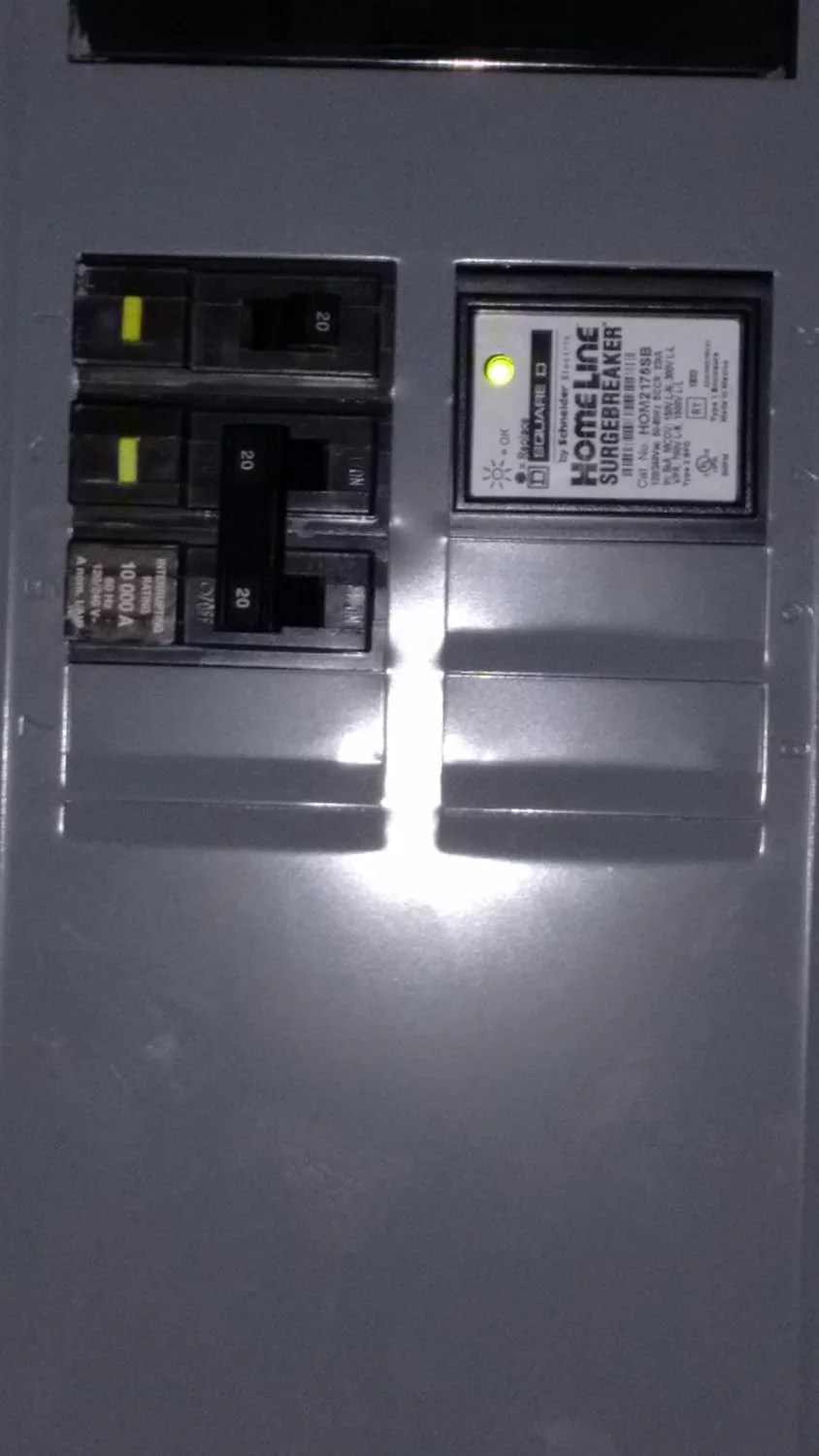
Square D by Schneider Electric HOM2175SB Homeline
I installed this in my breaker box and stopped replacing fried appliances after storms.
Fits Square D Homeline load centers only — not QO, Eaton, Siemens, or GE panels. Check the label inside your panel door first.
Check Price on Amazon →This post contains affiliate links. As an Amazon Associate, I earn from qualifying purchases at no extra cost to you.